


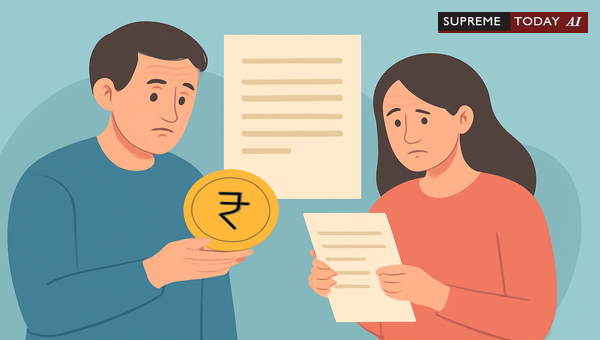
Can Adult Child Claim 6-Year from Father?
In family law disputes, questions about parental maintenance obligations often arise, especially when children reach adulthood. A common query is: Can the child claim the due amount from the father after attaining majority from the in MC 9/ for 6 years due? This issue touches on ongoing parental duties, , and court precedents in India. While maintenance is a fundamental right, recovering past dues (arrears) has specific legal boundaries.
This post explores the legal framework, drawing from key judgments and principles under the , particularly Section 125. Note: This is general information based on legal precedents and not personalized legal advice. Consult a qualified lawyer for your specific case.
Understanding Maintenance Claims Under Indian Law
Maintenance under ensures that parents, spouses, and children who cannot support themselves receive financial aid from those legally obligated. Fathers have a continuing duty to maintain minor children, and this extends in certain cases post-majority.
- For minor children: Maintenance is mandatory until majority.
- Post-majority: A major unmarried daughter may claim if she proves inability to maintain herself due to physical or mental disability. from other sources on
facilitates these claims efficiently. In cases like MC 9/, courts assess ongoing needs and past compliance.
Can Claims Be Made After Attaining Majority?
Yes, generally, a child (now adult) can pursue arrears even after majority, as maintenance is a . However, it's not unlimited.
Key principle: Maintenance claims are considered ongoing and can be pursued even after the child attains majority, but are subject to . 2015 7 Supreme 518
Courts recognize that parental duty doesn't vanish at , but recovery of old dues is time-bound. For instance, in a case involving enhancement of maintenance, the court allowed claims for a major daughter under specific conditions but emphasized limits post-majority unless disability is proven. from other sources on Criminal Revision Application
The Crucial Limitation Period for Arrears
The applies, typically barring claims after three years from when the amount became due, unless it's a .
- The period for claiming arrears of maintenance is generally three years prior to the filing of the claim, unless the claim is a . 2015 7 Supreme 518
- clarification: the claim for arrears of maintenance is a , and the limitation period is three years. 2015 7 Supreme 518
In the context of MC 9/ (filed in ), a claim for six years' arrears today (say, post-) would likely cover only the last three years before filing the new claim. Older dues from -2017 may be barred.
Related precedent: In a matrimonial appeal, past maintenance claims were scrutinized, with courts noting wilful default leads to consequences like striking off defense, but arrears calculation respects timelines. 2018 0 Supreme(Ker) 578
Application to Your Case: MC 9/ and 6-Year Dues
If the original petition was MC 9/, and you're seeking six years' dues post-majority:
- Original order: Assumed to grant monthly maintenance.
- Arrears accrual: From non-payment dates.
- Current claim: File a fresh or application in .
- Limitation check: Only dues within three years prior to new filing are recoverable. For six years total, roughly half may be time-barred.
The claim for arrears beyond three years from the date of filing is generally barred unless there is a specific exception or acknowledgment by the father. 2015 7 Supreme 518
Family Courts have struck off defenses for deliberate non-payment, ordering arrears up to Rs.9,75,000/- in one case, but always within limits. 2018 0 Supreme(Ker) 578
Exceptions and Special Circumstances
Not all claims are strictly barred:
- Continuing maintenance: Current or future dues unaffected by limitation.
- Acknowledgment: If father admits debt in writing, limitation resets.
- Disability: Major children with proven physical/mental inability get extended support. A father is liable to maintain his unmarried daughter only until she attains majority unless she proves inability to maintain herself due to physical or mental disability, per . from other sources
- Court discretion: Under or civil suits, decrees may allow broader recovery, but conversion from CrPC isn't automatic. 2024 0 Supreme(Guj) 1626
In custody-related matters, welfare paramountcy influences maintenance indirectly, prioritizing child's well-being. 2019 0 Supreme(SC) 1369
Integrating Other Legal Insights
Broader family law context reinforces these rules:
- Burden of proof: Claimant must show for arrears. 2024 0 Supreme(Ker) 800
- Execution proceedings: Transfer cases for recovery if needed, but fresh arrears apps face scrutiny. 2012 0 Supreme(Ker) 650
- No in civil claims: But consistent facts prevent relitigation. 2017 0 Supreme(Mad) 1607
Motor accident cases analogize loss of consortium, valuing family bonds, but maintenance is distinct. 2025 Supreme(Online)(P&H) 7003
Practical Recommendations
To maximize recovery:
- File promptly: Within three years of each due installment.
- Document everything: Payment defaults, income proofs.
- Seek enhancement: If needs changed post-majority.
- Explore civil routes: suits for decrees beyond CrPC limits. 2004 2 Supreme 313
- Counseling/Custody link: If ongoing, courts may bundle with maintenance. 2019 0 Supreme(SC) 1369
The child or the claimant should file a specific application or petition seeking arrears within three years prior to the date of filing to ensure the claim is within the limitation period. 2015 7 Supreme 518
Conclusion and Key Takeaways
In summary, yes, an adult child may claim from the father post-majority, but typically only for the three years preceding the filing date. For a case like MC 9/ seeking six years, expect partial success—older arrears likely barred. 2015 7 Supreme 518 2004 2 Supreme 313
Key Takeaways:- Maintenance is continuous, but arrears time-bound.- Prove inability for post-majority claims.- Act fast to avoid limitation bars.- Family Courts prioritize welfare but enforce timelines.
Parental support fosters family stability, but legal bounds protect fairness. For tailored guidance, approach a lawyer promptly.
#ChildMaintenance, #FamilyLawIndia, #MaintenanceArrears















