


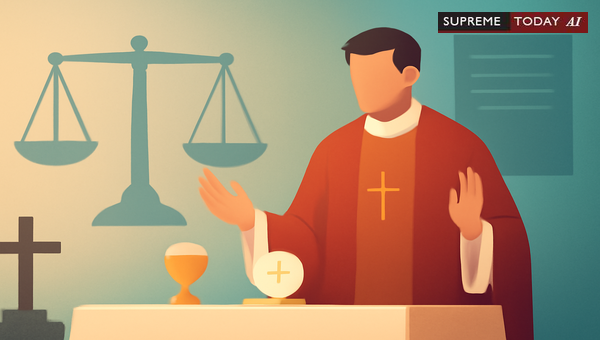
Can't Change Holy Mass Mode: Legal Insights
In the intersection of law and faith, one pressing question often arises: Civil Court has no to Change the Mode of Holy Mass. This issue strikes at the heart of religious freedom in India, where civil authorities must tread carefully around sacred practices. Imagine a dispute within a parish over how the Holy Mass is conducted—can a civil judge step in and dictate changes? The answer, grounded in constitutional protections and judicial precedents, is a resounding no. This blog post unpacks the legal framework, key principles, and supporting cases to clarify why such matters remain firmly in the realm of .
Note: This article provides general information based on legal principles and is not a substitute for professional legal advice. Consult a qualified lawyer for specific cases.
Overview of Civil Court in Religious Matters
Under Indian law, hold broad authority over secular disputes like property or contracts. However, when it comes to religious practices, their role is severely limited. guarantee the right to freely profess, practice, and propagate religion, as well as the autonomy of religious denominations to manage their affairs, including rites and ceremonies. 2004 4 Supreme 1
The mode of Holy Mass—a central in Christianity—involves specific rituals, the role of the Vicar, and community faith traditions. Interfering with this could undermine the very essence of religious belief. Courts have consistently held that they should not meddle in what is deemed essential to a faith. 2019 0 Supreme(SC) 1260
Key Legal Principles Protecting
1. to Religious Practices
Religious denominations enjoy the autonomy to determine their own rites. As established, the of a religion are protected under , which safeguard religious practices as integral to the faith of the community. 2004 4 Supreme 1
This protection extends to how sacraments like Holy Mass are performed, ensuring that external authorities cannot impose changes.
2. Limited Role of
Courts exercise caution in religious disputes: The of is limited when it comes to adjudicating on issues that pertain to the internal affairs of religious denominations. The courts should not interfere with decisions regarding rites and ceremonies that are considered essential by the religious community. 2019 0 Supreme(SC) 1260
In essence, can address tangential civil issues, such as property rights, but not the religious conduct itself. For instance, may have over certain civil issues like property disputes or legal rights of individuals, but not over the religious conduct itself. 2024 Supreme(Online)(KER) 26612 2024 Supreme(Online)(KAR) 38723
3. Matters Beyond Civil Reach
Disputes over Holy Mass or Vicar appointments are —purely religious—and fall outside civil . The appointment of a Vicar and the conduct of Holy Mass are significant to the faith of the parishioners. The Vicar's role is central to the performance of sacraments. 2017 5 Supreme 207
Supporting this, other rulings affirm: It is not open to the beneficiaries even by majority to change the nature of the Church, its property and management. 2025 0 Supreme(Ker) 2221 This underscores that even internal majorities cannot alter core practices, let alone courts.
Judicial Precedents and Case References
The has been unequivocal: What constitutes the essential part of a religion must be ascertained with reference to the doctrines of that religion itself. This means that practices regarded as essential by the community cannot be altered by . 2018 0 Supreme(SC) 959
In specific cases involving churches:- Courts refused to interfere in Holy Mass procedures, deeming them . 2024 Supreme(Online)(KER) 26612 2024 Supreme(Online)(Ker) 63148 2023 Supreme(Online)(Ker) 61989- A cannot substitute a for religious rituals, emphasizing separation of civil and authority. 2024 Supreme(Online)(KER) 26612
Further, in broader contexts:- lack to enforce changes in church management or nature. 2025 0 Supreme(Ker) 2221- The have to enforce the disciplinary actions... but not to change the nature of the Church. 2025 0 Supreme(Ker) 2221
These precedents align with the principle that courts have consistently acknowledged their limited role in religious affairs. They cannot dictate or modify religious rituals, practices, or their modes. 2023 Supreme(Online)(Ker) 61989 2024 Supreme(Online)(KAR) 38723
Integrating Additional Legal Contexts
While some sources discuss civil in unrelated areas—like marriage post-conversion
or church removals under state directives 2023 Supreme(Online)(MANIPUR) 206—they reinforce the boundaries. For example, even in property evictions, The Civil Court again has no in this regard. 2020 0 Supreme(All) 1103 2020 0 Supreme(All) 1206
In U.S. analogies, though not binding, cases like those involving Holy Cross highlight courts dismissing claims over religious entities' internal decisions. 2023 Supreme(US)(ca5) 360
In India, the pattern is clear: Religious vs. civil authority remains distinct. A writ proceeding cannot substitute a in such cases, emphasizing the separation of civil and authority. 2024 Supreme(Online)(KER) 26612 2024 Supreme(Online)(Ker) 63148
Practical Recommendations for Disputes
If facing a church dispute:- Argue lack of : Emphasize constitutional protections and . 2017 5 Supreme 207- Seek resolution: Matters like Holy Mass mode should be handled by church hierarchies.- Limit to civil aspects: Only pursue courts for purely secular issues, like land titles.
It is advisable to argue that the civil court’s does not extend to altering religious practices. 2017 5 Supreme 207
Conclusion and Key Takeaways
in India generally do not have to change the mode of Holy Mass or interfere in core religious practices. This stems from robust constitutional safeguards under Articles 25 and 26, judicial restraint in matters, and a clear separation of church and state. 2004 4 Supreme 1 2019 0 Supreme(SC) 1260 2018 0 Supreme(SC) 959
Key Takeaways:- trumps civil intervention in rites like Holy Mass.- Courts defer to community doctrines on .- Resolve internal disputes through religious bodies, not litigation.
By respecting these boundaries, India upholds pluralistic faith traditions. For tailored advice, consult legal experts.
References:- 2017 5 Supreme 207 2004 4 Supreme 1 2019 0 Supreme(SC) 1260 2018 0 Supreme(SC) 959- 2024 Supreme(Online)(KER) 26612 2024 Supreme(Online)(Ker) 63148 2023 Supreme(Online)(Ker) 61989 2024 Supreme(Online)(KAR) 38723 2025 0 Supreme(Ker) 2221
#CivilCourtJurisdiction, #ReligiousAutonomy, #HolyMass















