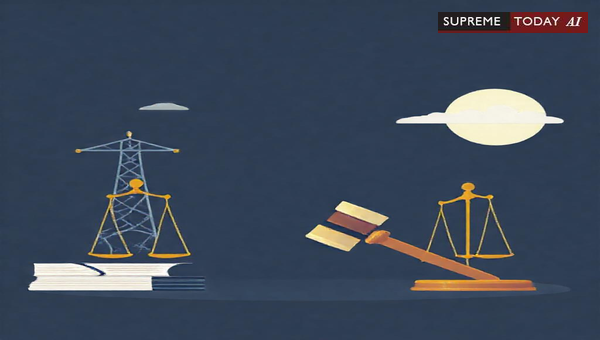
Analyzing Whether Civil Courts Can Hear Electricity Disputes Under Section 145 of the Electricity Act
For many consumers and legal practitioners, the interaction between statutory remedies and civil litigation can be confusing, particularly when dealing with the power sector. A common point of contention arises when a party attempts to challenge a decision made by an electricity board or authority in a civil court, only to be met with the argument that Section 145 of the Electricity Act, 2003, strips the civil court of its authority. This leads to a critical legal question: Does the Electricity Act 145 mean the Civil Court does not have jurisdiction?
The answer is not a simple yes or no. While the Act provides specific mechanisms for dispute resolution, judicial interpretations have consistently shown that the doors of the civil court are not permanently closed. The determination of whether a civil court can entertain a case depends heavily on the nature of the dispute, the adherence to procedural fairness, and the specific language of the statutory bar.
The General Scope of Civil Court Jurisdiction
Under the Indian legal framework, there is a general presumption that civil courts have the jurisdiction to try all suits of a civil nature unless their jurisdiction is expressly or impliedly barred. In the context of electricity disputes, multiple judicial findings affirm that Civil Courts generally maintain the jurisdiction to entertain disputes, particularly when the principles of natural justice are violated or the dispute is not explicitly barred by the Act 2013 0 Supreme(P&H) 1202 and 2012 0 Supreme(UK) 103.
The mere existence of an alternative remedy provided under the Electricity Act does not automatically exclude the jurisdiction of a civil court. As highlighted in legal precedents, remedies under the Electricity Act do not exclude Civil Court jurisdiction unless statutory provisions explicitly oust it 2024 0 Supreme(Mad) 1013. This means that if a consumer is facing a situation where the statutory remedy is inadequate or the law has been applied arbitrarily, the civil court may still be the appropriate forum for relief.
The Role of Natural Justice and Procedural Fairness
One of the most significant triggers for civil court intervention is the violation of the principles of natural justice. These principles require that any party affected by a decision must be given a fair opportunity to be heard and that the decision-maker must act without bias.
When an administrative or quasi-judicial body under the Electricity Act fails to follow due process, the civil court often steps in to rectify the injustice. For example, in cases where assessment orders were passed without following the necessary procedural steps, the courts have held that due process was not followed in passing assessment orders, thus Civil Court could hear the case 2014 0 Supreme(P&H) 263.
Procedural fairness is not a mere formality; it is a substantive requirement. If a consumer is penalized or their power is disconnected without a proper hearing or a valid notice, the action may be viewed as a violation of natural justice, thereby granting the Civil Court the authority to intervene and provide relief 2014 0 Supreme(P&H) 263.
Common Scenarios: Billing, Theft, and Disconnection
A frequent area of litigation involves disputes over electricity theft, inflated bills, and the abrupt disconnection of services. There is often a misconception that these matters are the exclusive domain of the authorities appointed under the Electricity Act. However, legal analysis suggests otherwise.
Section 145 does not categorically bar Civil Court jurisdiction in matters such as electricity theft, bills, or disconnection issues, unless explicitly excluded 2013 0 Supreme(P&H) 1202 and 2012 0 Supreme(UK) 103. If a dispute involves faulty bills or clear procedural violations, the jurisdiction of the civil court is typically maintained 2006 0 Supreme(P&H) 4533 and 2021 0 Supreme(P&H) 359.
For instance, if a consumer believes that a bill is mathematically incorrect or based on a faulty meter, and the internal grievance mechanism of the electricity department fails to address it fairly, the consumer may approach a civil court to seek a declaration or an injunction. The key is whether the dispute involves a fundamental error in law or a violation of the consumer's rights that the statutory body is unable or unwilling to address.
Understanding the Ouster of Jurisdiction
While the civil court's reach is broad, it is not unlimited. There are specific instances where the jurisdiction is indeed barred. This is known as the ouster of jurisdiction, where a statute explicitly removes the power of a civil court to hear a particular matter to ensure that specialized authorities can resolve technical disputes efficiently.
Certain matters, especially those involving adjudication by designated authorities under the Act, are barred from Civil Court jurisdiction, but only where the Act explicitly provides so 2020 0 Supreme(Kar) 2309. If the law designates a specific officer as the sole adjudicator for a particular type of claim, a civil court will typically defer to that authority.
The distinction lies in whether the dispute falls under these specific excluded categories. Unless the dispute is specifically excluded by the Act or involves an adjudicating officer's exclusive jurisdiction, Civil Courts retain the authority to hear cases related to electricity issues 2006 0 Supreme(P&H) 4528 and 2024 0 Supreme(All) 135.
Key Takeaways for Consumers and Litigants
Navigating the jurisdictional complexities of the Electricity Act requires a nuanced understanding of both the statute and the case law. The following points summarize the current legal landscape regarding Section 145:
- No Absolute Bar: Section 145 of the Electricity Act, 2003, does not create a blanket ban on civil court interventions for all electricity-related disputes.
- Natural Justice is Paramount: If a party is denied a fair hearing or if due process is ignored, the civil court is likely to exercise its jurisdiction to ensure justice is served 2014 0 Supreme(P&H) 263.
- Billing and Theft: Disputes regarding faulty billing, wrongful disconnection, and theft allegations are generally not barred from civil court scrutiny unless a specific statutory provision dictates otherwise 2013 0 Supreme(P&H) 1202 and 2012 0 Supreme(UK) 103.
- Statutory Exclusions: Jurisdiction is only ousted when the Act explicitly assigns exclusive authority to a designated adjudicating officer 2020 0 Supreme(Kar) 2309.
In conclusion, while the Electricity Act provides specialized forums for resolution, the civil court remains a vital safeguard against administrative overreach and procedural unfairness. Whether a case can be heard in a civil court generally depends on whether a statutory bar exists or if the principles of natural justice have been compromised.
#ElectricityAct #CivilJurisdiction #LegalRights #EnergyLaw