


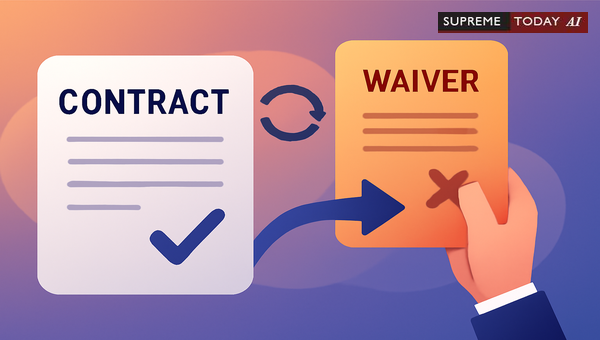
Condoning Delays: Does Fresh Contract Waive Claims?
In the complex world of contracts, delays are common, especially in construction and service agreements. But what happens when one party condones a delay in the original contract and then extends the work period through a new or fresh contract? Can they later turn around and claim under the old terms? This question—Condoning the Delay Caused in Earlier Contract and Extending the Work Period by Entering into Another Fresh Contract does Not Allow the Party to Claim as Per Old Contract—lies at the heart of many disputes.
Generally, such actions signal a of prior breaches, preventing revival of old claims. This blog post dives into the legal principles, key cases, and practical implications, drawing from established precedents. Note: This is general information, not legal advice. Consult a qualified attorney for your specific situation.
Main Legal Finding: Through and Extension
Condoning the delay caused in an earlier contract and extending the work period by entering into a subsequent or fresh contract generally does not permit the party to claim of the original contract. This is because the extension or new contract signifies a of the delay and a of the original , unless . 2011 4 Supreme 531
Extensions of time granted for delays typically operate as a or acknowledgment that the delay was not a , thereby limiting or extinguishing claims for under the original contract. 2011 4 Supreme 531 Entering into a new or fresh contract after condoning delays indicates mutual acceptance that the previous or delay was excused or waived, and parties cannot revert to claiming of the original contract. 2023 0 Supreme(Del) 90
Detailed Analysis: How Leads to
Condoning Delay and Granting Extensions
When a party condones a delay or grants an extension without , it effectively waives its claim for that . Courts have emphasized that such extensions recognize the delay as acceptable or excused. For instance, in a key ruling, the court noted that granted does not amount to a but is a recognition that the delay was acceptable or excused. 2011 4 Supreme 531 Similarly, the held that granting an extension generally signifies the delay is not a , barring original claims unless preserved. 2023 0 Supreme(Del) 90
This principle extends to scenarios where parties continue work post-delay without protest. As observed in another case: without reserving his right to claim compensation or damages for the delay caused, subsequently cannot claim any such damages or compensation.2024 0 Supreme(Bom) 1055
Impact of Entering a Fresh or New Contract
Entering a subsequent contract after condoning delays often amounts to a mutual intention to extinguish original rights and liabilities, akin to . However, requires to substitute the new for the old; mere extension does not automatically qualify. 1957 0 Supreme(AP) 90
Courts consistently hold that condoning delays and signing a new agreement without precludes claims under the prior contract. For example: condoning delays and subsequently entering into a new agreement of rights precluded claims for under the earlier contract.2006 9 Supreme 50 This is reiterated where a party cannot claim after condoning through a new agreement, indicating . 2017 0 Supreme(Del) 5
Additional sources reinforce this. In cases involving supplemental agreements, extending deadlines via new terms accepts delays without claims. For instance, supplemental agreements extended deadlines, and new contracts via fresh tenders indicated acceptance without claims. 2025 Supreme(Online)(Mad) 70812
vs. Mere Extension
extinguishes original obligations only with . An agreement for remission or extension does not necessarily novate unless it fully substitutes the old contract. 1957 0 Supreme(AP) 90 When parties enter a fresh contract post-, it signifies . Mere extensions, especially with new contracts, waive rights.
Exceptions and Limitations
While the general rule favors , exceptions exist:- If the new contract explicitly reserves claims under the original, rights may persist. 2011 4 Supreme 531- Extensions as without extinguishing rights allow claims if clearly expressed. 2023 0 Supreme(Del) 90- Ambiguous extensions do not novate; clear agreement is required. 1957 0 Supreme(AP) 90
In practice, hiring third parties during delays, when contractually permitted, does not constitute . Delays acknowledged through agreements rarely attract damages.
Insights from Related Cases and Principles
Under , entitles reasonable compensation, but condoned delays via extensions limit this. Parties suffering delays must prove without . 2015 0 Supreme(Guj) 1066 Contract clauses often bar claims for delays from extensions. 2004 0 Supreme(UK) 72
In arbitration contexts, delays due to payments or allotments may justify extensions without liability. The above clause of the contract document in fact had taken note of all such eventualities which may result in extension of the contract period and on account of the delay none of the party to the contract was permitted to seek or make any claim...2004 0 Supreme(UK) 72
Unjust withdrawal of work leading to new contracts can allow damages, but changes this. respondent No. 1 were not justified in entering into another contract for the work unjustifiably withdrawn.1998 0 Supreme(Del) 975
Supplemental agreements or third-party assignments, when allowed, waive delay-based claims. 2021 Supreme(Online)(MAD) 555
Practical Recommendations for Parties
To avoid disputes:- Explicitly specify in new contracts if prior claims are waived or preserved.- Document intentions clearly when condoning delays or extending periods.- Courts interpret extensions and new contracts as waivers unless evidence shows otherwise.
Businesses and contractors should review clauses on delays, extensions, and third-party work upfront.
Key Takeaways
- Condoning delays and entering fresh contracts typically waives original claims. 2023 0 Supreme(Del) 90 2011 4 Supreme 531
- Reserve rights explicitly to preserve claims.
- Understand requires clear substitution intent. 1957 0 Supreme(AP) 90
- Use supplemental agreements judiciously to manage delays without unintended waivers.
In summary, while contracts provide remedies for breaches, and fresh agreements generally close the door on old claims. This promotes certainty but demands vigilance in drafting. For tailored advice, seek professional legal counsel.
References
- 2011 4 Supreme 531: Extensions as waivers.
- 2023 0 Supreme(Del) 90: on .
- 1957 0 Supreme(AP) 90: principles.
- 2006 9 Supreme 50, 2017 0 Supreme(Del) 5: Fresh contracts post-delay.
- 2024 0 Supreme(Bom) 1055, 2025 Supreme(Online)(Mad) 70812,
, etc., as cited.















