


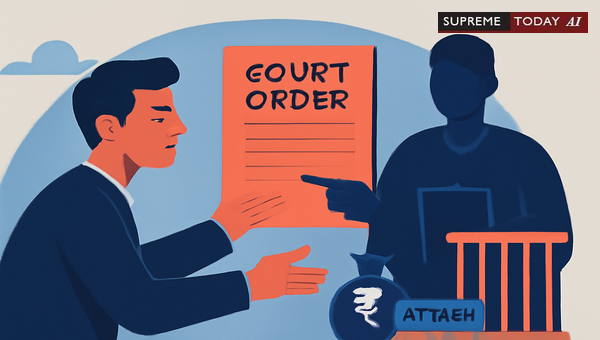
Can Disobeying Document Production Orders Lead to Contempt?
In the high-stakes world of litigation, court orders are not mere suggestions—they are binding directives. Imagine a scenario where a party is ordered to produce critical documents, yet fails to comply. Whether disobedience of an order for the production of documents can lead to is a pressing question for litigants, businesses, and legal professionals alike. This blog delves into the legal framework, consequences, and real-world case examples, drawing from established precedents under the .
While this post provides general insights based on judicial interpretations, it is not legal advice. Consult a qualified attorney for advice tailored to your situation.
The Legal Framework: Court Orders and Their Enforcement
Court orders, including those for the production of documents under or injunctions under , must be obeyed. Disobedience can trigger a cascade of remedies designed to enforce compliance or punish defiance. Primarily, courts employ like and , alongside for wilful breaches. 2021 5 Supreme 321
As per Rule 2A, consequences for disobedience or breach of injunction include attachment as a coercive tool and detention as punishment for deliberate non-compliance. 1998 7 Supreme 85 The attachment compels obedience and cannot persist beyond one year, while detention targets . 2021 5 Supreme 321
Key Consequences of Non-Compliance
1. and Civil Imprisonment
When a party disobeys an order, courts may first attach property to pressure compliance. If disobedience continues and is deemed wilful, follows. This is punitive, not reformative. 2021 5 Supreme 321 1998 7 Supreme 85
- Attachment: Coercive, aimed at enforcement.
- Detention: For deliberate breaches, up to six months under Rule 2A.
Courts distinguish enforcement from punishment: the former secures compliance, the latter penalizes contempt. 2007 0 Supreme(SC) 352
2. for
Not every lapse invites contempt. —deliberate conduct with knowledge of the order and intent to flout it—attracts penalties under the , including fines up to ₹2,000 and simple imprisonment up to six months. 2007 0 Supreme(SC) 352 1999 7 Supreme 382
Courts invoke contempt cautiously, requiring proof beyond doubt. Mere inadvertence or genuine inability typically spares parties. 2007 0 Supreme(SC) 352 As one ruling notes, , proven beyond doubt, attracts and penalties. 2007 0 Supreme(SC) 352
Case Studies: When Contempt Sticks (or Doesn't)
Real cases illustrate the threshold for contempt, especially in document production or injunction contexts.
In a matter, plaintiffs alleged of an injunction against construction post-fire damage. The court dismissed contempt, finding no specific evidence of willful disobedience by the , which had issued sealing orders. 2023 0 Supreme(Del) 5738 This underscores that proactive steps toward compliance can avert contempt.
Contrast this with a case of police inaction: Despite a civil court's protection order, respondents stole the petitioner's crop. The court directed crime registration and a departmental inquiry, deeming it apparent disobedience. 2019 0 Supreme(Bom) 1281 Here, failure to enforce enabled violation, mirroring risks in document non-production.
Another instance involved IAS cadre transfers. The court found no contempt where representations were considered amid shortages and pandemic strains, accepting an apology for any unintentional breach. 2021 0 Supreme(Del) 611 It emphasized, Whether contemnor is guilty of intentional and wilful violation... even to constitute a .
Persistent defiance drew harsher penalties elsewhere. In a public interest litigation, officials ignoring a construction halt order faced civil prison (15 days to two months) and fines (₹2,000 each). The court lambasted, continued with and completed construction... in open defiance. 2015 0 Supreme(AP) 338 Similarly, a district official fined ₹1,116 for inaction on road restoration showed courts' intolerance for officials treating orders lightly. 2016 0 Supreme(AP) 102
In motor vehicles scheme enforcement, Supreme Court threatened contempt against state transport heads for international disobedience, highlighting public interest stakes. 2011 0 Supreme(UK) 224
These examples reveal: Contempt hinges on wilfulness. Passive neglect or overt flouting both qualify if deliberate. 2016 0 Supreme(AP) 102
Nature of Penalties and Alternatives
Penalties vary:- Fines: Often first resort, without imprisonment for lesser breaches. 1979 0 Supreme(SC) 233- Imprisonment: For contumacious conduct. 2007 0 Supreme(SC) 352- Costs and Remedial Orders: Direct compliance or damages. 2025 0 Supreme(SC) 1588
Courts prefer remediation over incarceration, exercising discretion for ambiguities or misunderstandings. 1961 0 Supreme(SC) 388 Apologies can mitigate, as in cadre cases. 1983 0 Supreme(Ker) 61
Exceptions and Defenses
Not all non-compliance equals contempt:- Genuine inability or misunderstanding: No wilful intent. 2007 0 Supreme(SC) 352- Ambiguous orders: Require clear communication. 1961 0 Supreme(SC) 388- Policy or institutional constraints: Scrutinized, e.g., government shortages. 1983 0 Supreme(Ker) 61
Practical Recommendations
To avoid pitfalls:- Ensure clarity: Seek interpretations if orders seem vague.- Document compliance efforts: Evidence proactive steps. 2023 0 Supreme(Del) 5738- Act swiftly: Delays signal wilfulness.- Seek legal counsel: Distinguish enforcement from contempt paths.
Courts advise caution: Courts should exercise caution and require clear proof of before imposing contempt sanctions.
Key Takeaways
Disobeying document production orders may lead to contempt if wilful, but courts prioritize coercion (attachment, detention) before penalties. 2021 5 Supreme 321 Distinguish inadvertent slips from deliberate defiance—proof is key. By integrating precedents like those under Rule 2A, parties can navigate risks effectively.
Stay compliant to uphold justice. For specific guidance, consult a lawyer.
References:1. 2021 5 Supreme 321: Attachment and civil imprisonment.2. 1998 7 Supreme 85: Coercive vs. punitive measures.3. 2007 0 Supreme(SC) 352: and contempt.4. 1979 0 Supreme(SC) 233: Fine without imprisonment.5. 2025 0 Supreme(SC) 1588: Costs and remedies.6. 2023 0 Supreme(Del) 5738, 2019 0 Supreme(Bom) 1281, etc.: Case insights.
#ContemptOfCourt, #CourtOrderCompliance, #LegalIndia












