


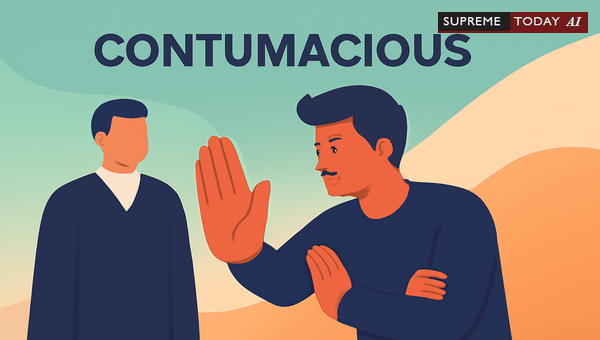
Meaning in Law: Full Legal Guide
In the high-stakes world of legal proceedings, certain terms carry significant weight. Imagine a party blatantly ignoring a court order—not by accident, but with deliberate defiance. This is where the term comes into play. But what does really mean in a legal context? If you've ever wondered about the meaning of , especially in relation to court authority and contempt, you're in the right place.
This comprehensive guide breaks down the definition, legal interpretations, real-world applications, and consequences. Drawing from authoritative dictionaries and case law, we'll explore how courts view conduct and why proving intent is crucial. Whether you're a litigant, legal professional, or simply curious, understanding this term can help navigate courtroom dynamics effectively.
Definition of
The term refers to conduct that is willfully disobedient or to authority, particularly in the context of court orders. It is commonly associated with . Legally, it describes behavior that shows stubborn defiance rather than mere oversight.
Key Dictionary Definitions
- Black's Law Dictionary: Wilfully stubborn and disobedient conduct commonly punishable as . 1998 0 Supreme(Raj) 1211
- Oxford Dictionary: Obstinately disobedient to authority; stubbornly perverse, to the summons or orders of a court.
- Webster's Dictionary: Perverse in resisting authority; stubbornly disobedient, rebellious, irreconcilable. 1998 0 Supreme(Raj) 1211
These definitions highlight a core element: against judicial directives, distinguishing it from accidental non-compliance.
Conduct in Legal Proceedings
In courtrooms, is often used interchangeably with wilful or deliberate. Courts emphasize that it requires more than negligence—it demands proof of intentionality. For instance, mere disobedience may not qualify; there must be a willingness to defy the order. 2005 0 Supreme(Del) 1001 2014 1 Supreme 406
- Synonymity with Wilful: Legal precedents note that behavior indicates deliberate choice, not oversight. 1981 0 Supreme(HP) 36 1980 0 Supreme(Raj) 412
- Element of Willingness: Acts are only if they reflect a conscious decision to disregard authority. Without clear intent, courts may hesitate to label conduct as such. 2014 1 Supreme 406 1961 0 Supreme(Cal) 47
This threshold protects parties from harsh penalties for unintentional errors, ensuring fairness in proceedings.
Real-World Applications and Case Examples
Courts frequently invoke in contempt rulings. Here's how it plays out:
and Penalties
acts can lead to contempt findings, resulting in sanctions like fines, imprisonment, dismissal of applications, or costs. For example:- Failure to comply with court conditions or breach undertakings is often deemed , prompting dismissal and cost imposition. 2021 0 Supreme(Del) 804 2023 0 Supreme(Del) 109- The conduct of the defendant is woeful, deliberate and . This observation in underscores summary proceedings for such guilt, allowing immediate punishment like prison. 2021 0 Supreme(Bom) 283 2016 0 Supreme(Bom) 1129- In another instance, conduct on the part of the plaintiff is thus evident, tied to non-disclosure of fund usage post-sale. 2018 0 Supreme(Ker) 186
Judicial Interpretations
Judges require unambiguous evidence of willfulness:- This conduct, say the defendants, is also , referring to obtaining interim orders under false pretenses. 2009 0 Supreme(Del) 1012- Contempt demands or obstruction to law, requiring a clear demonstration of willingness and deliberate defiance. 2024 0 Supreme(Telangana) 275- Breach of undertakings, if wilfully and contumaciously, constitutes contempt. 2023 0 Supreme(Del) 483- Mere disobedience isn't enough; the element of willingness or conduct is essential. 2023 0 Supreme(Del) 2447
Additional cases reinforce this:- Courts nullify gains from acts. 2023 0 Supreme(Chh) 267- Defendants liable for wilful and contempt face punishment. 2023 0 Supreme(Del) 109- Only when conduct is wilful or can contempt proceedings be justified. 2023 0 Supreme(Cal) 916- Civil contempt involves or breach of court undertakings. 2023 0 Supreme(Del) 931- Defying injunctions wilfully, like continued sales, is punishable. 2023 Supreme(Online)(DEL) 260
These examples illustrate how underpins contempt, emphasizing judicial authority.
Distinguishing from Other Misconduct
Not all non-compliance is . Courts differentiate:
| Type of Conduct | Key Characteristics | ? ||-----------------|---------------------|---------------|| Negligence | Accidental oversight | Typically no || | Intentional defiance | Yes || | Obstinate resistance to authority | Yes, with willingness proven |
This table highlights the intentionality bar, as seen in rulings requiring clear demonstration of deliberate defiance.
Recommendations for Legal Practice
When facing or alleging conduct:- Prove Intent: Focus on evidence showing deliberate choice. 2014 1 Supreme 406- Counter Claims: Distinguish negligence from willfulness to avoid sanctions.- Leverage Authorities: Cite dictionaries and precedents like Black's or cases for robust arguments.- Seek Compliance: Parties should document efforts to obey orders, mitigating contumacy risks.
Key Takeaways
- conduct means , to court orders, often leading to contempt. 1998 0 Supreme(Raj) 1211
- It requires proven intentionality, beyond mere error. 2005 0 Supreme(Del) 1001
- Common in cases of breached undertakings or false statements. 2021 0 Supreme(Bom) 283
- Consequences include penalties, dismissals, and imprisonment. 2023 0 Supreme(Del) 109
- Courts protect against overreach by demanding clear willfulness. 1961 0 Supreme(Cal) 47
In summary, understanding empowers better navigation of legal challenges. It signifies not just disobedience, but a defiant attitude undermining justice. This analysis draws from established sources, but legal outcomes vary by jurisdiction and facts.
Disclaimer: This post provides general information only and is not legal advice. Consult a qualified attorney for your specific situation.
#Contumacious #ContemptOfCourt #LegalTerms












