


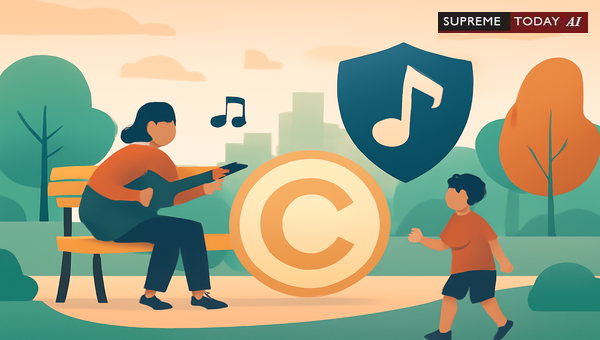
Legal Risks of Playing Copyrighted Songs in Children's Parks
Imagine a lively children's park filled with laughter, swings, and your favorite tunes playing in the background to entertain the kids. Sounds perfect, right? But what if those tunes are copyrighted songs played without permission? This seemingly innocent act could expose park management to serious legal trouble under India's Copyright Act. In this post, we dive into the legal consequences of playing copyrighted songs in a children's park, breaking down key provisions, potential liabilities, and practical steps to stay compliant.
Whether you're a park operator, event organizer, or local authority, understanding these risks is crucial. We'll cover relevant laws, real-world implications, exceptions, and insights from legal precedents—all while emphasizing that this is general information, not specific legal advice. Always consult a qualified attorney for your situation.
Understanding the Core Issue: of Copyrighted Music
The question at hand is straightforward: What are the legal consequences of playing songs which are copyrighted in a children's park? At its heart, this involves through unauthorized .
Under the , playing music in a public space like a children's park qualifies as a . Copyright owners hold exclusive rights to authorize such uses. Without a license, this can trigger infringement claims. As noted in legal analysis, Under of the Copyright Act, unauthorized use of copyrighted material constitutes an offense. This includes playing music without the necessary permissions or licenses 2019 0 Supreme(HP) 1428.
further reinforces penalties for such infringements, particularly in public settings 2019 0 Supreme(HP) 1428. Parks, even those dedicated to children, aren't exempt just because they're recreational— they're public spaces where crowds gather.
Key Legal Provisions Governing Music in Public Spaces
1. (Sections 51 and 63)
Section 51 defines infringement as doing any act that the copyright owner has exclusive rights over, without permission. Publicly playing songs falls squarely here. makes knowing infringement a criminal offense, punishable by imprisonment up to three years and fines 2019 0 Supreme(HP) 1428.
2. Rights
The act of playing music in a public space is classified as a . The owner of the copyright has exclusive rights to authorize such performances 2016 0 Supreme(Del) 3675. If a park blasts popular tracks from Bollywood hits or international artists without clearance, it's infringing 2016 0 Supreme(Del) 3675.
This extends to under . In a case involving a restaurant, the court held: The exploitation of the performances of the members of the Plaintiff by the Defendant by playing the said performances in its bar and restaurant without obtaining the Performers Rights Clearance Certificate thus constitutes an infringement of the R3 of the members of the Plaintiff Society 2016 0 Supreme(Del) 2983. The principle applies similarly to parks—playing recorded performances without royalties violates these rights 2016 0 Supreme(Del) 2983.
3. Exceptions and (Section 52)
Does save the day? Not usually. outlines certain exceptions where specific acts do not constitute infringement. However, these exceptions are limited and typically do not cover public performances in commercial or recreational settings like parks 2023 0 Supreme(Del) 4455.
Exceptions might apply to private, educational, or incidental uses, but a park's loudspeaker setup for entertainment doesn't qualify. Courts scrutinize factors like purpose, amount used, and market impact—public amusement rarely passes muster 2023 0 Supreme(Del) 4455.
Potential Legal Consequences and Liabilities
If caught, parks face multifaceted risks:
: Copyright holders (or societies like /) can sue for damages, unpaid royalties, and profits gained from the music. If a children’s park plays copyrighted songs without permission, it may face legal action from the copyright holder for infringement. This could include demands for payment of royalties or damages for unauthorized use 2016 0 Supreme(Del) 3675.
Injunctions: Courts may issue , halting music playback immediately 2016 0 Supreme(Del) 3675.
: Under , first-time offenders risk 6 months to 3 years imprisonment plus fines starting at ₹50,000. Repeat offenses escalate 2019 0 Supreme(HP) 1428.
Additional Liabilities: Management or DJs could be personally liable if they knowingly infringe.
Real-world parallels exist beyond parks. In a village celebration case, playing political songs led to conflict, underscoring how music in public can escalate legally 2012 0 Supreme(Mad) 4721. While not directly copyright-focused, it highlights public playback sensitivities.
Children's parks have appeared in other contexts, like Guindy Children's Park in wildlife notices or recreational disputes, but copyright remains a standalone risk 2022 Supreme(Online)(Mad) 77500 2019 0 Supreme(Bom) 111. In one park development case, courts balanced public green spaces against other intrusions, stressing evidence-based decisions—but music licensing demands proactive compliance, not apprehension 2019 0 Supreme(Bom) 111.
Defenses and Mitigation Strategies
Possible defenses include:- Proving a license existed (e.g., from ).- Arguing non-commercial, incidental use—though weak for parks 2023 0 Supreme(Del) 4455.
Stronger approach: Prevention.
Recommendations for Compliance
To avoid pitfalls:
Secure Licenses: Contact performing rights organizations (e.g., for compositions, for recordings) for licenses. Tariffs are based on capacity and frequency.
Use : Opt for public domain, Creative Commons, or licensed stock music.
Consult Experts: Engaging with a legal expert specializing in can help navigate the complexities of copyright compliance and mitigate potential risks.
Policies and Training: Implement guidelines: Establish clear policies regarding the use of music in public spaces to ensure compliance with copyright laws and avoid legal disputes.
Raids by rights societies are common in India—cafes, gyms, and events frequently face notices. Parks aren't immune.
Insights from Broader Legal Contexts
U.S. cases offer comparative caution. In music similarity disputes, courts note: In the field of popular songs, many, if not most, compositions bear some similarity to prior songs 2024 Supreme(US)(ca2) 25. But infringement hinges on unauthorized use, not just similarity—relevant for Indian parks playing hits.
Domestically, restaurant suits like the decree reinforce: Playing of songs by the Defendant in its restaurant without payment of royalty to the Plaintiff is a violation of the R3 of the performers 2016 0 Supreme(Del) 2983. Scale this to parks, and risks amplify with public visibility.
Conclusion and Key Takeaways
Playing copyrighted songs in a children's park without licenses may lead to significant legal consequences, from fines and injunctions to criminal charges. Proactive licensing ensures joyful, lawful playtime.
Key Takeaways:- requires explicit permission.- Exceptions rarely apply to parks.- Obtain licenses from / to comply.- Consult IP lawyers for tailored advice.
Parks are community treasures—keep them litigation-free. This overview draws from provisions like Sections 52, 63, and 68A 2019 0 Supreme(HP) 1428 2016 0 Supreme(Del) 3675 2023 0 Supreme(Del) 4455, plus precedents 2016 0 Supreme(Del) 2983. For specifics, seek professional counsel.
References: 2019 0 Supreme(HP) 1428 2016 0 Supreme(Del) 3675 2023 0 Supreme(Del) 4455 2016 0 Supreme(Del) 2983 2023 0 Supreme(Del) 4455 2019 0 Supreme(Bom) 111
#CopyrightLawIndia, #MusicLicensing, #PublicPerformanceRights















