


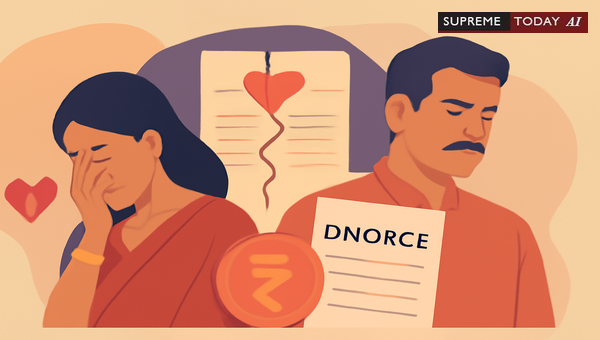
Husband Can't Benefit from Own Wrongs in Divorce: Key Indian Law Insights
In the realm of Indian family law, a fundamental principle stands as a bulwark against injustice: a . This doctrine, deeply rooted in equity, ensures that individuals seeking legal remedies—such as divorce—do not profit from their misconduct. The phrase encapsulates numerous judicial decisions under the , where courts have barred husbands from securing relief when their actions precipitated the marital discord.
This blog delves into this principle, its applications in divorce proceedings, supporting precedents, and broader implications. Whether you're navigating a family dispute or seeking legal clarity, understanding this concept can illuminate court expectations. Note: This is general information; consult a qualified lawyer for personalized advice.
Overview of the 'No Benefit from Own Wrongs' Doctrine
The principle originates from and is enshrined in . It mandates courts to deny relief if the petitioner's conduct has contributed to the matrimonial breakdown. Typically applied in cases of cruelty, desertion, or dowry demands, it prevents opportunistic claims.
Courts scrutinize both parties' behavior meticulously. As one ruling states, A party cannot be allowed to take any benefit of his own wrongs. 2021 0 Supreme(Del) 2057 This extends beyond family law but is pivotal in matrimonial matters.
Key Applications in Divorce and Separation Cases
Cruelty and Misconduct
Husbands alleging cruelty by wives often face rejection if evidence reveals their own cruelty. In a notable case, the ruled that the husband, guilty of cruelty, cannot be allowed to take benefit of his own wrongs. 1980 0 Supreme(Del) 9 This precedent underscores that self-inflicted wounds bar divorce petitions.
Similarly, where a husband's cruelty followed dowry demands, courts denied relief under . The established misconduct precluded benefiting from outcomes. 1995 0 Supreme(P&H) 361
Desertion claims falter if the husband's actions compel the wife to leave. Courts have held that creating circumstances forcing separation equates to by the petitioner. This was evident in instances where husbands' behavior drove wives to seek refuge elsewhere. 1996 0 Supreme(P&H) 1387 1993 0 Supreme(P&H) 1194
and Desertion
A deserting husband cannot later petition for divorce. Relief under Section 23(1)(a) is withheld, as it would reward wrongful abandonment. 2001 0 Supreme(P&H) 801
Broader Judicial Interpretations and Related Scenarios
This doctrine transcends strict family law, reinforcing fairness across litigation. For instance, in maintenance disputes, husbands cannot evade obligations by citing their faults: The petitioner cannot take advantage of his wrongs and argue that he should not be directed to pay maintenance. 2024 Supreme(Online)(DEL) 8907 Echoing wisdom from Shamima Farooqui, it affirms a husband's duty to support his wife, regardless of separation causes.
Conversely, the principle applies bilaterally. In one case, The wife cannot be allowed to take undue benefit of her own wrongs and rather the present petition is nothing but a sweet revenge by the wife.
This highlights courts' balanced scrutiny.
In divorce cruelty allegations, false cases or preventive police actions (under ) do not inherently prove cruelty. Moreover, —such as resuming cohabitation post-misconduct—nullifies prior claims. A wife aborting without consent, followed by two years of harmonious living, condoned any cruelty, barring the husband's petition. 2015 0 Supreme(P&H) 259
Even in non-matrimonial contexts, like landlord-tenant disputes, post-lease expiry cannot claim extensions via unilateral rent deposits. A party cannot be allowed to take any benefit of his own wrongs. 2021 0 Supreme(Del) 2057 Such parallels emphasize the doctrine's universality.
Practical Implications for Litigants
When pursuing divorce or separation:- Gather Comprehensive Evidence: Document both parties' conduct to counter 'own wrongs' defenses.- Anticipate Scrutiny: Alleging cruelty? Prove you're blameless. Claiming desertion? Show it wasn't self-induced.- Consider Alternatives: may precede divorce, but misconduct taints progression.
Recommendations include thorough fact-finding. When representing clients, it is crucial to gather comprehensive evidence regarding both parties' conduct. Courts also caution against litigation abuse: No litigant can derive benefit from the mere pendency of a case in a court of law... Litigation should not be permitted to turn into a fruitful industry. 2015 0 Supreme(Guj) 205 2013 0 Supreme(P&H) 1195 2012 0 Supreme(Del) 812
Conclusion and Key Takeaways
The 'no benefit from own wrongs' principle fortifies Indian family law's equity. Courts vigilantly prevent parties—husbands included—from leveraging misconduct for divorce or relief. Precedents like those under cruelty, dowry, and desertion affirm this. 1980 0 Supreme(Del) 9 1995 0 Supreme(P&H) 361 1996 0 Supreme(P&H) 1387 1993 0 Supreme(P&H) 1194 2001 0 Supreme(P&H) 801
Key Takeaways:- Misconduct like cruelty or dowry demands disqualifies relief.- by the petitioner voids claims.- Evidence of conduct is paramount; heals past faults.- The doctrine promotes fairness across legal domains.
This overview draws from established cases but is not exhaustive. Family law evolves; professional counsel is essential for your situation. Stay informed, act justly.
References:- 1980 0 Supreme(Del) 9- 1995 0 Supreme(P&H) 361- 1996 0 Supreme(P&H) 1387- 1993 0 Supreme(P&H) 1194- 2001 0 Supreme(P&H) 801-
- 2024 Supreme(Online)(DEL) 8907- 2021 0 Supreme(Del) 2057- 2015 0 Supreme(Guj) 205- 2015 0 Supreme(P&H) 259- 2013 0 Supreme(P&H) 1195- 2012 0 Supreme(Del) 812 #FamilyLawIndia, #DivorceLaw, #HinduMarriageAct












