


When Can Courts Bar Parties from Testifying in Civil Cases?
In the realm of , parties generally enjoy the right to appear as witnesses in their own cases, allowing them to provide under . However, this right is not absolute. Courts possess inherent discretion to disallow a party from testifying under specific circumstances, particularly when their conduct undermines judicial authority, such as in .
Under what circumstances can a court disallow a party to appear as a witness in his own case in a civil case? This question strikes at the balance between a party's evidentiary rights and the court's need to maintain order and integrity. Typically, disallowance occurs when a party is charged as a , where the court may bar them from being heard or participating fully. This article examines key legal principles, drawing from judicial precedents on , knowledge requirements, and third-party involvement.
Disclaimer: This post offers general legal information based on reported cases and is not a substitute for professional legal advice. Consult a qualified attorney for advice tailored to your situation.
The Court's Discretion in Disallowing Testimony
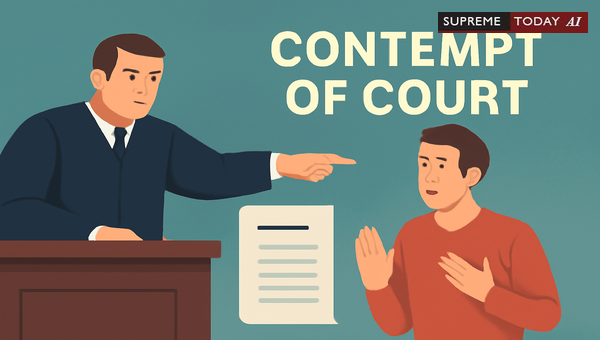
Courts wield significant discretion to regulate proceedings, including restricting a party's ability to testify. A prime example arises in contempt matters. As observed in judicial rulings, It lies within the discretion of the Court to tell the charged with having committed contempt of Court that he will not be heard and would not be allowed particip... 2024 0 Supreme(Guj) 1302. This underscores that persistent contemptuous conduct can lead to exclusion from evidentiary participation, even in the party's own civil case.
Such measures prevent interference with justice. For instance, violent behavior or contumacious actions during mediation or hearings may render a party liable for contempt, justifying restrictions on their testimony 2023 0 Supreme(Mad) 582. Evidence in contempt applications may proceed without the 's input if deemed necessary, prioritizing orderly adjudication.
Contempt of Court: Foundation for Disallowance
often originate from civil cases, triggered by disobedience of court orders or undertakings. A party becomes vulnerable to being barred as a witness when held in contempt. However, establishing contempt requires proof of with knowledge of the order.
Knowledge from an Authorized or Authentic Source
The has clarified that hinges on knowledge of the order from a reliable source. The appellant's refusal to act on the telegram did not amount to contempt of court as he had no knowledge of the 's order from an authorized or authentic source 1961 0 Supreme(SC) 107. A mere telegram from an unknown sender, unsigned and unauthenticated, does not suffice—parties are entitled to ignore unverified communications.
Similarly, disobedience of a court order without knowledge of the order from an authorized or authentic source does not amount to contempt of court 1961 0 Supreme(SC) 107. This principle protects against unwarranted contempt findings, ensuring intent is proven.
Parties vs. Third Parties: Differing Liability Thresholds
For direct parties to the suit, knowledge is typically presumed upon service. However, third parties face a higher bar. A third party will also be liable if he knowingly assists in the breach, that is to say if knowing the terms of the he willfully assists the person to whom it was directed to disobey it 2017 1 Supreme 145. Without authentic knowledge, third parties cannot be held liable, even if their actions inadvertently aid a breach 1961 0 Supreme(SC) 107.
Courts reject arguments that non-parties are automatically immune: mere because certain Respondents were not parties to the original Suit, it cannot be accepted that they cannot be held liable for contempt and that a party who assists and abets the violation of the Order is also liable for Contempt of Court 2024 0 Supreme(Bom) 911. Yet, consistent defenses succeed when awareness is absent, as in cases where third parties created rights bona fide without court order knowledge 2023 0 Supreme(Kar) 11 2023 0 Supreme(Del) 483.
Key Elements of
To trigger contempt—and potential disallowance of testimony—courts assess:
- Awareness Proof: Orders served on lawyers may not impute knowledge to the litigant unless directly shown. Unless it is shown that the litigant was made aware of the order served on his lawyer it may not be possible to hold that despite the knowledge of the order he wilfully decided to commi... 2024 0 Supreme(Chh) 129.
- Intent and Conduct: Mere breach without wilfulness, or due to bonafide reasons, does not constitute contempt 2023 0 Supreme(Kar) 11.
- Aiding or Abetting: Third parties may also be liable for contempt if he 'knowing of an , the defendant in breaking it' 2020 0 Supreme(Cal) 35.
Exceptions abound: Unverified notifications or unawareness shield from liability 2023 0 Supreme(Telangana) 350, and compliance with orders negates claims 2022 0 Supreme(AP) 7.
Integrating Third-Party Perspectives
Third parties often enter civil disputes peripherally, such as through property transactions or undertakings. Courts emphasize caution: Respondents not parties to the suit and without undertakings cannot be held liable absent knowledge 2023 0 Supreme(Del) 483. Similarly, appointments subject to writ outcomes do not breach if compliant 2023 0 Supreme(AP) 197.
Third Parties' Liability and Awareness - Lack of awareness of orders or undertakings absolves third parties, as seen in Mehrotra where non-parties escaped contempt 2023 0 Supreme(Del) 483.
Knowledge as Prerequisite - demands proven awareness; ignorance from unverified sources is a valid defense 2024 0 Supreme(Chh) 129.
These principles ensure fairness, preventing overreach in contempt enforcement.
Practical Implications and Recommendations
- For Litigants: Verify court orders through official channels before acting. Unauthenticated notices risk no liability but ignoring authentic ones invites contempt—and potential testimony bans.
- For Courts: Prove knowledge rigorously, especially against third parties, before imposing sanctions like barring witnesses.
- Legal Practitioners: Advise clients on authenticating communications and the risks of aiding breaches unknowingly.
In practice, contempt petitions may close with costs if compliance is shown 2022 0 Supreme(Mad) 1025, reinforcing measured judicial responses.
Conclusion and Key Takeaways
Courts may disallow a party from appearing as a witness in their civil case primarily when charged with contempt, exercising discretion to bar contemnors from being heard 2024 0 Supreme(Guj) 1302. Liability, for parties or third parties alike, requires knowledge of the order from an authorized source and wilful breach 1961 0 Supreme(SC) 107 2017 1 Supreme 145. Without these, actions—even if seemingly obstructive—do not attract contempt.
Key Takeaways:- Knowledge from authentic sources is essential for contempt 1961 0 Supreme(SC) 107.- Third parties liable only if knowingly aiding breaches 2017 1 Supreme 145 2024 0 Supreme(Bom) 911.- Courts' discretion prevents abuse but upholds authority.- Always verify orders to avoid unintended liability.
Understanding these nuances empowers better navigation of civil disputes. Stay informed, but seek expert counsel for your matters.
References
- 1961 0 Supreme(SC) 107: Knowledge from authentic source required.
- 2017 1 Supreme 145: Third-party aiding liability.
- 2024 0 Supreme(Bom) 911: Abettors liable regardless of party status.
- 2024 0 Supreme(Guj) 1302: Discretion to bar contemnors.
- Additional precedents: 2023 0 Supreme(Del) 483, 2023 0 Supreme(Kar) 11, 2024 0 Supreme(Chh) 129, 2020 0 Supreme(Cal) 35.












