


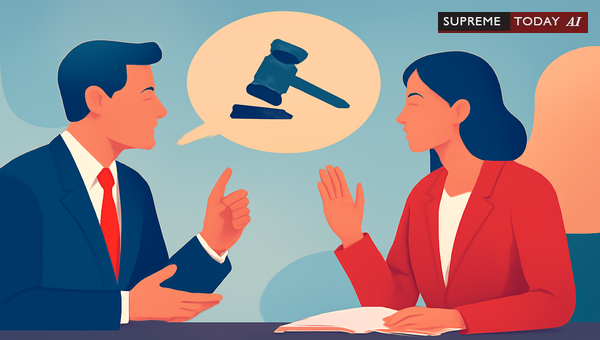
The : Mastering Persuasion in the Legal Arena
In the high-stakes world of law, where cases can hinge on a single well-crafted point, the stands as a cornerstone of effective advocacy. Whether you're a lawyer preparing for trial, a law student dissecting precedents, or someone curious about courtroom dynamics, understanding this skill is essential. But what exactly is the ? This blog dives deep into its definition, key elements, and practical applications, drawing from constitutional law battles and patent disputes to illustrate its power.
Note: This post provides general information for educational purposes and is not legal advice. Consult a qualified attorney for specific cases.
Defining the in Legal Context
The in the legal context refers to the skillful presentation and structuring of legal reasoning and evidence to persuade a court or tribunal. It involves weaving constitutional provisions, case law, and logical reasoning to champion a client's position. This isn't mere debate; it's a strategic craft honed through precision and foresight.
For instance, arguments often pivot on specific constitutional articles. Cases have spotlighted , 21, 14, 31(2), 71(1), 329(b), 15, and 16 as flashpoints in pivotal disputes 1980 0 Supreme(SC) 274 1985 0 Supreme(SC) 401 1952 0 Supreme(SC) 4 1960 0 Supreme(SC) 326. These provisions form the backbone of persuasive narratives, demanding interpreters who can navigate their nuances.
Key Elements of Crafting Compelling Legal Arguments
Effective legal arguments share core components that elevate them from routine submissions to persuasive masterpieces. Here's a breakdown:
1. Identification of Relevant Provisions
Arguments thrive on pinpointing constitutional or statutory hooks. In one scenario, the distinction between was leveraged to debate the scope of electoral disputes 1952 0 Supreme(SC) 4. Similarly, courts have scrutinized language in , questioning whether it demands merely some semblance of procedure, howsoever arbitrary or fanciful, or a fair and one 1978 0 Supreme(SC) 29.
2. Logical Structure
A methodical approach dissects issues systematically. 's three-point attack exemplifies this, methodically unraveling complexities 1980 0 Supreme(SC) 274. Courts appreciate this clarity, as seen in appeals where arguments made were principally in line with the arguments advanced in the appeal 2015 0 Supreme(Del) 1724.
3. Anticipating and Addressing Counterarguments
True mastery lies in preempting opposition. Documents reveal challenges to arguments rooted in constitutional language, with distinctions between articles fiercely debated 1952 0 Supreme(SC) 4 1960 0 Supreme(SC) 326. In practice, the respondent recanvassed the arguments relating to the '' and why it is not applicable by reference to the drafting history of
, showcasing proactive rebuttal.
4. Leveraging Judicial Precedents
Citing binding case law fortifies positions. The Constitution Bench's ruling in rebuffed claims under , serving as a bulwark in subsequent arguments 1985 0 Supreme(SC) 401. This precedent underscores how history informs persuasion.
5. Nuanced Interpretation of Language
Word choice in laws can sway outcomes. Debates over personal liberty under —extending to rights like travel abroad—highlight interpretive finesse 1978 0 Supreme(SC) 29.
The in Specialized Fields: Patent Law Insights
Beyond constitutional arenas, the art shines in patent litigation, where technical and procedural precision reigns. Consider , which assess if prior references qualify as relevant . Sanofi contested Mylan's reliance on de Gennes, arguing the Board's analysis lacked substantial evidence 2023 Supreme(US)(cafc) 92. Proper framework and support are non-negotiable.
Procedural mastery is equally vital. Arguments must evolve responsively: initial petitions, patent owner responses, and replies without new theories. Voice Tech's points, raised early, endured on appeal despite omission in rehearings 2024 Supreme(US)(cafc) 82 2024 Supreme(US)(cafc) 81. Replies expand existing contentions, as affirmed: petitioners can respond to patent owner responses or Board decisions without needing to anticipate all arguments initially 2023 Supreme(US)(cafc) 183.
demand evidence from references, artisan knowledge, or problem nature. Boards evaluate implicit motivations and success expectations 2023 Supreme(US)(cafc) 176. Forfeiture looms if arguments stray procedurally, yet initial submissions often suffice 2024 Supreme(US)(cafc) 82 2024 Supreme(US)(cafc) 81.
In Indian contexts, arguments feature prominently: Upon hearing the arguments of the matter underwent adjournments to enable the learned counsel for the petitioners to advance arguments 2023 Supreme(Online)(MANIPUR) 214. Or, We have heard the arguments and perused notes of arguments presented
. Even dismissals note: The arguments are advanced just for the sake of arguments
.
Practical Strategies from Courtroom Realities
Real cases reveal timeless tactics:- Oral and Written Synergy: on behalf of the appellant were advanced by ... on behalf of the first respondent were advanced by 2025 Supreme(Online)(Mad) 69031. Balance both for impact.- Narrow Focus: Counsel may restrict his arguments only on two aspects for potency 1991 0 Supreme(Del) 184.- Evidence Integration: Hospital records bolstered positions after arguments
.
In patents, Parus challenged qualification, arguing the Board ignored antedating evidence 2023 Supreme(US)(cafc) 119. These vignettes stress timeliness and support.
Conclusion and Key Takeaways
The is a blend of deep constitutional knowledge, logical prowess, counter-strategy, precedents, and linguistic acuity. From debates 1978 0 Supreme(SC) 29 to patent obviousness clashes 2023 Supreme(US)(cafc) 176, it shapes justice.
Key Recommendations:- Master relevant articles and interpretations.- Structure arguments logically.- Anticipate counters with precedents.- Time submissions responsively.- Support with evidence and quotes.
Hone these, and you'll wield persuasion effectively. Stay informed—legal landscapes evolve.
#ArtOfArguments #LegalStrategy #CourtroomPersuasion















