


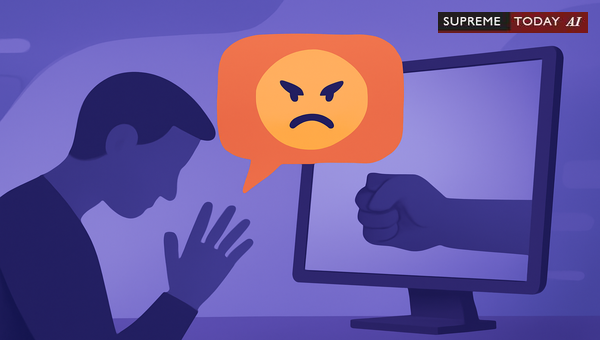
& in Virtual Worlds: Liability Explained
In today's hyper-connected digital age, virtual worlds—think social media, online gaming platforms, and metaverses—have become extensions of our real lives. But what happens when interactions turn hostile? Can threats posted in a chat room or harassing messages in a virtual space lead to criminal liability? The question of Liability for and in Virtual World is increasingly relevant as courts adapt traditional laws to digital realms.
This post breaks down the legal framework under the , key provisions, real-world applications, jurisdictional challenges, and insights from case law. While this provides general information, it's not a substitute for professional legal advice—consult a lawyer for your specific situation.
Overview of the Legal Landscape
The legal framework for and in virtual spaces is evolving rapidly. Traditional provisions in the , such as , apply to online actions because courts recognize that virtual threats can cause real harm, like emotional distress or coerced behavior. 2017 0 Supreme(Del) 2092 2010 0 Supreme(UK) 667
Online platforms amplify the reach of intimidation, making it easier to target victims across borders. However, not every harsh word qualifies as criminal—intent and impact are crucial. 2017 0 Supreme(Del) 2092
Key Legal Provisions: Defined
: What Constitutes ?
Under , occurs when someone threatens another with injury to their person, reputation, or property, with the or force the victim to do (or avoid) something they're legally entitled to. Key elements include:
- : Must be specific enough to instill fear.
- Intent: The perpetrator must aim to alarm or coerce. Mere words without this intent don't suffice, as highlighted in , where the court stressed, mere words without the intention to cause alarm do not constitute . 2017 0 Supreme(Del) 2092 2023 0 Supreme(Mad) 1315
: Punishment for Intimidation
This section prescribes punishment for offenses under Section 503, with enhanced penalties if threats involve death or grievous hurt. In , the court clarified that threats must be real and not merely verbal, considering the full context, including online platforms. 2021 0 Supreme(Mad) 2335
Application in the Virtual World
Virtual actions aren't immune from scrutiny. Courts equate online dissemination of threats to physical acts, establishing liability based on the perpetrator's virtual presence or the victim's location. For example:
- Social media threats: Comments designed to alarm or coerce qualify as intimidation. 2017 0 Supreme(Del) 2092 2023 0 Supreme(Mad) 1315
- Real-world impact: Digital immortality and persistent online presence mean harms linger, as noted in discussions on privacy and public records: Technology has opened the world around us and created a virtual public space. 2022 0 Supreme(Ker) 950
However, a single message often falls short. In a tort context, courts have ruled: A single letter does not constitute actionable or intimidation under , as it cannot establish a persistent course of conduct or unlawful threats.
This principle extends to criminal law, requiring a pattern or clear intent. 2021 0 Supreme(Bom) 1742
Insights from other cases reinforce this: The only averments against the 2nd petitioner is that on through line application, heard her voice of threat, which is not followed with any subsequent act. By no stretch of imagination, it can be said that the offence of made. 2021 0 Supreme(Mad) 1856
Jurisdictional Challenges in Cyberspace
The borderless nature of the internet complicates . Perpetrators and victims may be in different states or countries. Indian courts base on:
- Victim's location where harm is felt.
- Impact of the act, even if initiated elsewhere. 2023 1 Supreme 385
For instance, if a threat posted from abroad alarms an Indian resident, local courts may claim . This mirrors Sri Lankan precedents on intimidation under Penal Code sections, where geographical elements are weighed.
Landmark Case Law and Judicial Insights
This case underscores intent: Virtual or not, threats must demonstrably aim to cause alarm. 2017 0 Supreme(Del) 2092 2023 0 Supreme(Mad) 1315
Emphasizes context: Online platforms don't shield 'verbal' threats if they're coercive. 2021 0 Supreme(Mad) 2335
Additional Precedents
- In a case, courts quashed proceedings for lack of evidence under , noting: The complaint did not disclose the essential elements of the alleged offences. 2021 0 Supreme(Bom) 1742
- Historical nuance: It is undeniable that the terms 'threat', '', and even 'intimidation', are often applied in popular language to utterances which are quite lawful and which give rise to no liability either civil or criminal. 2017 0 Supreme(All) 1854 2017 0 Supreme(All) 1826
These rulings highlight that while virtual is actionable, robust evidence is key.
Beyond Intimidation
often overlaps with intimidation but may invoke other laws like the . In privacy-focused cases, courts balance open justice with rights: Judgments are public records... making them available to public to view through process of a search made online, cannot be found fault with. Yet, protections exist for sensitive matters. 2022 0 Supreme(Ker) 950
Practical Recommendations for Victims
If you're facing virtual intimidation:
- Document everything: Screenshots, timestamps, and communications build evidence of intent and pattern. 2017 0 Supreme(Del) 2092
- File complaints: Approach police under IPC . For cyber elements, invoke IT Act provisions.
- Seek injunctions: Courts may order content removal.
- Awareness: Know your rights—consensual interactions don't retroactively become criminal without deceit. 2021 0 Supreme(Mad) 1856
Perpetrators risk FIRs, but politically motivated complaints can be quashed if lacking merit. 2021 0 Supreme(Bom) 1742
Conclusion and Key Takeaways
Liability for and in virtual worlds falls squarely under IPC provisions, adapted to digital realities. Courts demand proof of intent, real threats, and impact, dismissing isolated or lawful pressures. As technology evolves, so does jurisprudence—victims should document meticulously and seek prompt legal recourse.
Key Takeaways:- Virtual threats = real liability if intent to alarm/coerce exists. 2010 0 Supreme(UK) 667- follows harm's locus.- Single acts rarely suffice; patterns matter.
- Always consult a legal expert.
Stay safe online. References: 2017 0 Supreme(Del) 2092 2010 0 Supreme(UK) 667
2023 1 Supreme 385 2023 0 Supreme(Mad) 1315 2021 0 Supreme(Mad) 2335
2021 0 Supreme(Bom) 1742 2021 0 Supreme(Mad) 1856 2022 0 Supreme(Ker) 950 #OnlineHarassment, #CyberIntimidation, #IPCLaw















