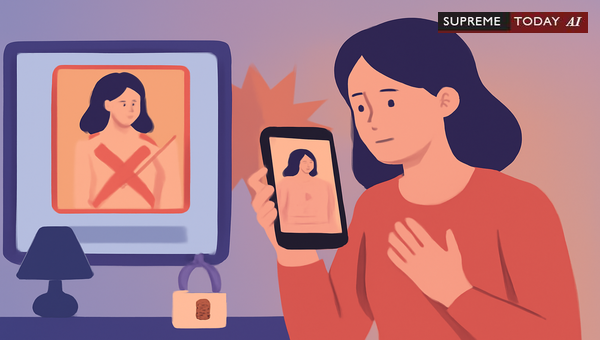
Is Morphing Victim Photos an Offence in India?
In today's digital age, where photo editing tools are readily available, the line between harmless fun and criminal activity can blur quickly. One pressing question arises: Morphing the Victim Photo is an Offence? With social media amplifying the reach of altered images, understanding the legal boundaries is crucial for individuals and businesses alike. This blog post delves into Indian law, particularly the Information Technology (IT) Act, 2000, to clarify when morphing—digitally altering a photo to create obscene or sexually explicit content—and disseminating it crosses into illegal territory.
We'll explore key provisions, landmark cases, exceptions, and practical advice, drawing from judicial precedents. Note: This is general information based on legal interpretations and not specific legal advice. Consult a qualified lawyer for your situation.
Understanding Morphing and Its Legal Implications
Morphing involves using software to superimpose a person's face onto another body, often to fabricate nude or sexually explicit images. While creating such images privately might raise ethical concerns, the real legal trigger is dissemination—publishing, transmitting, or sharing them electronically.
Under Section 67A of the IT Act, publishing or transmitting material containing sexually explicit acts or conduct in electronic form is punishable. The punishment? First conviction: up to 5 years imprisonment and a fine up to ₹10 lakh. Subsequent convictions double the term and fine. This section targets obscene material, including morphed images that depict victims in compromising positions without consent.
Peddi Phani Kumar VS State of A. P. rep. by its Public Prosecutor - Crimes (2015)
As established in legal findings, morphing images to create obscene or nude photographs and transmitting or publishing them is an offence under Section 67A of the IT Act. The Supreme Court in Sharat Babu Digumarti v. Govt. of NCT of Delhi clarified that IT Act provisions like Sections 67, 67A, and 67B form a complete code for electronic record offences, taking precedence over general Indian Penal Code (IPC) provisions when digital transmission is involved.
Peddi Phani Kumar VS State of A. P. rep. by its Public Prosecutor - Crimes (2015)
Key Case Examples Involving Morphed or Edited Photos
Judicial precedents reinforce this stance. In one case, the accused shared morphed nude photographs of the victim, tarnishing her image by circulating them among friends and relatives. This act was deemed an offence under Section 67A. 2025 0 Supreme(Mad) 3433
Another instance highlights photo editing for harassment: The accused had followed the victim girl and took a photo. Furthermore, the accused has edited the photo to portray as though the victim girl is too close with accused. Though POCSO charges didn't apply, it underscores how edited images fuel cyber offences. 2022 Supreme(Online)(MAD) 26374
In a related threat scenario, the petitioner used a selfie photo, threatening to display it with pornographic content before the victim's parents and public, leading to sexual intercourse. This ties into broader cyber misuse patterns under the IT Act.
BONVENCHOR DUMING FERNADIS Vs THE STATE OF KARNATAKA
Even in cases without morphing, sharing obscene photos triggers Section 67: Evidence from the victim, her father, and fiancé proved the offence, with the victim recognizing the accused via Facebook. 2024 0 Supreme(Bom) 773
These examples show courts prioritize victim protection, emphasizing that dissemination shall be considered an offence under this section even if initial capture had consent—but not sharing. 2024 0 Supreme(Cal) 1060
When Does Morphing Become Criminal?
Core Elements of the Offence
- Creation Alone: Mere morphing without sharing may not violate Section 67A, but it's a narrow exception. Intent to disseminate changes this.
- Dissemination: Publishing, emailing, or posting online qualifies as transmission in electronic form.
- Obscene Content: Must depict sexually explicit acts; non-explicit edits might fall under defamation (IPC Section 499) or harassment.
The law protects dignity: Anyone who indulges in a crime of such nature not only does he violate the penal provision of IPC but also the right of equality, right of individual identity. 2019 0 Supreme(Jhk) 1666
Relationship with Other Laws
While IPC sections like 354C (voyeurism) or 509 (insulting modesty) may apply, IT Act prevails for electronic offences. POCSO Act integrates for minors, as seen in cases rejecting morphed photo evidence due to minors' rights. 2025 Supreme(Online)(Mad) 31027
Exceptions and Limitations
Not every case is black-and-white:- Consent: If the victim consents to creation and dissemination, no offence. But revoking consent later criminalizes sharing. 2024 0 Supreme(Cal) 1060- Private Use: No transmission means no Section 67A violation, though storage could invite scrutiny.- Good Faith: Disclosures for legal purposes (e.g., evidence) might qualify, but courts construe narrowly.
In acquittals, lack of proof—like no scientific confirmation of morphing—leads to dismissal, stressing prosecution's burden. 2024 0 Supreme(Bom) 773
Victim Rights and Reporting
Victims face trauma from reputational harm. Courts urge prompt reporting for IT Act investigations. Key recommendations:- Preserve evidence (screenshots, URLs).- Report to cyber cells or police under IT Act.- Seek interim relief like content takedown via courts.
Judgments stress confidentiality: Courts should uphold the strict confidentiality and protection of victims’ identities. Law enforcement must act decisively on morphed obscene images.
Broader societal impact: Such acts scar victims mentally, violating Article 21 rights (life and dignity). 2017 0 Supreme(Guj) 811
Penalties and Prevention Tips
| Offence | Punishment (First Conviction) | Subsequent ||---------|-------------------------------|-------------|| Section 67A | Up to 5 years RI + ₹10L fine | Up to 10 years + ₹10L fine |
Prevention for Individuals/Businesses:- Avoid unauthorized edits; obtain explicit consent.- Platforms: Implement AI detection for deepfakes.- Educate on cyber hygiene.
Conclusion: Protect Dignity in the Digital Era
Morphing a victim’s photograph and disseminating it constitutes an offence under Section 67A of the IT Act. This protects against non-consensual digital abuse, with courts affirming IT Act's primacy. While technology evolves, laws like these safeguard rights—emphasizing respect for individual identity. 2016 0 Supreme(Guj) 1044
Key Takeaways:- Dissemination of morphed obscene images is criminal.- Victims: Report immediately; evidence is key.- Perpetrators: Face severe penalties; consent is paramount.- Stay informed—digital actions have real-world consequences.
For personalized guidance, consult a legal expert. Share your thoughts below—have you encountered similar issues?
References:1. 2025 0 Supreme(Mad) 3433 - Case on morphed photos dissemination.2. 2024 0 Supreme(Cal) 1060 - Consent and dissemination rules.3.
Peddi Phani Kumar VS State of A. P. rep. by its Public Prosecutor - Crimes (2015)
-
Supreme Court on IT Act as complete code.4. Additional cases:
2024 0 Supreme(Bom) 773,
2022 Supreme(Online)(MAD) 26374,
BONVENCHOR DUMING FERNADIS Vs THE STATE OF KARNATAKA
,
2019 0 Supreme(Jhk) 1666,
2017 0 Supreme(Guj) 811
#ITAct67A, #CyberCrimeIndia, #VictimProtection