Searching Case Laws & Precedent on Legal Query.....!
Scanned Judgements…!



Searching Case Laws & Precedent on Legal Query.....!
Scanned Judgements…!
Girvarsingh Bhagwatsingh Devda VS State of Maharashtra - Crimes
"] ["2020 0 Supreme(Bom) 295"]No sources explicitly detail a liquor shop employee signing scene mahazar (panchnama) in a stolen liquor case, nor list verbatim questions; instead, cross-examinations target credibility on shop operations, solo staffing, independent customer visits, recovery procedures (e.g., coins, liquor, keys), witness ignorance, and police influence, often eliciting admissions of inconsistencies or hostility to undermine recoveries linked to theft. Insights highlight challenges to prosecution via solo worker admissions and unverified seizures, common in liquor theft/theft proceeds cases. ["
Girvarsingh Bhagwatsingh Devda VS State of Maharashtra - Crimes
"] ["2020 0 Supreme(Bom) 295"] ["2024 0 Supreme(Raj) 1001"] ["2024 0 Supreme(Pat) 1057"]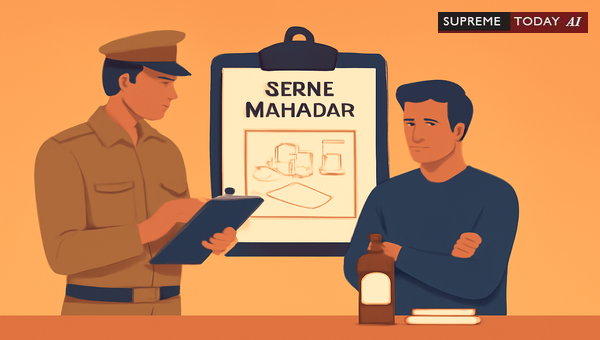
In the high-stakes world of violations, particularly under the or similar statutes, the () plays a pivotal role in documenting recoveries. But what happens when a liquor shop employee signs this crucial document as a witness in a liquor theft case? Defense lawyers often target such witnesses during cross-examination to expose inconsistencies, procedural flaws, or biases. If you're wondering, What are the cross-examination questions asked to a liquor shop employee who signed in case of liquor stolen case?, this post breaks it down based on judicial precedents.
This is general information drawn from case analyses and not specific legal advice. Consult a qualified lawyer for your situation.
A records the recovery of or stolen items, requiring independent witnesses—like a nearby liquor shop employee—to attest to its contents. In liquor theft scenarios, it details the stolen bottles' position, quantity, and condition. However, courts scrutinize these documents rigorously, especially when witnesses turn hostile.
In excise offences, witnesses who sign mahazars are cross-examined to test their opportunity to observe, the mahazar's accuracy, and any external influences. For instance, independent witnesses in a possession of wash case signed Ext.P2 mahazar but turned hostile, admitting signatures while denying seizure observations: PWs.3 and 4 are the independent witnesses who figured as attestors to Ext.P2 mahazar... both of them turned hostile to the prosecution. 2006 0 Supreme(Ker) 787
This pattern holds in theft cases too, where a shop employee's familiarity with liquor could imply bias or special knowledge.
Cross-examination typically challenges the witness's presence, sensory observations, procedural compliance, and independence. Derived from analogous illicit liquor cases, these questions create . Here's a categorized list:
These probe if the employee truly witnessed the theft discovery or recovery:- Were other people present at the liquor shop when the theft was discovered, and did they leave upon seeing the police? (at the time they reached the spot there were approximately 10 people at the site and that all others except the accused left the place on seeing the police party. 2020 0 Supreme(Ker) 697)- Did you personally see the stolen liquor bottles being recovered, or were you only asked to sign afterward? (Hostile witnesses: Both of them admitted their signatures in Ext.P2 mahazar... But they did not support the prosecution case regarding the search as well as the seizure. 2006 0 Supreme(Ker) 787)
In a stolen liquor context, one case noted partners dealing in illicit and stolen liquor, with a witness seeing accused near a mutton shop drinking: the deceased and the accused persons were partners of the team which dealt with illicit liquor and stolen liquor.
Focus on the mahazar's description of stolen liquor:- Was the stolen liquor container in anyone's possession, or kept aside? (MO2 glass was in the hands of the accused, MO1 can was not in his hand but was kept on one side of the culvert. 2020 0 Supreme(Ker) 697)- Did you smell or taste the contents to confirm it was liquor, and when—before or after arrest? (the can was opened, smelt and tasted only after the accused was arrested. 2020 0 Supreme(Ker) 697)
Courts emphasize scientific proof: Merely trusting to the smelling sense of the Prohibition Officers... cannot justify the conviction. 1967 0 Supreme(SC) 167
Highlight omissions or influences:- Did you note alcohol smell or sediments in seized items, and why omitted from mahazar? (though the glass contained smell of alcohol and sediments, the same was omitted to be noted in the mahazar. 2020 0 Supreme(Ker) 697)- Are there locals known for illicit/stolen liquor dealings, and could items belong to them? (there were other persons in the locality who used to indulge in sale of illicit liquor. 2020 0 Supreme(Ker) 697)- You admit signing, but deny seeing the theft/recovery? (PWs.3 and 4 were turning out to be cunning performers in witness box. 2006 0 Supreme(Ker) 787)
A witness admitted signing blank documents: W. 5, has stated in his cross examination... that he signed on blank documents. 2024 Supreme(Online)(Pat) 3740 Another nearby shop witness signed but was unaware of contents: Ex. Ka-13 is under his signature but he was not aware of the recital of the same. 2019 0 Supreme(All) 49
As a shop employee:- Can you confirm if seized liquid matches prohibited liquor under (spirits, arrack, etc.)? (liquor includes spirits of wine, arrack, spirits, wine, toddy, beer and all liquid consisting of or containing alcohol. 2011 3 Supreme 33)- The smell of alcohol could as well be the result of his having consumed medicinal or toilet preparations. 1954 0 Supreme(SC) 117
Though direct theft precedents are scarce, analogies from possession/sale cases apply. Theft recoveries mirror illicit seizures, with mahazars vulnerable to challenge. In homicide-linked cases involving stolen liquor, witness cross-exams revealed police influence: Witnesses PW4 and PW7 have candidly agreed... that the Police had told them that only if they would say that there was a quarrel... they could proceed to file a case. 2020 0 Supreme(Bom) 1361 2020 0 Supreme(Bom) 884
Prosecution must prove beyond doubt, as in raid where witness credibility failed: conviction reversed due to procedural issues. (2024 Supreme(Online)(Pat) 3740)
For Defense:- Exploit inconsistencies in item positions/timing.- Question if employee has bias from illicit dealings.
For Prosecution:- Re-examine to clarify.- Secure chemical analysis over sensory tests.- Avoid interested witnesses like shop owners.
References include: 2020 0 Supreme(Ker) 697, 2006 0 Supreme(Ker) 787, 1954 0 Supreme(SC) 117, 1967 0 Supreme(SC) 167, 2011 3 Supreme 33, 2000 7 Supreme 364,
, 2024 Supreme(Online)(Pat) 3740, 2019 0 Supreme(All) 49, 2020 0 Supreme(Bom) 1361, 2020 0 Supreme(Bom) 884.
Stay informed on —effective cross-examination can turn the tide in liquor theft trials.
#CrossExamination #LiquorTheftCase #AbkariAct



He identified the coins seized in the case. 42. In the cross-examination, witness admits that he alone work in the wine shop. He manage counter of the shop. ... Mr.Bakali (PW-4) further deposed that the appellant took the police to liquor shop. The appellant asked the person in the said shop to produce the coins of Rs.1100/- given by him. The name of the said person was Mr.Kalal (PW-16). He produced coins of Rs.1100/-. Police took....

He identified the coins seized in the case. 42. In the cross examination, witness admits that he alone work in the wine shop. He manage counter of the shop. ... Mr.Bakali (PW-4) further deposed that the appellant took the police to liquor shop. The appellant asked the person in the said shop to produce the coins of Rs.1100/- given by him. The name of the said person was Mr.Kalal (PW-16). He produced coins of Rs.1100/-. Police took c....

He stated in his statement that the deceased and the accused were the regular customers to the liquor shop apart from other persons and he also admitted in his cross-examination that they used to come to liquor shop independently and on the day of incident also as usual they came and consumed liquor ... His cross-examination also shows that he watched the entire scene by hiding himself at that place and he could no....

In the case before us, it has been established that the deceased and the accused persons were partners of the team which dealt with illicit liquor and stolen liquor. ... He has stated in his examination-in-chief that in the morning at 7.00 AM, he had seen Kashinath, Bhima, Rajiya and the deceased Raju and these four persons came near the mutton shop and went to drink liquor and this witness also followed them to drink liquor. ... In his cro....

It is admitted in the cross-examination that when he reached Peth Naka it was raining heavily. That he had reached the scene of offence at about 12.30 am and had seen that his father-in-law and other relatives were present on the spot. ... Witnesses PW4 and PW7 have candidly agreed in the cross-examination that the Police had told them that only if they would say that there was a quarrel between the accused and the deceased they could proceed to file a case against appellant. ... There....
It is admitted in the cross-examination that when he reached Peth Naka it was raining heavily. That he had reached the scene of offence at about 12.30 am and had seen that his father-in-law and other relatives were present on the spot. ... Witnesses PW4 and PW7 have candidly agreed in the cross-examination that the Police had told them that only if they would say that there was a quarrel between the accused and the deceased they could proceed to file a case against appellant. ... There....

Another angle is that, the complainant while deposing in cross-examination admitted that there were two keys of the lock of the shop. 18. ... In his cross examination, he has clearly stated that no key was recovered in his presence and he did not go anywhere apart from the police station. ... PW-1 was threatened by the accused when asked about the deceased. ... List of stolen articles were given by the complainant but no stolen articles were recovere....

Upon cross-examination, it was stated that illicit liquor was not before him. PW-6 also stated upon cross-examination that he can not say from where the illicit liquor was recovered. He has shown his complete ignorance about the recovery of liquor. 21. ... Upon cross-examination, it was stated by him that he did not found any customer at the shop of appellant, which was opened at that point of time. It was stated ....

W. 5, has stated in his cross examination in paragraph 4 that he signed on blank documents and he knows the appellant as he is his co-villager. ... He also explained that there was no need for him to send any telephonic message had they been present at the scene of occurrence. This witness did not support the prosecution case. He was not subjected to any cross-examination by the prosecution. His evidence remained unimpeached. ... PW 2 stated in his cross#HL_....

His case that he jumped from the terrace in front of the shop and he was attacked by the assailants was not disputed in the cross-examination. ... ... The production of the credit chit kept on the table in the shop would have lent corroboration to the prosecution case of the sale of liquor to A-1 and A-3 on credit. It is not the prosecution case that it was signed by either of the accused. ... only to explain the matter referred to....

He is the witness of the occurrence but in cross-examination he has categorically said that his shop is situated nearby the place of occurrence and the liquor shop was of Bantu and Ex. Ka-13 is under his signature but he was not aware of the recital of the same.

In her cross-examination, she has stated that she had asked her husband not to take liquor, but he said that the grandson was offering the english liquor and he took some liquor. She has denied the suggestion of giving false evidence.

Cross examination by the side of Prosecution I sell country liquor in my dabha. Ld. P.P. in-charge is permitted to cross-examine the witness.) Selling country liquor without licence is illegal and I am involved in this illegal business.

He claimed that he had seen the deceased in the company of accused in Ramban town. It is in his cross-examination that accused had purchased liquor from the liquor vend in his presence. He further claimed that from Ramban market he had gone to the house of accused.

It has come on record that the accused was indulging himself into outlined business as stated by the eyewitness Nanusing, P.W.1. As stated above, it does not appear to be a case of causing injury out of the sudden provocation nor by way of self-defence. As stated in the complaint, the accused was identifying himself as Dada-Headstrong person. In the cross-examination, it has also come on record that the accused was selling liquor and was also consuming the liquor.


An indispensable Tool for Legal Professionals, Endorsed by Various High Court and Judicial Officers
Please visit our Training & Support
Center or Contact Us for assistance

Scan Me!
India’s Legal research and Law Firm App, Download now!


For Daily Legal Updates, Join us on :



 Back to top


