



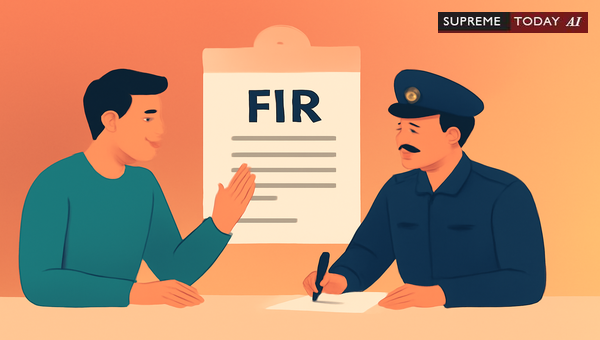
Cross-Examining the Lodger: Essential Principles in Indian Criminal Law
In the high-stakes arena of criminal trials in India, the () often serves as the 's foundation. But what happens when you, as a defense lawyer, face the lodger—the complainant who first reported the incident? Effectively cross-examining this key witness can make or break a case. This post delves into the legal nuances of challenging the lodger's testimony, drawing from judicial precedents and practical recommendations.
Whether you're handling a murder trial, dowry dispute, or robbery case, understanding how courts view the lodger's account is crucial. We'll cover reliability tests, corroboration needs, handling delays, and more—always remembering this is general information, not specific legal advice. Consult a qualified lawyer for your situation.
What is an Lodger and Why Cross-Examine Them?
The lodger is typically the victim, informant, or eyewitness who lodges the under . Their statement kickstarts the investigation, but it's not gospel. Courts have repeatedly emphasized scrutiny, especially during .
A common query arises: Cross to Lodger— shorthand for strategies in cross-examining the lodger. Key is probing for inconsistencies without dismissing minor issues outright.
Key Principles for Scrutinizing Lodger's Testimony
Indian courts apply several principles when evaluating the lodger's evidence. Here's a breakdown:
1. Reliability and Vested Interest
The lodger's testimony warrants careful scrutiny due to potential bias or vested interest. As noted in precedents, The testimony of the lodger should be carefully scrutinized, as they may have a vested interest in the case 2021 0 Supreme(Raj) 1212.
In one case, the lodger's revealed doubts about recoveries, with PW-10 questioning earring recovery timing: who has stated in his that he had seen the earrings at the ... The petitioner has been arrested in connection with No. ... lodger and Kanti Lal (son of the deceased), who was examined as PW-10 and has put a question mark on the recovery of the earrings
. Such revelations can undermine credibility.
2. Minor Omissions Don't Doom the Case
Minor contradictions or omissions in the don't automatically weaken the . The is not expected to be an exhaustive account of all the facts 2009 6 Supreme 526 1997 8 Supreme 27. Focus cross-exam on major inconsistencies.
For instance, in a murder appeal, contradictions in witness statements, including the lodger, led to acquittal due to insufficient : The lack of corroborative evidence, contradictions in witness statements, and doubtful recoveries led to the acquittal of the accused 2018 0 Supreme(Raj) 913.
3. Need for Corroboration
Courts demand corroboration from medical reports, other witnesses, or physical evidence. The lodger's testimony should be corroborated by other evidence, such as medical reports, witness statements, and physical evidence 2009 0 Supreme(SC) 1576 2003 1 Supreme 923. Presence at the scene and injuries bolster credibility: The fact that the lodger was present at the scene and suffered injuries can lend credibility to their testimony 2009 6 Supreme 526.
In a robbery conviction upheld, was corroborated: Identification evidence in a TIP, when corroborated by other evidence, can be relied upon by the to convict the accused 2011 0 Supreme(Cal) 640.
4. Handling Delays in Lodging
Delay alone doesn't discredit the case if explained. Delay in lodging the , by itself, does not necessarily cast doubt on the 's case, as long as the delay is adequately explained 2009 0 Supreme(SC) 1576 1997 8 Supreme 27. Probe the timeline rigorously.
One case noted a one-day delay: has also been lodged after of the
.
5. and
A cross- doesn't mandate quashing either. The mere existence of a cross- does not automatically warrant the quashing of either 2010 0 Supreme(Raj) 1597. Avoid quashing based on assumptions: FIRs should not be quashed solely on the basis of assumptions or without considering the complete investigation and evidence 2008 0 Supreme(Raj) 2492.
In a quashing instance, the lodger's wishes led to dismissal: the injured and the complainant rather the lodger of the may not ... The complainant wish to live in peace and therefore, the is quash
.
Practical Recommendations for Effective
Arm yourself with these strategies:
Hunt for Major Contradictions: Examine for inconsistencies that erode credibility, like in cases where lodgers turned : He further submits that the lodger of the report has not supported the case of the and turned
.
Probe Lodging Circumstances: Question delays or timeline gaps. In one , the lodger admitted no prior complaint: of the , who admitted in his cross - examination that no complaint was submitted either in the police station
.
Uncover Biases and Motives: Investigate interests, as in family disputes: According to this witness, as the accused did not offer any help in the construction of new house, there was a dispute 2017 0 Supreme(Chh) 545.
Demand Corroboration: Highlight lacks, avoiding over-reliance on minor discrepancies.
Holistic Case View: Weigh medical, witness, and physical evidence overall.
These align with broader evidence appreciation, as in a reduction: It is thus apparent that the incident occurred all of a sudden... act of accused/appellant is covered by 2017 0 Supreme(Chh) 545.
Insights from Notable Cases
Witnesses: In dowry death appeals, inconsistent lodger statements failed to prove abetment: In order to establish the offense of under , the must prove that the accused instigated 2011 0 Supreme(Cal) 911. Conviction set aside due to unreliable evidence.
Bail and Custody: Names absent from weaken cases: Learned counsel for the petitioner submits that the name of the petitioner has not been reflected in the
.
Murder Convictions: Knowledge of fatal injury upheld : Appellant had only intention of causing bodily injury... which led to his death on spot itself 2017 0 Supreme(Chh) 252.
These illustrate courts' balanced approach.
Conclusion and Key Takeaways
Cross-examining the lodger demands precision: target credibility gaps, insist on corroboration, and contextualize delays or . While minor flaws rarely topple prosecutions, major issues combined with weak evidence can. Always view the case holistically.
Key Takeaways:- Scrutinize for bias but respect minor omissions 2009 6 Supreme 526.- Seek corroboration 2009 0 Supreme(SC) 1576.- Explain delays reasonably.- need full evidence review 2010 0 Supreme(Raj) 1597.
This guidance draws from established precedents, but outcomes vary. For tailored advice, engage a criminal law expert.
(Word count: approx. 1050. General insights only; not legal advice.)
#FIRCrossExam #CriminalLawIndia #LegalStrategy







