SupremeToday Landscape Ad
AI Thinking

AI Thinking...

Searching Case Laws & Precedent on Legal Query.....!

Scanned Judgements…!

Checking relevance for In Re Children In Street Situations VS . ...

Checking relevance for State Of Maharashtra VS Praful B. Desai...

Checking relevance for Manju Devi VS State of Rajasthan...

Checking relevance for Iffco Tokio General Insurance Company Ltd. VS Pearl Beverages Ltd. ...

2021 0 Supreme(SC) 259 : The legal documents explicitly permit cross-examination of witnesses from a different country through video conference. In the context of consumer protection proceedings, the court held that if a party intends to cross-examine experts or witnesses and stakes are high, video conferences can be arranged, with the cost initially borne by the party requesting such a conference. This is specifically mentioned in the passage: ''''In case where stakes are very high and still a party intends to cross-examine such doctors or experts, there can be video conferences or asking questions by arranging telephonic conference and at the initial stage this cost should be borne by the person who claims such video conference.''''Checking relevance for J. J. Merchant VS Shrinath Chaturvedi...

2002 5 Supreme 337 : The legal document permits cross-examination of witnesses from a different country through video conference, provided the cost is borne by the party requesting it. It states: ''''In case where stakes are very high and still party intends to cross-examine such doctors or experts, there can be video conferences or asking questions by arranging telephone conference and at the initial stage this cost should be borne by the person who claims such video conference.''''Checking relevance for Kulvir Ram @ Mati VS State of Punjab...

2024 0 Supreme(P&H) 1240 : The trial court permitted the cross-examination of a witness from a different country through a video conference using WhatsApp and other electronic channels, after the witness was unable to have their statement recorded through the Indian Embassy. The court allowed this arrangement due to practical difficulties, emphasizing the need to facilitate justice without imposing undue hardship on witnesses. The court also directed the verification of the witness''''s identity through passport and ID documents, and confirmed that the use of ordinary video conferencing (such as WhatsApp) was lawful and justified under the circumstances, despite procedural rules favoring embassy-based recording. The court found no illegality in the decision, noting that the process ensured identity verification and witness safety.Checking relevance for Vicky Verma VS State of Punjab...

Checking relevance for ALEX C. JOSEPH S/O C. A. JOSEPH VS STATE OF KERALA...

Checking relevance for Vinod Kumar VS State (NCT) of Delhi)...

Checking relevance for Nanda Kishore Kolluru vs Madhulika Maddipudi...

Checking relevance for State of Maharashtra VS Dr. Praful B. Desai...

Checking relevance for Manish Dixit: Devender K. Sharma: State Of Rajasthan VS State Of Rajasthan: State Of Rajasthan: Sharad Dhakar Alias Bantu...

Checking relevance for Suryanarayana VS State of Karnataka...

Checking relevance for Rammi VS State Of M. P. ...

Checking relevance for Sakshi VS Union of India...

Checking relevance for Nabeesathu Sudheer @ Mondi Sudheer VS State of Kerala...

Checking relevance for A. Neelalohithadasan Nadar VS State Of Kerala...


AI Overview

AI Overview...

  • Cross-examination via Video Call/WhatsApp - Main points and insights:
  • Courts have permitted recording witness statements through video conferencing, including WhatsApp video calls, due to exceptional circumstances or pandemic-related restrictions ["2024 0 Supreme(P&H) 1240"]. The courts justified such measures by emphasizing the need for effective testimony while maintaining safety and convenience.
  • Identification of witnesses during virtual proceedings is crucial; courts have adopted procedures such as verifying identity through official documents like Aadhaar or checking contact details (the same WhatsApp no. or email ID) ["SMT. PALLAVI AGARWAL vs ARPIT AGARWAL - Uttarakhand"], ["SMT. PALLAVI AGARWAL vs ARPIT AGARWAL - Uttarakhand"].
  • The admissibility and relevance of evidence obtained via WhatsApp or video calls depend on court rulings, with specific rules for cross-examination and objections (questions asked during cross-examination are subject to relevancy and objections can be raised) ["2024 0 Supreme(UK) 439"], ["2024 0 Supreme(UK) 149"].
  • Courts have recognized that cross-examination conducted through video conferencing can be as effective as in-person, provided proper identification and procedural safeguards are followed ["2021 0 Supreme(Raj) 820"], ["2023 0 Supreme(Ker) 126"]].
  • Concerns about impersonation or tutored witnesses are acknowledged; however, courts have generally held that proper identification protocols mitigate these risks (witnesses shall be identified by checking their identities on the same WhatsApp no.) ["2024 0 Supreme(P&H) 1240"].
  • Some objections to virtual cross-examination, such as the inability to observe demeanor fully, have been raised, but courts have upheld virtual proceedings as compliant with legal standards, especially when in-person attendance is impractical ["2024 0 Supreme(All) 1654"], ["2023 Supreme(Online)(Mad) 92101"].
  • The courts have also emphasized that the mode of cross-examination (physical or virtual) does not fundamentally affect the defendant's right to a fair trial, provided procedural safeguards are in place ["2023 0 Supreme(Ker) 126"].
  • Specific procedural rules, such as obtaining the accused's consent and ensuring proper identification, are integral to lawful virtual cross-examinations ["2023 0 Supreme(Del) 2750"], ["2022 Supreme(Online)(Kar) 234"].
  • Courts have rejected blanket restrictions on cross-examination questions and have maintained the importance of lawful questioning, even in virtual settings ["2024 0 Supreme(UK) 439"].

  • Analysis and Conclusion:

  • The legal framework and judicial decisions support the use of WhatsApp video calls and other electronic means for witness cross-examination, especially under circumstances limiting physical presence.
  • Proper identification, adherence to procedural rules, and the ability to effectively cross-examine witnesses are key to ensuring virtual proceedings uphold the defendant's rights.
  • While concerns about impersonation and demeanor observation persist, these can be addressed through verification protocols and technological safeguards.
  • Overall, courts recognize that virtual cross-examination, including via WhatsApp, can be legally valid and effective when conducted with appropriate procedures, thus expanding the flexibility of judicial proceedings without compromising fairness ["2024 0 Supreme(P&H) 1240"] ["2023 0 Supreme(Ker) 126"].

References:- ["2024 0 Supreme(P&H) 1240"]- ["SMT. PALLAVI AGARWAL vs ARPIT AGARWAL - Uttarakhand"]- ["2024 0 Supreme(UK) 439"]- ["2023 Supreme(Online)(DEL) 11766"]- ["2024 Supreme(Online)(HP) 10145"]- ["2021 0 Supreme(Raj) 820"]- ["2023 0 Supreme(Ker) 126"]- ["

M/S.E.SHANKAR vs Mr.K.Natarajan - Madras

"]- ["2022 Supreme(Online)(Kar) 234"]- ["2024 0 Supreme(UK) 149"]- ["SMT. PALLAVI AGARWAL vs ARPIT AGARWAL - Uttarakhand"]- ["2023 0 Supreme(Del) 2750"]- ["United States v. Greaux-Gomez - Court of Appeals for the First Circuit"]- ["2022 Supreme(US)(ca1) 216"]- ["2023 Supreme(Online)(Mad) 92101"]
Admissibility of Cross-Examination of Foreign Witnesses via WhatsApp Video Call in India

Cross-Examining Foreign Witnesses via WhatsApp Video Call in India

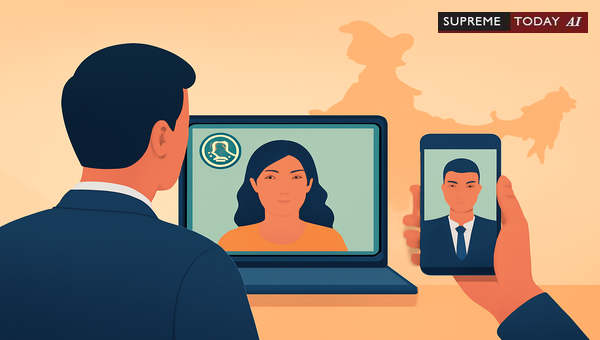
In today's globalized world, legal disputes often involve witnesses scattered across borders. Imagine a key witness in your case lives abroad, making in-person court appearances impractical due to travel costs, visa issues, or emergencies. Can cross-examination proceed via a simple WhatsApp video call? This question—cross examination of witness from a different country through whatsapp video call—is increasingly relevant in Indian courts, especially post-pandemic.

Indian jurisprudence has evolved to embrace technology, balancing procedural rigor with access to justice. Courts have permitted remote testimony through platforms like WhatsApp, provided strict safeguards are followed. This post explores the legal permissibility, key judgments, essential precautions, and practical insights, drawing from authoritative rulings.

Legal Permissibility of Remote Cross-Examination

Indian courts generally recognize the discretion to allow witness examination via video conferencing, including informal platforms like WhatsApp, when circumstances justify it. This flexibility stems from principles of natural justice and speedy trials, particularly under statutes like the Consumer Protection Act and general procedural laws. Courts have discretion to allow witness statements via video conferencing, including platforms like WhatsApp, especially when justified by circumstances2021 0 Supreme(SC) 259 2024 0 Supreme(P&H) 1240.

In one notable case, the court approved recording statements via WhatsApp, noting: the court approved recording statements via WhatsApp considering the circumstances, provided identity verification measures were in place2024 0 Supreme(P&H) 1240. Similarly, guidelines under the Consumer Protection Act affirm that cross-examination can be conducted via affidavits, video conference, or other electronic means, and that safeguards like identity verification and procedural adherence are essential2002 5 Supreme 337.

This approach aligns with broader judicial trends. For instance, in a case involving a witness abroad, the court upheld video conferencing testimony after verifying identity through an Aadhaar Card presented virtually: the identity of the witness was duly proved during the VC proceedings, where she presented her Aadhaar Card through the virtual mode to the Presiding Officer2024 0 Supreme(P&H) 967.

Key Safeguards for WhatsApp Video Testimony

While permissible, remote cross-examination isn't a free-for-all. Courts emphasize safeguards to ensure authenticity, prevent impersonation, and uphold fairness. Here's what typically applies:

  • Identity Verification: Paramount in all rulings. Witnesses must produce official IDs like passports, Aadhaar cards, or government-issued documents on camera. Identity verification is paramount; witnesses can be asked to produce passports or IDs to confirm their identity2024 0 Supreme(P&H) 1240. In another matter, procedures followed Ministry of Home Affairs guidelines for mutual legal assistance, confirming the identity of the witness was properly established

    SMT. PALLAVI AGARWAL vs ARPIT AGARWAL

    .
  • Procedural Compliance: Adhere to High Court video conferencing rules. The platform must support clear audio-video, recording, and no coaching. The procedure should follow established rules, but flexibility is permitted to ensure justice, especially where logistical challenges exist2021 0 Supreme(SC) 259.

  • Court Satisfaction: Judges must be convinced the process maintains testimony integrity. Cross-examination via electronic means, including WhatsApp, is permissible if safeguards are in place, and if the court finds that the procedure ensures the integrity and authenticity of testimony2002 5 Supreme 337.

Additional cases reinforce this. A High Court dismissed a challenge to video-recorded evidence from a Canada-based witness, ruling that all necessary protocols were followed and that the witness's identity was established satisfactorily

SMT. PALLAVI AGARWAL vs ARPIT AGARWAL

. Even in criminal matters, screenshotted WhatsApp chats were considered alongside video calls, with extensive cross-examination conducted remotely 2024 0 Supreme(P&H) 967.

Judicial Discretion and Practical Examples

Courts exercise wide discretion, prioritizing justice over rigid formalities. In 2024 0 Supreme(P&H) 1240, practical constraints like a witness's location abroad justified WhatsApp use, balancing justice and practical constraints. This mirrors timelines in legal evolution: from affidavits to full video links, especially for overseas witnesses.

Other precedents highlight applications:- In family or civil suits, commissioners record evidence via video from India-UK links, permitting testimony and cross-examination through audio-video conferencing2018 0 Supreme(AP) 95.- Bail conditions have mandated fortnightly WhatsApp video reporting to police, showing courts' comfort with the platform 2022 0 Supreme(SC) 1577.- Hearings themselves occurred via WhatsApp video calls during COVID, with parties connected through official numbers 2020 0 Supreme(Raj) 389.

However, not all cases succeed without safeguards. Challenges arise if rules are flouted, as seen when petitioners argued procedural violations, but courts upheld valid processes

SMT. PALLAVI AGARWAL vs ARPIT AGARWAL

.

Limitations and Best Practices

Remote testimony via WhatsApp may not suit every scenario. Limitations include:- Platform Reliability: WhatsApp must enable stable, recordable sessions; formal links (e.g., Cisco Webex) are preferred for high-stakes matters.- No Tutoring Risk: Courts monitor for external influence; witnesses should be alone.- Documentation: Full recordings are mandatory for appeals.

To apply successfully:1. File an application detailing reasons (e.g., witness abroad).2. Propose safeguards like ID checks and oaths.3. Ensure technical readiness.

The platform used must allow verification of identity. The court must ensure that the witness is not tutored or impersonated. The procedure should be transparent and documented2021 0 Supreme(SC) 259 2024 0 Supreme(P&H) 1240.

Conclusion and Key Takeaways

Cross-examination of a witness from a different country via WhatsApp video call is legally permissible under Indian law, provided that the court ensures proper verification of identity and adherence to procedural safeguards2021 0 Supreme(SC) 259 2024 0 Supreme(P&H) 1240 2002 5 Supreme 337. This reflects courts' adaptability to technology, facilitating global justice without compromising fairness.

Key Takeaways:- Courts authorize WhatsApp for witness statements with ID verification 2024 0 Supreme(P&H) 1240.- Judicial discretion allows flexibility for practical needs 2021 0 Supreme(SC) 259.- Always prioritize safeguards to avoid challenges 2002 5 Supreme 337.

Note: This is general information based on precedents and not specific legal advice. Consult a qualified lawyer for your case.

References

  1. 2021 0 Supreme(SC) 259: Permissibility and safeguards in video conferencing.
  2. 2024 0 Supreme(P&H) 1240: WhatsApp approval with ID checks.
  3. 2002 5 Supreme 337: Electronic cross-examination principles.
  4. 2024 0 Supreme(P&H) 967: Aadhaar verification in VC.
  5. SMT. PALLAVI AGARWAL vs ARPIT AGARWAL

    : Mutual legal assistance compliance.
#IndianLaw, #LegalTechIndia, #RemoteWitness

Chat Download
Chat Print
Chat R ALL
Landmark
Strategy
Argument
Risk
Chat Voice Bottom Icon
Chat Sent Bottom Icon
SupremeToday Portrait Ad
logo-black

An indispensable Tool for Legal Professionals, Endorsed by Various High Court and Judicial Officers

Please visit our Training & Support
Center or Contact Us for assistance

qr

Scan Me!

India’s Legal research and Law Firm App, Download now!

For Daily Legal Updates, Join us on :

whatsapp-icon Back to top