


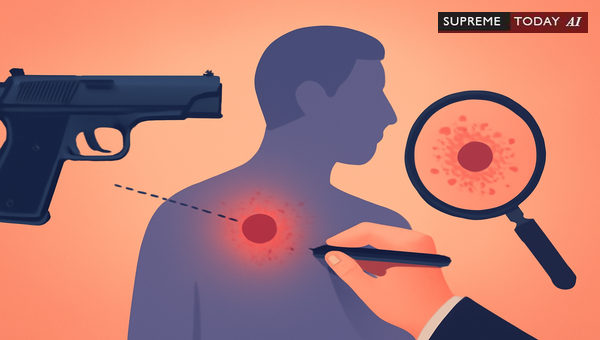
Key Cross-Examination Questions for Gunshot Injury Cases
In high-stakes criminal trials involving firearms, the cross-examination of medical experts, eyewitnesses, and forensic witnesses can make or break a defense strategy. A common challenge arises: Gun Shot Injury Injured what Question to be Put in Cross Examination. Effectively questioning the nature of a gunshot wound can cast doubt on the prosecution's narrative regarding firing distance, weapon type, intent, and circumstances. This post explores proven questions and strategies, drawing from medico-legal principles and case insights to help lawyers build a robust defense.
Whether defending against murder, attempted murder, or lesser charges, understanding wound characteristics is crucial. Typically, these questions aim to establish if the injury aligns with the alleged scenario or suggests alternatives like distant firing or accidental discharge. Note: This is general information based on legal precedents and should not be considered specific legal advice—consult a qualified attorney for your case.
Main Legal Findings on Cross-Examining Gunshot Injuries
Cross-examination should focus on the nature, , and circumstances of the firearm discharge while challenging the prosecution’s version of the injury’s cause, distance, and weapon used. Key objectives include:
- Probing if the injury was from close or distant range, based on , , and wound features 2025 0 Supreme(SC) 645 2007 8 Supreme 375.
- Clarifying the weapon type (e.g., shotgun, rifle, pistol) and possibility of other causes or distances 2025 0 Supreme(SC) 645 2007 8 Supreme 375.
- Contesting forensic evidence on , , , and on the injured 2025 0 Supreme(SC) 645 2007 8 Supreme 375.
These tactics have been highlighted in various cases where medical testimony was pivotal. For instance, courts have noted discrepancies in injury descriptions during cross-exam, such as the treatment sheet recorded by me does not reflect any gun shot injury 2009 0 Supreme(Cal) 31.
Nature and Characteristics of Gunshot Injuries
Gunshot wounds vary significantly by firing distance. (under 6 feet) often show , , , and , while produce clean, circular wounds with 2025 0 Supreme(SC) 645 2007 8 Supreme 375.
Essential Questions to Ask:
- Was there , , or around the injury? 2025 0 Supreme(SC) 645
- Did the injury have inward or ? 2025 0 Supreme(SC) 645
- Was there any soot or gunpowder residue on the skin or clothing? 2025 0 Supreme(SC) 645
In one case, a doctor clarified in cross-examination that injuries have been caused from the front side of the injured persons and noted pellets hitting from the front, highlighting range implications 2023 0 Supreme(P&H) 1901. Such questions can reveal inconsistencies, like the absence of close-range signs suggesting a shot from over 6 feet 2025 0 Supreme(SC) 645.
Additional sources emphasize testing if injuries match testimonies: The witness denied to explain that whether injury nos.1 and 3 on the injured, would have been caused by pellets or not, but in cross examination, stated that these injuries cannot be caused by a gun shot 2019 0 Supreme(All) 352.
Type of Weapon and Its Capabilities
Distinguishing weapons is vital—shotguns cause dispersed pellet wounds, rifles produce focused, high-velocity penetration (e.g., fracturing skull bones), and pistols vary by caliber 2025 0 Supreme(SC) 645 2007 8 Supreme 375.
Targeted Questions:
- Are you aware that a shotgun cannot cause fractures of the skull bones as described? 2025 0 Supreme(SC) 645
- Could the injury have been caused by a rifle or a high-velocity firearm? 2025 0 Supreme(SC) 645
- Is it possible that the injury was caused from a distance greater than 6 feet, given the absence of and ? 2025 0 Supreme(SC) 645
Case law supports probing this: A witness stated Hari Shanker has shot first fire by his gun at his father, which hit the chest, but cross-exam revealed non-explanation of certain injuries, diluting eyewitness credibility 2024 0 Supreme(All) 849.
, , and Gunshot Residue
depends on shooter and victim positions. Close-range injuries show burning; distant ones do not 2025 0 Supreme(SC) 645 2007 8 Supreme 375. GSR is key—typically on the shooter's hand or close victims, but absent in .
and Questions:
- Was the injury consistent with a shot fired from a distance of more than 6 feet? 2025 0 Supreme(SC) 645
- Did the injury have the characteristics typical of a close-range shot, such as or ? 2025 0 Supreme(SC) 645
- Is it possible that the injury was caused from a higher elevation or from a distance, based on the wound’s characteristics? 2007 8 Supreme 375
GSR-Focused Questions:
- Was gunshot residue found on the injured person’s hands or clothes? 2025 0 Supreme(SC) 645
- If the injury was caused at close range, would you expect to find gunshot residue on the injured person’s hands? 2025 0 Supreme(SC) 645
- Could the absence of gunshot residue on the injured person indicate a distant shot? 2025 0 Supreme(SC) 645
Eyewitness cross-exams often reveal distances: at a close range of 7-8 ft. gun shot was fired and this witness and other eye-witnesses namely Devendra and Daulat were 8-10 ft. behind the deceased 2008 0 Supreme(MP) 1088. Dr. Amar Singh Meena admitted a wound was grievous in nature and was sufficient in the ordinary course of nature to cause death 2009 0 Supreme(Raj) 2574.
Challenging Forensic and Medical Evidence
Question the expert's interpretations:- Does the absence of or necessarily mean the shot was fired from a distance? 2025 0 Supreme(SC) 645- Could the injury have been caused by a different type of firearm or from a different distance? 2007 8 Supreme 375- Is it possible that the injury was inflicted by a firearm of a different caliber or from a different angle? 2025 0 Supreme(SC) 645
Other cases show rebound possibilities or accidental shots: Injuries might be rebound or re-entry, probed to question direct intent 2023 0 Supreme(Del) 1662 2024 0 Supreme(All) 621.
Insights from Additional Case Law
Cross-examination often targets witness credibility, weapon ownership, and procedures. For example:- Intent and Shooter ID: Probe if firing was intentional or mistaken: He had sustained gun shot injury mistakenly 2023 Supreme(Online)(MP) 22715.- Injury Cause: Challenge if consistent with front-side firing or pellets 2023 0 Supreme(P&H) 1901.- Ownership/Presence: Question accused's role at the scene 2022 0 Supreme(All) 1292.
Effective tactics include testing consistency: Witnesses may falter on details like distance or multiple shots 2025 0 Supreme(Pat) 617. Courts permit questions to one's own witness if strategic 2022 0 Supreme(MP) 1489.
Exceptions, Limitations, and Recommendations
- Intermediate distances may lack , so avoid absolutes.
- Challenge GSR cautiously, considering contamination or other factors.
Recommendations:- Elicit admissions on greater distances via absent signs.- Scrutinize expert assumptions on wounds.- Explore alternative weapons/circumstances.
Conclusion and Key Takeaways
Mastering cross-examination in gunshot injury cases hinges on forensic details like distance indicators and GSR. By posing targeted questions, defense counsel can create reasonable doubt, as seen in precedents emphasizing wound morphology 2025 0 Supreme(SC) 645 2007 8 Supreme 375. Key takeaways:- Focus on / absence for .- Differentiate weapon effects.- Test and residue.
Always tailor to facts; this overview draws from sources like detailed injury analyses 2025 0 Supreme(SC) 645, medico-legal principles 2007 8 Supreme 375, and case testimonies (e.g., 2023 0 Supreme(P&H) 1901, 2024 0 Supreme(All) 849). For personalized strategy, seek professional legal counsel.
#CrossExamination, #GunshotInjury, #ForensicLaw














