


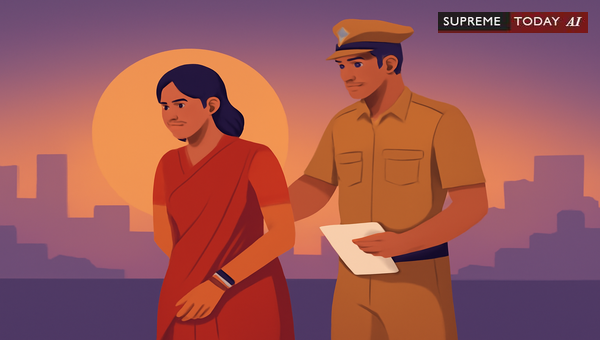
: CrPC Rules Explained
In India, the arrest of women, particularly after sunset, is a sensitive issue governed by strict legal safeguards to protect dignity and prevent abuse. Many individuals wonder about the procedure of arresting a woman after sunset, especially in light of evolving judicial interpretations and . This blog post breaks down the rules under the , highlights exceptions, and discusses real-world implications, drawing from key legal documents and court observations.
Understanding these procedures is crucial for both law enforcement officers and the public to ensure compliance and uphold under . Note that this is general information and not specific legal advice—consult a qualified lawyer for personalized guidance.
Legal Framework Under CrPC Section 46(4)
The cornerstone of this procedure is , inserted by and effective from . It explicitly states:
- General Rule: No woman shall be arrested after sunset and before sunrise. 2021 0 Supreme(Bom) 658 2015 0 Supreme(Del) 3012
- Exceptional Circumstances: Arrests during these hours are permissible only if:
- A woman police officer makes a written report documenting the reasons.
- Prior permission is obtained from the within whose jurisdiction the offence is committed or the arrest is to be made. 2021 0 Supreme(Bom) 658 2022 0 Supreme(Ori) 271
This provision aims to enhance women's protection during arrests, addressing historical concerns about misuse of power. Courts have reinforced that police must adhere strictly, deeming illegal. 2012 0 Supreme(Bom) 2394 2023 0 Supreme(Mad) 1441
Key Requirements and Safeguards
Mandatory Compliance and Written Report
Police officers are required to follow these steps meticulously. Any deviation renders the arrest unlawful, potentially leading to its and disciplinary action against officers. 2012 0 Supreme(Bom) 2394 2021 0 Supreme(Bom) 658
In exceptional cases, the arresting woman officer must prepare a detailed written report justifying the necessity, such as imminent flight risk or urgent evidence preservation. This report, along with , forms the bedrock of legality. 2022 0 Supreme(Ori) 271 2012 0 Supreme(Bom) 1112
Judicial Oversight as a Safeguard
The prior permission from a Judicial Magistrate acts as a critical check against . It ensures arrests are not whimsical but backed by compelling reasons, protecting women's rights.
2015 0 Supreme(Tri) 443
Judicial directions further emphasize that no female should be detained or arrested without a lady constable's presence after sunset, reinforcing statutory limits. 2023 0 Supreme(Mad) 1441
Exceptions and What Qualifies as 'Exceptional Circumstances'
While the law carves out exceptions, they are narrowly interpreted:
- Clearly Justified and Documented: Situations like preventing evidence tampering or suspect escape may qualify, but routine matters do not. The mere existence of urgency isn't enough—documentation is key. 2021 0 Supreme(Bom) 658 2021 0 Supreme(MP) 787
- Judicial Discretion in Exigent Cases: Courts acknowledge rare scenarios where immediate action is vital, but is scrutinized. Officers must demonstrate why permission couldn't be sought.
From legal precedents, arrests without adherence to Section 46(4) are violations of , potentially invalidating proceedings.
Deepa VS S. Vijayalakshmi - Crimes
2025 Supreme(Online)(Mad) 19770 2025 0 Supreme(Mad) 3521 2025 0 Supreme(Mad) 4669One source notes: arresting the person under the process entrusted to him at a time in the day after sunset... A warrant of arrest... may be executed between the hours of sunrise and sunset only.
Another highlights production delays: her arrest after sunset but before sunrise... her detention was also illegal. 2012 0 Supreme(UK) 482
Consequences of Non-Compliance
Violations carry serious repercussions:
- Illegality of Arrest: Courts may declare such arrests void, leading to acquittals or compensation claims. 2012 0 Supreme(Bom) 2394 2023 0 Supreme(Mad) 1441
- Disciplinary Actions: Officers face inquiries, as seen in cases of unjustified handcuffing or detention. 2006 0 Supreme(Guj) 810
- Compensation and : Affected women can seek redress via , as in pleas for beyond 24 hours post-arrest. 2012 0 Supreme(UK) 482
Police must be trained on these rules to avoid challenges. Breaches not only undermine proceedings but also erode public trust. 2025 Supreme(Online)(Mad) 19770 2024 0 Supreme(Del) 512
Role of Police Officers and Judicial Guidelines
Law enforcement plays a pivotal role:- Training Imperative: Officers need awareness of Section 46(4) to prevent errors. 2025 0 Supreme(Bom) 993
Deepa VS S. Vijayalakshmi - Crimes
- Lady Constable Presence: Mandatory for women's arrests post-sunset, per court directives. 2023 0 Supreme(Mad) 1441The Reports () and subsequent rulings reiterate these protections. 2025 0 Supreme(Bom) 993 2025 Supreme(Online)(MAD) 3340 2023 Supreme(Online)(KER) 15000
Practical Recommendations for Compliance
To navigate this:- Prepare Thoroughly: In potential exceptional cases, draft the written report and approach the Magistrate immediately.- Document Everything: Maintain records to defend actions if challenged.- Seek Alternatives: Consider surveillance or daytime arrests where feasible.- Monitor and Train: Departments should audit compliance regularly. 2021 0 Supreme(Bom) 658 2022 0 Supreme(Ori) 271
Conclusion and Key Takeaways
The procedure of arresting a woman after sunset under CrPC Section 46(4) prioritizes protection, allowing exceptions only with rigorous safeguards like written reports and magistrate permission. Non-compliance risks illegality, compensation claims, and disciplinary measures, as evidenced across legal documents. 2021 0 Supreme(Bom) 658 2023 0 Supreme(Mad) 1441 2012 0 Supreme(Bom) 2394
2015 0 Supreme(Tri) 443
Key Takeaways:- General prohibition after sunset; exceptions tightly controlled.- Always involve a woman officer and secure prior judicial nod.- Violations can derail cases—prioritize adherence.
Stay informed on these rules to safeguard rights. For specific scenarios, professional legal counsel is recommended.
References: 2021 0 Supreme(Bom) 658 2022 0 Supreme(Ori) 271 2023 0 Supreme(Mad) 1441 2012 0 Supreme(Bom) 2394
2015 0 Supreme(Tri) 443
2012 0 Supreme(UK) 482 2006 0 Supreme(Guj) 810 2025 0 Supreme(Bom) 993
Deepa VS S. Vijayalakshmi - Crimes
2025 Supreme(Online)(Mad) 19770 #WomenArrestRights, #CrPC46, #LegalIndia















