Searching Case Laws & Precedent on Legal Query.....!
Analysing the retrieved Case Laws
Scanned Judgements…!



Searching Case Laws & Precedent on Legal Query.....!
Analysing the retrieved Case Laws
Scanned Judgements…!
Main Point - The evidence across multiple cases indicates that the cheque in question was not mutilated or tampered with; the bank manager consistently testified that the cheque was in full size, in order, and not mutilated at the time of presentation ["2011 0 Supreme(Ker) 930"] ["
Seenath VS Joyson - Dishonour Of Cheque
"] ["Seenath VS Joyson - Crimes
"].Main Point - The bank records and dishonour memos (Ext.P2) show that the cheque was dishonoured due to insufficient funds, not because of any material alteration or mutilation ["2011 0 Supreme(Ker) 930"] ["
Seenath VS Joyson - Dishonour Of Cheque
"] ["Seenath VS Joyson - Crimes
"].Main Point - Several cases mention corrections made in the cheque, such as overwriting the year or date, which were not explained by the drawer. Some courts found that such corrections, especially if not duly endorsed or explained, could amount to material alterations, potentially invalidating the cheque ["2024 0 Supreme(Chh) 472"] ["SMT. SEEMA D/O VASANT KHANVILAKAR, Vs MISS. SHABANA M. JAMADAR, - Karnataka"] ["2025 Supreme(Online)(KAR) 11962"].
Main Point - The presence of corrections like overwriting or crossing out figures on the cheque, without proper endorsement or explanation, was often deemed as making the cheque invalid or mutilated. For instance, Ex.P1 is a nothing but a mutilated cheque and there is a correction of year by dropping ink on the date column and subsequently initialed ["2019 0 Supreme(Kar) 753"] ["SMT. SEEMA D/O VASANT KHANVILAKAR, Vs MISS. SHABANA M. JAMADAR, - Karnataka"].
Main Point - In some cases, the courts observed that the alterations, especially when not explained or endorsed by the drawer, could be considered material and thus render the cheque invalid under Section 138 of the Negotiable Instruments Act ["
Seenath VS Joyson - Crimes
"] ["SMT. SEEMA D/O VASANT KHANVILAKAR, Vs MISS. SHABANA M. JAMADAR, - Karnataka"].Analysis and Conclusion - The main issue is whether the correction in the date on the cheque constitutes material alteration or mutilation. The evidence suggests that when corrections like overwriting are unendorsed or unexplained, courts tend to view the cheque as mutilated or invalid, which affects its enforceability under Section 138 NI Act. The bank manager's consistent testimony that the cheque was in order and not mutilated supports the view that the cheque was valid at the time of presentation, and dishonour was solely due to insufficient funds. Therefore, unless the correction is duly endorsed and explained, the cheque's validity can be challenged on the grounds of material alteration or mutilation ["2011 0 Supreme(Ker) 930"] ["
Seenath VS Joyson - Dishonour Of Cheque
"] ["2019 0 Supreme(Kar) 753"].References:- ["2011 0 Supreme(Ker) 930"]- ["
Seenath VS Joyson - Dishonour Of Cheque
"]- ["Seenath VS Joyson - Crimes
"]- ["2024 0 Supreme(Chh) 472"]- ["SMT. SEEMA D/O VASANT KHANVILAKAR, Vs MISS. SHABANA M. JAMADAR, - Karnataka"]- ["2025 Supreme(Online)(KAR) 11962"]- ["2019 0 Supreme(Kar) 753"]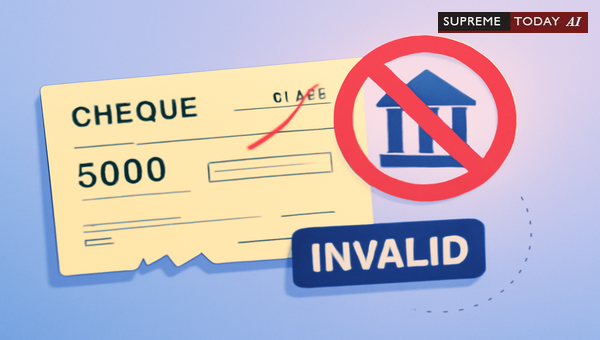
In the world of financial transactions, cheques remain a common payment method despite digital alternatives. However, issues like under (NI Act) can lead to legal battles. A frequent dispute arises when a cheque shows corrections, especially on critical details like the date. Consider this scenario: 138 matter. There is correction in the date mentioned in the cheque. No explanation given by complainant. Bank manager gave evidence that the cheque is invalid. Is it a ?
This question highlights a pivotal issue in cheque-related litigation. Generally, such corrections without proper can render a cheque invalid or mutilated, impacting its enforceability. This blog post delves into the legal analysis, drawing from key judgments and principles to provide clarity—though remember, this is general information, not specific legal advice. Consult a qualified lawyer for your situation.
A typically refers to one that has been physically damaged, torn, or materially altered in a way that compromises its integrity as a . Under banking guidelines and the NI Act, material alterations—changes to essential elements like date, amount, or payee—without the 's authorization or proper (e.g., full signature or countersignature) can classify it as mutilated or tampered.
is central here: any made without the consent of the discharges the from liability and renders the cheque void against any party at the time of making such alteration 2019 0 Supreme(Ker) 468. Courts have consistently held that unauthorized changes void the instrument 2023 0 Supreme(P&H) 469.
In the given case, the cheque bears a correction in the date, marked as 2004 0 Supreme(Ker) 347. The complainant offers no explanation for this change, a critical omission. Legally, when a cheque is altered—particularly on the date, which determines its —the burden falls on the complainant (holder) to prove the alteration was made by or with the 's consent 2019 0 Supreme(Ker) 468.
The absence of explanation implies , raising doubts about authenticity 2004 0 Supreme(Ker) 347. Without , such as initials or a full signature beside the correction, the cheque loses validity.
The bank manager's testimony strengthens the defence: the bank manager's evidence states that the cheque is invalid due to the correction 2004 0 Supreme(Ker) 347. Banks often refuse such cheques per guidelines, treating them as mutilated if alterations lack proper endorsement. This evidence aligns with practices where unendorsed changes lead to memos citing 'invalid' reasons, beyond mere ''
Seenath VS Joyson
.In one case, the manager confirmed due to insufficient funds but also noted account details, underscoring how banks scrutinize alterations
Seenath VS Joyson
. Here, the explicit invalidation due to date correction tips the scales toward mutilation.Section 87 NI Act explicitly protects against unauthorized changes. Courts emphasize: of a renders it void unless made to carry out the common intention of the original parties, and only the date on the cheque could be altered 2023 0 Supreme(P&H) 469. Even date corrections require 's approval with full signature.
In a ruling, a cheque with ink-dropped date correction and initials was deemed mutilated: Even, as could be seen from the Ex.P1, it is nothing but a . ... The said cheque if it is perused, there is a correction of year by way of dropping ink on the date and subsequently, initial is also found by the side of the said dot of ink
SMT. SEEMA D/O VASANT KHANVILAKAR, Vs MISS. SHABANA M. JAMADAR,
. Though initials were present, the explanation failed to validate it—mirroring our scenario's lack of any rationale.Another judgment quashed proceedings where a cheque was materially altered and returned for that reason: the cheque was materially altered and had been returned for the first time on account of material alterations, rendering it void as per the Guidelines and Section 87 of the Negotiable Instruments Act 2023 0 Supreme(P&H) 469.
Courts have addressed similar issues:- Handwriting and Manipulation Claims: In disputes alleging date or amount changes in different ink, expert opinions are relevant but weak without corroboration. One revision dismissed a late request for handwriting analysis, noting: the amount mentioned in the cheque, the date mentioned therein and the person to whom it has been issued have been manipulated by the complainant-opposite party and the same is in a complete different ink
. Oral evidence is key under .- Mutilation in Contexts: Even if signed portions remain, mutilation during disputes doesn't always acquit if liability is proven
Seenath VS Joyson
. However, unproven alterations favour the accused.- Overwriting on Date: Overwriting on the year next to date/month was questioned, but without proof of authorization, validity suffers.- No Blank Cheque Defence: Absence of misuse claims reinforces alteration issues 2015 0 Supreme(Ker) 1688.
These cases illustrate that complainant silence on corrections often leads to acquittals or quashals.
Not all corrections doom a cheque:- If the authorizes via or countersignature, it may remain valid 2004 0 Supreme(Ker) 347.- Bonafide mistakes might allow amendments in complaints, but not in the cheque itself 2014 0 Supreme(MP) 1254.- Post-dated cheques can be presented multiple times within , but alterations invalidate regardless
.
Here, no such proof exists, weakening the complainant's case.
To avoid pitfalls:- For Complainants: Always explain alterations in complaints, provide authorization evidence, and secure fresh cheques.- For Accused/Drawers: Highlight bank evidence and demand expert analysis early; challenge via Section 87 NI Act.- General Advice: Banks should mark reasons clearly; parties settle accounts before litigation 2015 0 Supreme(Ker) 1688. Courts weigh bank memos and lack of heavily 2004 0 Supreme(Ker) 347.
A cheque with an unexplained date correction, validated by the bank manager's invalidation evidence, is typically classified as mutilated or materially altered, discharging the under Section 87 NI Act 2019 0 Supreme(Ker) 468 2004 0 Supreme(Ker) 347. This undermines Section 138 proceedings.
Key Takeaways:- Unattested alterations void cheques.- Complainant bears proof burden.- Bank testimony is persuasive.- Seek legal counsel promptly.
Stay informed on NI Act nuances to safeguard transactions. This analysis draws from precedents but isn't advice—professional guidance is essential.
References:- 2004 0 Supreme(Ker) 347: Bank invalidation due to correction.- 2019 0 Supreme(Ker) 468: Section 87 effects.- Additional cases as cited.
#MutilatedCheque, #NIAct138, #ChequeBounce


PW.3 has given evidence that the cheque returned with Ext.P2 dishonour memo from the bank of PW.2, was given back to the complainant with Ext.P3 return memo. ... PW.2 the Manager of that bank has given evidence that on receiving such cheque Ext.P2 dishonour memo stating ‘funds insufficient’ was issued, since the account of the drawer was short of funds. ... He further gave #HL_ST....

PW2 the Manager of that bank has given evidence that on receiving such cheque Ex.P2 dishonour memo stating ‘funds insufficient’ was issued, since the account of the drawer was short of funds. ... He has also given evidence that the instrument transmitted related to the account of the accused, giving particulars of that account. The extract of the ‘cheque return register’ of that bank was also marked as Ex. P6. He further g....
PW2 the Manager of that bank has given evidence that on receiving such cheque Ex.P2 dishonour memo stating ‘funds insufficient’ was issued, since the account of the drawer was short of funds. ... He has also given evidence that the instrument transmitted related to the account of the accused, giving particulars of that account. The extract of the ‘cheque return register’ of that bank was also marked as Ex. P6. He further g....
PW2 the Manager of that bank has given evidence that on receiving such cheque Ex.P2 dishonour memo stating ‘funds insufficient’ was issued, since the account of the drawer was short of funds. ... He has also given evidence that the instrument transmitted related to the account of the accused, giving particulars of that account. The extract of the ‘cheque return register’ of that bank was also marked as Ex. P6. He further g....
(ii) As to whether the cheque in-question is invalid due to overwriting on the figure of year mentioned next to the date and month of issue of cheque (iii) As to whether on the date of issuance of cheque, the drawer had an existing account in the concerned ... bank (iv) As to whether the notice sent by the appellant/complainant is readable in evidence. ... , on the date, when the #HL_STAR....

Ex.P-1 is a return cheque of the bank which shows that the cheque was returned due to “insufficient funds” and “alternation in date, figures/words requires drawers signatures”. ... Therefore the correction duly acknowledged by the drawer will not amount to material alternation to attract Section 87 of the NI Act. The return of cheque stating “alternation on instrument other than date filled” will attract the offence under Section 138 of the NI Act. 5....

Looking from any angle, the said explanation given by the complainant-appellant is not going to validate the cheque Ex.P1. Though, the signature on the cheque Ex.P1 is admitted by the accused, no presumption can be drawn under Section 138 of the Act. ... As could be seen from the evidence of the complainant, when she has deposited, she has not aware of the said fact and the said cheque given by the accused has been....

Looking from any angle, the said explanation given by the complainant- appellant is not going to validate the cheque Ex.P1. ... Even, as could be seen from the Ex.P1, it is nothing but a mutilated cheque. ... The said cheque if it is perused, there is a correction of year by way of dropping ink on the date and subsequently, initial is also found by the side of the said dot of ink. ... The complainant #....
A post dated cheque bearing No.822543 dated 26-3-2012 was given by the applicant to the complainant for repayment of loan amount. The same was was presented by the complainant in the Bank on 3-4-2012, however, it got dishonoured on 6-4-2012 for want of sufficient funds. ... Both the parties adduced their evidence before the Judicial Magistrate. ... to the bank within a period of six months from the date on which it is drawn or within the period of it....

The plaintiff in his deposition denies any correction, he has no explanation to offer in case it is found that the date appears to be materially altered. ... The accused agreed and assured to repay the said loan amount along with interest @ 12 % per annum to the complainant/respondent. As per the assurance given by the accused, the complainant advanced a loan to the accused @ 12 % per annum. ... evidence to show that the cheque had not been issued fo....
Admittedly, no such prayer was made by the petitioner either before the learned Trial Court or before the learned Appellate Court to send the disputed cheque to the handwriting expert. case, it is mentioned that the amount mentioned in the cheque, the date mentioned therein and the person to whom it has been issued have been manipulated by the complainant-opposite party and the same is in a complete different ink.

case, it is mentioned that the amount mentioned in the cheque, the date mentioned therein and the person to whom it has been issued have been manipulated by the complainant-opposite party and the same is in a complete different ink. Admittedly, no such prayer was made by the petitioner either before the learned Trial Court or before the learned CRLREV No.1 of 2011 Appellate Court to send the disputed cheque to the handwriting expert.

Further, the accused had no case that he had given a blank signed cheque and that has been misused. Further, it will be seen from the accounts that more than the amount covered by the cheques are really due from the accused to the complainant. In order to attract section 138 of the Act, it is not necessary that the accused must issue cheque for the entire amount. There is no dispute regarding the entries made in the cheque, signature in the cheque and the date mentioned in the cheque.

The cheque number initially mentioned was wrong in the notice which was based for filing the complaint under section 138 of the Act, the said mistake cannot be corrected by the way of amendment. 7. On perusal of the record, it is evident that cheque No. 049063 instead of correct No. 0494063 has been mentioned in the notice which was issued by the respondent/complainant under section 138 of N.I.

3. It is the case of complainant that the cheque dated 26.2.2009 bearing No. 132547 given by the accused was presented by him in his bank from Latur. It is the case of complainant that when he contacted the accused and informed about the dishonour of the cheque, the accused requested to present the cheque again. It is contended that in the online transaction, it was informed that funds were not sufficient in the account of the accused and the cheque bounced on 27.2.2009.


An indispensable Tool for Legal Professionals, Endorsed by Various High Court and Judicial Officers
Please visit our Training & Support
Center or Contact Us for assistance

Scan Me!
India’s Legal research and Law Firm App, Download now!


For Daily Legal Updates, Join us on :



 Back to top


