


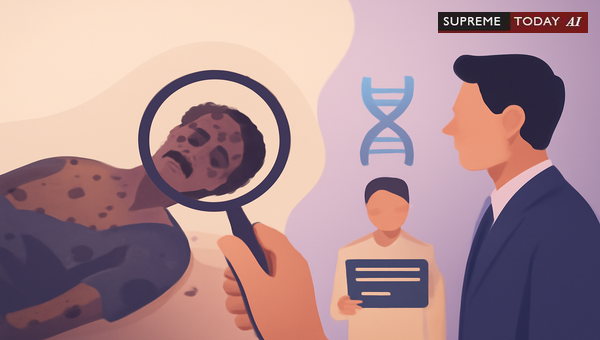
Death Body Identification in Indian Courts: Key Challenges
In criminal investigations, particularly homicides, death body identification stands as a cornerstone for establishing the victim's identity and building a case beyond . But what happens when bodies are decomposed, skeletal, or lacking clear markers? The question Death Body Identification encapsulates a complex legal issue in the Indian judiciary, where courts scrutinize identification methods amid evidentiary hurdles. This blog post delves into the challenges, valid approaches, and judicial insights drawn from landmark cases, offering general guidance for legal practitioners, investigators, and the public.
Note: This is general information based on judicial precedents and not specific legal advice. Consult a qualified lawyer for case-specific guidance.
Overview of Death Body Identification
Identification of a deceased person is pivotal in homicide trials. Courts demand proof that leaves no about the body's identity. Legal documents reveal recurring themes: bodies in advanced decomposition, reliance on clothing or photos, and the push for scientific corroboration. For instance, medical experts often testify that significant decomposition complicates visual ID, as seen in cases where skeletal remains were linked solely to attire without DNA backing 2021 0 Supreme(MP) 774.
Failure to robustly identify the body can derail prosecutions, as highlighted in one ruling: It is that of the identification of the dead body itself. The dead body, stated to be of Ashok Lahu Ukey... could not be identified by anybody 2019 0 Supreme(Bom) 172.
Key Challenges in Body Identification
Indian courts frequently encounter obstacles that undermine identification reliability. These include:
1. Decomposition and Physical State Issues
- Bodies found in advanced decay make visual recognition nearly impossible. Witnesses identifying based on clothing alone faced skepticism due to absent purchase receipts or corroboration 2017 0 Supreme(Bom) 801.
- In decomposed or skeletal cases, courts question non-scientific methods. One case noted a highly decomposed body, casting doubts on attire-based ID 2016 0 Supreme(Raj) 1231.
- Additional complications arise when bodies are exposed post-death, even eaten by animals, further obscuring features 2024 0 Supreme(MP) 424.
2. Lack of Documentary or Corroborative Evidence
- Testimonies without supporting documents, like receipts for personal items, weaken claims 2017 0 Supreme(Bom) 801.
- () document ID processes, such as Panchnama of Identification of Dead Body of deceased dated 2017 0 Supreme(Guj) 1723, but their evidentiary weight depends on procedural integrity 2016 0 Supreme(Guj) 920.
3. Inconsistent Witness Testimonies
- Witnesses altering details—e.g., shifting from multiple methods to one—erode credibility 2018 0 Supreme(Pat) 1238.
- Visual ID by family or witnesses via photos or clothing is common but unreliable for decomposed remains 2023 0 Supreme(Kar) 322 2023 0 Supreme(Pat) 294.
These challenges often lead courts to rule evidence insufficient, acquitting accused due to unproven identity 2016 0 Supreme(Raj) 1231 2021 0 Supreme(MP) 774.
Valid Methods for Reliable Identification
Despite hurdles, courts uphold certain methods when properly executed:
1. Familial Identification
- Close relatives like parents or siblings provide strong testimony. Severed body parts identified by family were deemed credible 2008 0 Supreme(Mad) 807.
- Combined with timing, such as aligning with disappearance (e.g., 2-3 months prior), it bolsters cases 2014 0 Supreme(Del) 3110.
2. Scientific and Forensic Evidence
- from bones (e.g., femur) matched to relatives' blood offers cogent proof 2023 0 Supreme(Bom) 1178 2023 0 Supreme(Kar) 322 2023 0 Supreme(Del) 5245.
- reports confirm homicidal causes like asphyxia, firearm wounds, or head trauma, typically within 24 hours
2024 0 Supreme(Chh) 558
Mohd. Yasin VS State of Through the Station House Officer - Crimes
.
3. Photographic and
- Photos aid ID if corroborated 2021 0 Supreme(MP) 727, though prior exposure via social media can taint it 2023 0 Supreme(Bom) 1173.
- Recovery at accused's instance, via disclosure statements, links evidence chains 2014 0 Supreme(Del) 3110 2023 0 Supreme(Kar) 322.
The Role of (TIP)
(TIP) is crucial but must follow strict protocols. Courts invalidate TIPs lacking age-matched dummies or when prior ID occurred via photos/social media 2023 0 Supreme(Bom) 1173 2022 0 Supreme(Cal) 1529. As one judgment states: The physical fact of identification has thus no separate existence apart from the statement involved in the very process of identification... such evidence of his would attract the operation of alongside 2024 0 Supreme(Mad) 2606.
Failure to conduct TIP or procedural lapses diminish its weight, emphasizing the need for forensic integration.
Judicial Considerations and Precedents
Courts evaluate ID holistically:- Relationship to Deceased: Familial ties enhance reliability.- Body Condition: Decomposition demands scientific backups.- Corroboration: Chains of , like weapon recovery and injuries, support claims
Mohd. Yasin VS State of Through the Station House Officer - Crimes
.In circumstantial cases, unproven ID overshadows other evidence: This is a case of and in order to substantiate the charges against the accused, the prosecut... 2024 0 Supreme(Mad) 2606. Absent robust ID, prosecutions falter 2019 0 Supreme(Bom) 172.
and aid but aren't standalone; they must align with forensics 2015 0 Supreme(Guj) 835.
Conclusion and Key Takeaways
Death body identification in Indian courts requires a multi-pronged approach, balancing traditional testimonies with modern forensics. While challenges like decomposition persist, leveraging DNA, proper TIPs, and documented chains fortifies cases. Investigators should prioritize:- Familial and scientific corroboration.- Procedural adherence in and TIPs.- Comprehensive evidence gathering to counter doubts.
Legal practitioners may challenge weak IDs or advocate strong ones based on precedents. Ultimately, accurate identification upholds justice in homicidal probes.
References (select case IDs):2017 0 Supreme(Bom) 801 2016 0 Supreme(Raj) 1231 2021 0 Supreme(MP) 774 2018 0 Supreme(Pat) 1238 2008 0 Supreme(Mad) 807 2023 0 Supreme(Bom) 1178 2021 0 Supreme(MP) 727 2024 0 Supreme(Mad) 2606 2019 0 Supreme(Bom) 172 2023 0 Supreme(Bom) 1173 2023 0 Supreme(Kar) 322
#DeathBodyID #IndianLaw #ForensicEvidence















