



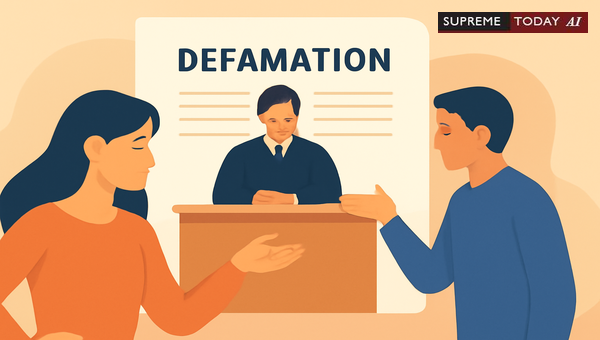
Claims in Family Court: Provisions and Key Factors in India
In family disputes, harsh words can escalate into serious legal battles. Imagine a spouse or relative spreading false rumors that damage your reputation—can you seek compensation for in Family Court? This is a common question: What is the Provision under which I can File a Claim for Compensation for in the Family Court and what are the Factors to be Included to Constitute the above Said ?
While primarily handle matters like marriage, divorce, maintenance, and child custody under the Act, 1984, claims between family members may not always fit neatly here. Generally, suits—civil or criminal—are filed in civil or . However, if tied to marital disputes, they might intersect with family proceedings. This post explores the legal landscape, key provisions, essential elements, and practical considerations under Indian law. Note: This is general information, not legal advice. Consult a qualified lawyer for your specific case.
Jurisdiction for Claims: Family Court or Civil Court?
have jurisdiction over 'suits or proceedings between the parties to a marriage' or involving family relationships, as per the Act, 1984. However, pure claims for compensation typically fall under via suits for under or for . 2006 0 Supreme(Ker) 50
suits between family members are maintainable if the plaintiff is legally aggrieved, but Family Court jurisdiction depends on whether the claim arises from a marital relationship. For instance, in marital discord cases involving allegations, ancillary claims might be considered, but standalone suits often go to . In one case, the court clarified jurisdiction noting, It is not a suit for land. It is suit for . Situs of properties is not material to decide on jurisdiction. Since part of arose within jurisdiction of this Court, this suit is maintainable. 2023 Supreme(Online)(HC) 6743
Key takeaway: Check if your claim links directly to family matters; otherwise, file in the appropriate civil court.
Key Provisions Governing Claims
Civil
Civil suits for seek compensation () and . No specific 'provision' mandates Family Court; instead:- (now ) defines , but civil remedies are under general .- (now BNSS) for criminal complaints, but only by a '' under . 1949 0 Supreme(SC) 54
Criminal
Requires a complaint by the aggrieved person. Families can't sue as an 'indeterminate body'; it must be a specific individual. 1949 0 Supreme(SC) 54
In family contexts, courts assess if the plaintiff has 'direct interest.' 2006 0 Supreme(Ker) 50
Essential Factors to Constitute
To succeed, prove these core elements:- Defamatory Statement: Tends to lower the person's reputation in others' eyes. 2006 0 Supreme(Ker) 50- Falsity: The statement must be false, made with malice or knowledge of falsity. 2006 0 Supreme(Ker) 50- Publication: Communicated to a third party. 2006 0 Supreme(Ker) 50- Harm: Actual injury, or presumed in libel cases. 2006 0 Supreme(Ker) 50- Aggrieved Plaintiff: Must be a ''—not a group or deceased's family unless living members' reputation is hit. 1949 0 Supreme(SC) 54 2022 0 Supreme(Del) 2118
In a YouTube case, the court outlined : Plaintiffs first prove , then defendants prove truth. In cases, the initially lies with the plaintiffs to prove , after which it shifts to the defendants to prove the truth of their statements. 2025 Supreme(Online)(KAR) 3437
Defenses and Exceptions in Family Disputes
Not all statements qualify as actionable:- : Absolute protection for judicial proceedings, lawyers, or official duties. Statements made in judicial proceedings... are protected by . 1908 0 Supreme(Mad) 120 2023 0 Supreme(Del) 2783- Deceased Persons: No action unless it harms living family reputation or targets feelings maliciously. 2022 0 Supreme(Del) 2118- Truth as Defense: If proven true and for public good.
In family feuds, counter-blast suits often arise. One case noted a civil suit for injunction against 'false complaints' by family, questioning maintainability under .
Another highlighted misbehavior and threats by family, leading to claims amid public humiliation.
Case Studies: Between Family or Associates
Grievance Letters as : A letter alleging wrongdoing, circulated publicly, led to nominal (Rs.1,000) and injunction. Use of derogatory terms without substantiation in a grievance letter constitutes . 2023 Supreme(Online)(HC) 6743
Family Interference: Threats and public by relatives were actionable when harming reputation.
These illustrate that even in family-like disputes, unsubstantiated claims damage reputations and invite suits.
Steps to File a Claim
- Gather Evidence: Statements, witnesses, proof of publication and harm.
- Determine Court: Family Court if marital-linked; else civil/magistrate.
- Draft Complaint/Petition: Detail elements, seek /injunction.
- File as Aggrieved Person: Ensure you're directly affected. 1949 0 Supreme(SC) 54
- Anticipate Defenses: Privilege or truth pleas.
Recommendations:- Verify no privilege applies (e.g., court statements). 1908 0 Supreme(Mad) 120- Prove malice and falsity clearly.- For deceased-related claims, show impact on living kin. 2022 0 Supreme(Del) 2118
Conclusion and Key Takeaways
claims between family members are viable under Indian law if elements are met and you're a ',' but Family Court jurisdiction is limited—often better suited for unless intertwined with family proceedings. 2006 0 Supreme(Ker) 50 Always establish falsity, publication, and harm while navigating defenses like privilege.
Key Takeaways:- No direct Family Court provision for standalone ; link to marital issues for possible fit.- Prove: Defamatory, false, published statement harming reputation.- Watch for privileges and '' requirement.- Burden shifts to defendant for truth after your case. 2025 Supreme(Online)(KAR) 3437
Facing family ? Seek professional advice promptly to protect your rights. Share your thoughts below!
References:- 2006 0 Supreme(Ker) 50, 1949 0 Supreme(SC) 54, 1908 0 Supreme(Mad) 120, 2023 0 Supreme(Del) 2783, 2022 0 Supreme(Del) 2118, 2023 Supreme(Online)(HC) 6743, 2025 Supreme(Online)(KAR) 3437,
,
#DefamationLawIndia, #FamilyCourtClaims, #LegalCompensation







