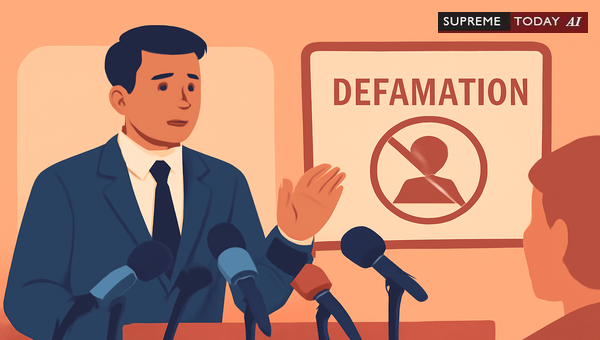
Can Press Conferences Amount to Defamation?
In today's fast-paced media landscape, press conferences are a powerful tool for politicians, businesses, and public figures to share their side of the story. But what happens when bold accusations fly? Can a press conference amount to defamation? This question often arises in high-stakes scenarios, especially during elections or corporate disputes, where false statements can tarnish reputations overnight.
Press conferences amplify messages through print, electronic, and social media, making them a double-edged sword. While they protect freedom of speech under Article 19(1)(a) of the Indian Constitution, they are not immune to legal scrutiny. Under Section 499 of the Indian Penal Code (IPC), defamation involves making or publishing any imputation concerning a person that harms their reputation, unless exceptions like truth for public good apply. Section 500 IPC prescribes punishment, typically up to two years' imprisonment or fine.
This blog dives into when press conference statements cross the line into defamation territory, drawing from key judicial insights. Note: This is general information, not legal advice. Consult a qualified lawyer for specific cases.
Understanding Defamation in the Context of Press Conferences
Defamation law balances free speech with reputation protection. As noted, every person has a right to reputation. Law of Defamation is an effective limitation on the freedom of Press. However, this freedom is not absolute, since no democracy affords absolute and unbridled freedom. 2022 0 Supreme(Guj) 345
Statements at press conferences aren't just casual remarks—they're often assertions meant for wide dissemination. Courts examine if they are false imputations that lower a person's esteem in society. For instance, allegations of corruption or scams, if untrue, can trigger liability.
Nature of Statements: Questions or Assertions?
Not all utterances are defamatory. Mere questions might be protected, but definitive claims aren't. In one case, statements during a press conference were deemed assertions, not inquiries: The statements made during a press conference are not merely questions but can be considered assertions that may lead to defamation if they are false and damaging to a person's reputation. 2022 0 Supreme(Gau) 1394
Similarly, accusations of involvement in multi-crore scams have been flagged. On 01.07.2019, Shri Manoj Tiwari... held a Press Conference making false and defamatory statements as though the complainant... was involved in corruption to the tune of Rs. 2000 crores... 2022 8 Supreme 274
Intent, Publication, and Wide Reach
Calling a press conference signals intent to publish widely. The act of calling a press conference inherently suggests an intention to disseminate information widely. This was acknowledged in a case where the petitioner intended for the press to publish his views, thereby completing the act of defamation through publication in various media outlets. 1983 0 Supreme(Bom) 123
Publication completes defamation. Even if spoken in Chandigarh, if reported in a Bombay newspaper, the offense occurs there too: the statements made in Chandigarh were deemed to have completed the act of defamation in Bombay due to the publication... 1983 0 Supreme(Bom) 123
Recent examples abound. A press conference was held by respondent nos. 1 and 2 at Lucknow on 15.04.2024 where the opposite parties meet allegations against the husband of the petitioner, and the said news was widely covered in print, electronic as well as social media. 2024 0 Supreme(All) 1984 This was timed on the eve of elections, heightening scrutiny.
Role of Prior Clarifications and Context
Prior statements matter. If clarifications were issued earlier, contradicting them later can worsen matters: If clarifications have been issued prior to the press conference, as in the case where the respondent clarified certain allegations on social media, the subsequent statements made in the press conference may still be considered defamatory if they contradict those clarifications. 2022 0 Supreme(Gau) 1394
Context is key. In corruption allegations: In a case involving allegations of corruption made during a press conference, the court examined whether the statements were per se defamatory. It was determined that the context and nature of the statements were crucial...
Manoj Kumar Tiwari VS Manish Sisodia - Delhi (2020)
Defenses exist, like good faith for public good, but courts are cautious. Since the accusations found in the articles and representations were made in good faith and for public good, that will not amount to defamation. 2018 0 Supreme(Mad) 4221 Yet, irony or alternatives can still defame: imputations in such forms may be actionable 2022 0 Supreme(Gau) 1394 2025 0 Supreme(Telangana) 619.
Media Reporting vs. Original Statements
Importantly, media outlets reporting press conferences are often protected if accurate. The reportage of press conferences, if accurate and based on what was stated, generally does not constitute defamation. 2022 Supreme(Online)(Kar) 55235 But the speaker bears primary risk for false content.
Attending alone isn't corrupt practice: Merely, attending the press conference does not amount to any corrupt practice. 2021 0 Supreme(P&H) 588 Factual criticism might be shielded, but false criminal imputations aren't.
Constitutional Balance: Free Speech Limits
The Supreme Court upheld IPC defamation provisions: Though right to freedom of speech and expression is a highly valued and cherished right but the Constitution itself conceives of reasonable restrictions and Sections 499 and 500 of the IPC cannot be characterized as disproportionate restriction on free speech. 2019 0 Supreme(Del) 524 (Referencing Subramanian Swamy vs. Union of India).
Key Cases and Lessons
Recommendations to Mitigate Risks
To avoid pitfalls:- Verify Facts: Review statements for accuracy before speaking.- Consider Context: Note prior clarifications or election timing.- Assess Reach: Evaluate publication jurisdictions.- Seek Exceptions: Ensure statements qualify under IPC defenses (e.g., truth, public good).- Legal Review: Have counsel vet content.
Conclusion: Proceed with Caution
Press conferences can amount to defamation if statements are false, damaging, and widely published. Courts focus on nature, intent, context, and truthfulness. While free speech is vital, reputation is equally protected. As media amplifies everything, precision is paramount.
Key Takeaways:- Assertions > Questions in risk.- Publication completes the offense.- Context and priors influence outcomes.- Media reports often safe; speakers vulnerable.
Stay informed, speak responsibly. For tailored advice, contact a legal expert.
References:- 2022 0 Supreme(Gau) 1394 1983 0 Supreme(Bom) 123
Manoj Kumar Tiwari VS Manish Sisodia - Delhi (2020)
2024 0 Supreme(All) 1984 2022 8 Supreme 274 2022 0 Supreme(Guj) 345 2021 0 Supreme(P&H) 588 2019 0 Supreme(Del) 524 2019 0 Supreme(Bom) 731 2018 0 Supreme(Mad) 4221 2025 0 Supreme(Telangana) 619 2025 0 Supreme(Kar) 1313 2024 0 Supreme(HP) 271 2022 Supreme(Online)(Kar) 55235
#DefamationLaw, #PressConference, #IPC499