


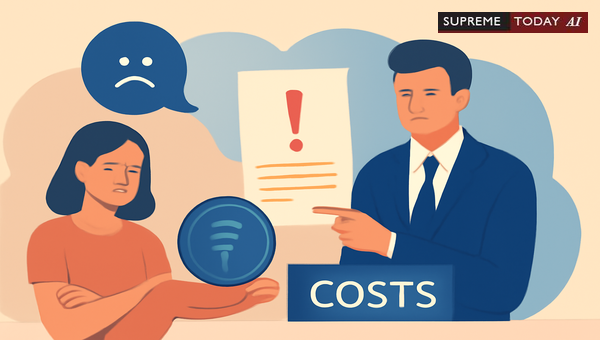
Frivolous Consumer Complaints: Courts Fight
In today's litigious environment, in India are sometimes misused as tools for harassment rather than justice. Imagine a scenario where a party, not qualifying as a 'consumer' under the law, files a complaint solely to extract money from the respondent. This is the essence of a with intent to squeeze money from the respondent—a growing concern that courts are addressing firmly.
This blog post explores the legal framework, key precedents, and strategies for respondents facing such baseless claims. While this provides general insights based on established case law, it is not specific legal advice. Consult a qualified lawyer for your situation.
Understanding Frivolous and Vexatious Consumer Complaints
Under the (now updated in ), not everyone can claim consumer status. and define a 'consumer' narrowly—typically someone who buys goods or services for personal use, excluding suppliers or commercial entities in the chain.
Courts have clarified that parties not fitting this definition cannot file complaints. Such filings are inherently frivolous and liable for dismissal. For instance, complaints by non-consumers are dismissed outright, as they lack . 2010 0 Supreme(Mad) 1804
Frivolous complaints often stem from malicious intent, such as harassment or pressuring settlements. Section 26 empowers forums to dismiss these and impose costs. Courts emphasize: complaints filed without sufficient cause or grounds, especially when motivated by a desire to extract money or cause harassment.
Sapient Corporation Employees Provident Fund Trust VS HDFC Bank Ltd. - Consumer ()
ASHWANI KUMAR VS SETIA TRAVELS PVT. LTD. - Consumer ()
Key Legal Principles and Court Precedents
Indian courts have built a robust body of precedents to deter abuse:
1. Lack of Consumer Status
- Suppliers or intermediaries do not qualify as consumers. Their complaints are dismissed as frivolous. 2010 0 Supreme(Mad) 1804
2. Malicious Intent to Extract Money
- Courts recognize complaints filed primarily for . In one case, the respondent argued the complaint was filed only with the sole of the complainant. 2023 Supreme(Online)(Del) 18926
- Another highlighted: After filing the said suit respondent/complainant has filed the above complaint solely with the intent to extract money from the petitioners. 2019 0 Supreme(Kar) 1990
- Such conduct leads to dismissal and penalties, as it undermines the consumer protection mechanism.
Sapient Corporation Employees Provident Fund Trust VS HDFC Bank Ltd. - Consumer ()
ASHWANI KUMAR VS SETIA TRAVELS PVT. LTD. - Consumer ()
3. Frivolous Nature and
- Baseless claims, even if framed as consumer disputes, are rejected. For example: The consumer complaint being a frivolous one, the complainant respondent Nos. were ordered to pay costs.
Crystal Phosphates Ltd. VS Harbhajan Singh - Consumer
- In another: In fact, the complainant appears to have been trying to take recourse to the provisions of with a view to extract money from the opponent who has specifically come out with the defence that a false, frivolous and vexatious complaint has been filed against him.
Additional Factors Leading to Dismissal
From various judgments, common red flags include:
- Violations: Complaints must be filed within two years. Delays without justification render them barred. In cases like 2025 Supreme(Online)(SCDRC) 10015 and 2025 Supreme(Online)(SCDRC) 2822, dismissals occurred due to excessive delays, deeming them frivolous.
- : Courts uphold forfeiture when complainants default. In
TDI Infrastructure Ltd. VS Prakash Vohra - Consumer ()
, the respondent refused an offer and filed for possession instead of refund, leading to scrutiny of motives. - Lack of Merit or Evidence: No proof of deficiency? Dismissal follows.
ROSHAN LAL GARG VS N. D. AGGARWAL (SINCE DECEASED) THROUGH HIS LRS. - Consumer
notes: The complaint was pleaded to be false, frivolous with to extract money. - Bad Faith Contentions: Respondents successfully argue mala fide when complaints follow parallel suits or conceal facts.
called a complaint immature and appears to be frivolous.
Other examples:- Expired products claims dismissed for without merit. 2025 Supreme(Online)(SCDRC) 19359- Delayed earnest money refund prayers rejected.
Consequences for Frivolous Complainants
Courts do not take misuse lightly:1. Outright Dismissal: Common for non-meritorious claims. 2010 0 Supreme(Mad) 1804
2. Imposition of Costs: Substantial amounts to deter abuse—e.g., Rs. 10,000 in litigation expenses.
Crystal Phosphates Ltd. VS Harbhajan Singh - Consumer
ASHWANI KUMAR VS SETIA TRAVELS PVT. LTD. - Consumer ()
3. Interest on Delayed Payments: Costs must be paid promptly, or interest accrues.4. Deposit to Welfare Funds: In some cases, amounts directed to consumer welfare.
This reinforces forum integrity: Courts are empowered to dismiss such complaints and impose costs, often substantial, to prevent misuse.
Defending Against Frivolous Complaints: Recommendations
If you're a respondent:- Challenge Consumer Status: Argue lack of standing under Sections 2(d)/2(o).- Highlight Frivolousness: Point to no cause of action, delays, or parallel litigation.- Prove Malicious Intent: Evidence of motives strengthens your case.- Seek Costs: Request declaration of frivolity and compensatory costs.- Gather Precedents: Reference cases like
Sapient Corporation Employees Provident Fund Trust VS HDFC Bank Ltd. - Consumer ()
for harassment claims.Proactively, document all interactions to counter false narratives.
Conclusion and Key Takeaways
Frivolous consumer complaints with intent to squeeze money are strongly discouraged by Indian courts. They protect the system by dismissing baseless claims and imposing costs, as seen across precedents. Key takeaway: Genuine grievances thrive, but abuse invites penalties.
- Complaints by non-consumers are inherently invalid. 2010 0 Supreme(Mad) 1804
- Malicious filings for money extraction lead to dismissal and costs.
ASHWANI KUMAR VS SETIA TRAVELS PVT. LTD. - Consumer ()
- Timely, evidence-based claims only succeed—delays or bad faith doom cases.
Stay informed, defend vigorously, and uphold justice. For tailored advice, reach out to a legal expert.
(Word count: 1028. This post draws from public judgments for educational purposes only.)
#ConsumerLaw #FrivolousComplaints #LegalProtection















