


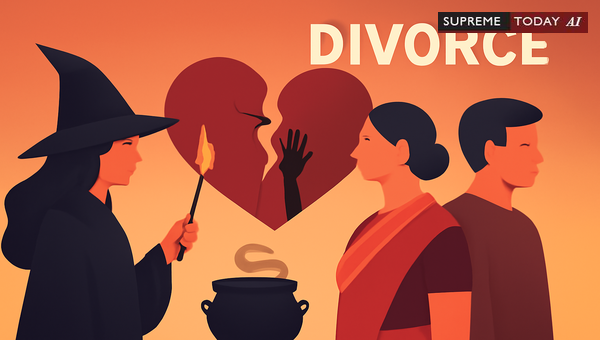
Can Be Grounds for Divorce in India?
In a country like India, where traditions blend with modernity, such as and continue to influence personal lives, including marriages. But what happens when allegations of enter the realm of marital discord? Can invoking as a reason justify seeking a divorce? This question, often phrased as Divorce on , raises critical legal, social, and cultural issues. While Indian courts strongly condemn such practices, especially when they lead to harm, their role in divorce proceedings requires careful examination.
This article delves into the legal framework, key court judgments, and real-world cases to provide clarity. Note: This is general information based on legal precedents and not specific legal advice. Consult a qualified lawyer for personalized guidance.
The Legal Stance on and in India
Indian courts have consistently condemned practices associated with , , and superstitious rituals, viewing them as socially harmful and often illegal, particularly when they involve bodily harm or death. The judiciary emphasizes a scientific and secular approach, holding that mere belief or superstitious motivation does not exempt individuals from criminal responsibility2009 0 Supreme(SC) 1200.
For instance, courts have noted that is deeply intertwined with , patriarchy and social control and that such allegations have a long past often with tragic consequences2009 0 Supreme(SC) 1200. Practices leading to violence are punishable under the , with specific statutes like the , targeting these evils 2021 0 Supreme(Bom) 125
.
Key points include:- Superstitious acts causing injury or death are criminal offenses 1997 0 Supreme(SC) 1741.- Legislation promotes a and condemns baseless rituals 2021 0 Supreme(Bom) 125.- Courts stress societal reform through education and awareness 2009 0 Supreme(SC) 1200.
Allegations in Marital Disputes and Divorce
Allegations of frequently surface in family courts as grounds for divorce, often under claims of mental or . In one case, a husband sought divorce after his wife allegedly threatened his family with tantra/, quarreling and vowing to approach tantriks
. Similarly, in another instance, a wife was accused of performing , leading to the installation of CCTV cameras and eventual harassment complaints 2025 Supreme(Online)(Kar) 13617.
Family members believing in have subjected spouses to rituals, such as placing lemons and green chilies near beds, contributing to mental torture 2018 0 Supreme(Bom) 997. These acts are cited as under , potentially justifying divorce.
Criminal Liability in -Related Harm
When escalates to harm, it attracts severe penalties. In a tragic case, the accused, influenced by superstitions, caused fatal injuries, with the court ruling it murder under the IPC, stating the prosecution must prove the criminal act irrespective of motives 1997 0 Supreme(SC) 1741. Practicing or tantrik acts causing injuries attract penal consequences, possibly under the 2025 0 Supreme(Telangana) 276.
Villagers known for have sparked quarrels, like when a deceased scolded an accused for targeting his daughter 2018 0 Supreme(Bom) 978, or a father blamed for on his daughter 2018 0 Supreme(Cal) 398. Even in prosecutrix cases, spells are alleged to impair judgment 2017 0 Supreme(All) 1869.
Divorce Proceedings Influenced by Claims
Courts scrutinize allegations in divorce petitions. Threats to finish the entire family via have been pivotal in granting relief
. In harassment scenarios, accusations led to police complaints and divorce filings 2025 Supreme(Online)(Kar) 13617.
However, not all claims succeed; courts demand evidence. often ties into broader patterns, like dowry demands intertwined with occult rituals, where a woman was subjected to after failing to conceive and robbed of her stridhan
.
Main insights from cases:- Harassment Tool: Used to control or threaten spouses, prompting domestic violence or divorce claims 2024 Supreme(Online)(MP) 52131
.- Grounds: Contributes to mental agony, supporting divorce 2024 Supreme(Online)(Kar) 40612 2017 6 Supreme 666.- Legal Prohibition: Act, 2013 bans promotion and abetment, invoked in family disputes 2024 0 Supreme(Kar) 305 2021 0 Supreme(Bom) 1.
Judges warn against propagating such practices, especially harming children, upholding statutory bans 2021 0 Supreme(Bom) 1 2025 Supreme(Online)(Ker) 25337.
Exceptions, Limitations, and Judicial Principles
Belief in offers no legal shield for harmful acts. Courts advocate the provisions of the Act and the need for a scientific approach, deeming baseless practices illegal 2021 0 Supreme(Bom) 125. While IPC provisions apply, they may not fully deter, necessitating stronger enforcement 2009 0 Supreme(SC) 1200.
In divorce, allegations must prove or . Social context matters—widespread beliefs require education, but violence remains prosecutable.
Recommendations for Legal and Social Reform
To address this:- Prosecute Rigorously: Violence motivated by under IPC and special acts.- Awareness Campaigns: Promote to eradicate superstitions.- Enforce Legislation: Strengthen Acts and support victims in family courts.
Key Takeaways and Conclusion
Divorce on is viable if allegations demonstrate or harassment, as courts view such practices as inhuman and illegal. Precedents like murder convictions 1997 0 Supreme(SC) 1741, societal harm discussions 2009 0 Supreme(SC) 1200, and divorce threats
affirm this. Yet, credibility is key—frivolous claims may fail.
Ultimately, Indian law prioritizes rationality over , protecting marriages from occult shadows while punishing harm. For those facing such issues, seek legal counsel promptly. By fostering education, society can diminish these archaic influences, ensuring justice prevails.
References
- 1997 0 Supreme(SC) 1741 – Murder under influence.
- 2009 0 Supreme(SC) 1200 – Societal harm of superstitions.
- 2021 0 Supreme(Bom) 125 – Scientific approach and Act.
- 2025 0 Supreme(Telangana) 276 – Penal consequences for tantrik acts.
– Threats leading to divorce.
- 2025 Supreme(Online)(Kar) 13617 – CCTV and harassment claims.
- Others as cited.












