


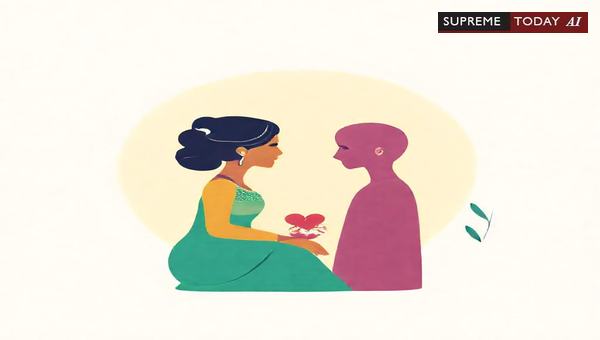
Whether a Wife Must Legally Adopt Her Husband's Surname and Identity After Marriage in India
One of the most common questions women ask after marriage is whether they are legally bound to follow their husband — in name, identity, or legal standing. The question does wife follow the case of her husband after marriage usually arises when a woman is deciding whether to update her documents, retain her maiden name, or understand what marriage actually changes about her legal status. The short answer, under modern Indian law, is that a wife does not legally follow her husband's identity — any change of surname is a matter of personal choice, not legal compulsion.
The Short Answer: Surname Change Is Choice, Not Law
The assumption of a husband's surname upon marriage is, in strict legal terms, a social convention. Halsbury's Laws of England puts it directly: when a woman on marriage assumes her husband's surname, she acquires a new name by repute, and the change of name is in fact, rather than in law, a consequence of the marriage 2025 0 Supreme(Mad) 2996. Indian courts have reinforced this autonomy by recognising the as a facet of the under 2023 0 Supreme(Del) 5107.
Where the Idea Came From: The
Historically, the answer to this question was very different. Under the in English Common Law, a husband and wife were treated as one person in law, with the wife's separate legal existence effectively suspended during marriage. As Blackstone articulated, the woman's legal being was incorporated and consolidated into that of the husband 2018 7 Supreme 1.
This doctrine had far-reaching consequences beyond names:
- A married woman's property rights were absorbed by her husband
- Her contractual capacity and legal standing were restricted
- It even gave rise to the obsolete tort of
The Victorian era reduced women's status to something near that of property — part of the estate of their fathers before marriage and of their husbands afterwards 2018 7 Supreme 1.
How Legislation Dismantled Coverture
The doctrine was progressively abolished through statute. The made the first statutory change, followed by the and the . From 1 January 1883, a married woman was capable of acquiring, holding, and disposing of property as if she were a — a fully independent legal person 2025 0 Supreme(Mad) 2996.
Today, a married woman stands in the same position as any unmarried woman regarding the acquisition, holding, and disposition of property, and the old has been completely abolished 2025 0 Supreme(Mad) 2996.
The Indian Position
Unlike the United Kingdom, where the doctrine of merger has become outdated by legislative reform, in India personal proprietary and possessory rights of women continue to be dealt with by their respective personal laws 2025 0 Supreme(Mad) 2996. This means the practical effect of marriage on a woman's identity and rights can vary depending on the personal law applicable to her — whether Hindu, Muslim, Christian, or secular law under the .
What Indian Courts Say About Names and Identity
Modern Indian jurisprudence strongly protects personal identity:
- The has held that a name is important because a person derives identity from it, and a mother, as , has the right to decide her child's surname — including giving the child her new husband's surname upon remarriage 2022 6 Supreme 675
- Courts have recognised that the under Article 21 allows individuals to change their surnames, including to escape caste-based prejudice, and to enjoy an honourable identity free from social prejudice 2023 0 Supreme(Del) 5107
Related Practical Realities After Marriage
While identity and name remain matters of choice, courts do recognise certain social expectations within marriage. In several decisions under the , courts have observed that in normal circumstances a wife is expected to be with the family of the husband after marriage, and that she becomes integral to and forms part of the husband's family 2019 0 Supreme(Mad) 2917 and 2018 0 Supreme(Kar) 1164. One court even held that insisting a husband live separately from his elderly mother amounted to cruelty
Prabir Kumar Das VS Papiya Das
. However, courts have also clarified that no person can be physically forced to cohabit under a decree of 2021 0 Supreme(Guj) 962.Maintenance: Where Marital Status Still Matters
Marriage does carry legal consequences, particularly in maintenance law. provides for maintenance of wives as a measure of social justice, and courts have mandated a broad and expansive interpretation of the term wife 2020 6 Supreme 322. Still, the status of a matters: a second marriage during the subsistence of a prior marriage generally does not create the legal status of wife for maintenance claims 2026 Supreme(Online)(Raj) 13846 and 1998 0 Supreme(AP) 477, though a recent judgment adopted a more expansive, welfare-oriented view 2025 2 Supreme 644. Courts have also held that a wife may claim separate maintenance where the husband takes a second wife, without proving neglect 1973 0 Supreme(AP) 6, and that a wife remains entitled to maintenance under Section 125 even if she has not complied with a decree of 2024 0 Supreme(Kar) 107.
Key Takeaways
- A woman in India is generally not legally compelled to adopt her husband's surname; it is a matter of repute and personal choice 2025 0 Supreme(Mad) 2996
- She may retain her maiden name, adopt her husband's surname, or use a combination of both
- Her legal identity is not merged into her husband's — she can own, hold, and dispose of property independently
- If she chooses to change her name, documents such as passports and educational certificates may need updating through the prescribed government process
- Marriage does create legal rights and obligations (maintenance, inheritance, succession), but these are governed by personal law and statute, not by the outdated
Marriage in modern Indian law creates a partnership of two legally independent persons, not a merger of identities. While this information reflects general legal principles, anyone facing a specific name-change, identity, or maintenance issue may wish to consult the applicable personal law and seek tailored advice for their circumstances.
#WomensRights #FamilyLaw #RightToIdentity #IndianLaw #MarriageLaw












