


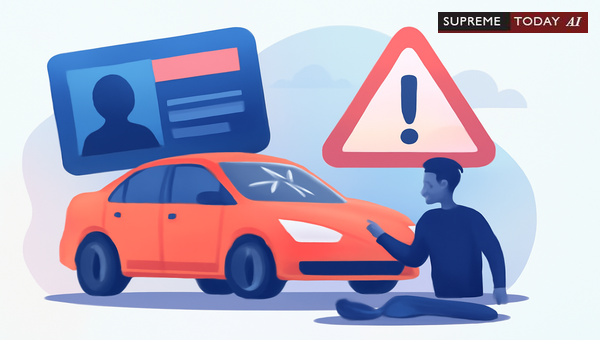
Does No Driving License Affect in Accidents?
In the chaotic aftermath of a motor vehicle accident, questions about liability often arise—especially under for causing death by negligence. One common query is: Does the absence of a driving license for the deceased and co-passenger affect of the accused? This issue frequently surfaces in cases involving , where license status of those involved (driver, deceased, or passengers) comes under scrutiny.
While driving without a valid license is an offense under the (MV Act), its role in establishing is nuanced. This blog post breaks down the legal principles, key court rulings, and practical implications, drawing from landmark judgments. Note: This is general information based on case law and not specific legal advice—consult a qualified lawyer for your situation.
Main Legal Finding
Driving without a valid license can impact , but its significance depends on the circumstances of the case, the nature of the act, and whether the driver’s conduct is proven to be rash or negligent. Merely holding or not holding a license does not automatically establish ; the actual conduct and are crucial. For the deceased and co-passengers, their license status primarily influences the driver's and owner's liability, rather than creating direct for them or significantly altering the accused's criminal exposure. 2006 3 Supreme 272 1967 0 Supreme(SC) 349
Criminal proceedings focus on proving rashness or negligence by the accused (typically the driver), not peripheral factors like passengers' licenses unless their actions contributed causally to the accident.
Key Principles from Case Law
License Status and Driver's Conduct
Courts have consistently held that the absence of a valid license is relevant but not conclusive for criminal negligence. In 1967 0 Supreme(SC) 349, the court acquitted the driver, stating: The mere fact that the appellant held only a learner’s license did not make him guilty of a rash or negligent act, as there was evidence that he had driven the jeep to various places on the day previous to the occurrence. This underscores that license status alone does not prove rashness—evidence of actual negligent behavior is required. 1967 0 Supreme(SC) 349
Similarly, in 2000 5 Supreme 308, liability depends on the driver's conduct and accident circumstances, not merely on others' license status. Driving without a proper license, especially for commercial vehicles like taxis, breaches policy conditions and may aggravate civil liability but doesn't automatically trigger criminal guilt. 2006 3 Supreme 272
Impact on Deceased and Co-Passengers
The license status of the deceased or co-passengers rarely affects the accused's . Passengers are not expected to hold driving licenses unless they were actively involved (e.g., interfering with controls). Courts emphasize:- No direct for passengers based on license absence.- Scrutiny only if their conduct (e.g., reckless behavior) contributed to the accident.
In 2024 0 Supreme(AP) 325, the court ruled: cannot be assumed solely based on the absence of a driving license; clear evidence of negligence is required to establish liability. This principle extends to deceased victims—lack of license doesn't imply fault or reduce the accused's responsibility. 2024 0 Supreme(AP) 325
Insurance and Civil Liability Angles
While hinges on penal code provisions, license absence often plays a bigger role in insurance claims under the MV Act. Insurers frequently challenge payouts citing breaches:
- In 2019 0 Supreme(Kar) 487, the insurer avoided liability partly because the tractor driver lacked a valid license, leading to another person being implicated. The tribunal assessed compensation despite this, focusing on the deceased's income (enhanced from Rs. 3,000 to Rs. 4,500 per month with future prospects). 2019 0 Supreme(Kar) 487
- 2023 Supreme(Online)(ORI) 10578 noted the insurer's liability even without a driver's license, allowing recovery from the owner later, as per precedents like Kusum Rai (2006).
- In 2023 0 Supreme(Guj) 1270, challenges on unauthorized passengers and invalid licenses were raised, but tribunals upheld claims under Sections 166 and 147 if negligence was proven.
Under , insurer liability persists post-insured's death, unaffected by license issues unless proven breaches. 2023 0 Supreme(Guj) 1270
However, for under , claims fail if the accident stems from the claimant's own fault without third-party involvement, as in 2022 0 Supreme(Mad) 3256, where the deceased drove without a license. 2022 0 Supreme(Mad) 3256 2020 0 Supreme(SC) 463
Exceptions Where License Matters More
- Commercial Vehicles: Driving a taxi without a Light Motor Vehicle endorsement breaches conditions, affecting owner/insurer liability. 2006 3 Supreme 272
- : If evidence shows license absence led to poor handling (rare for passengers), it may factor in. But courts demand proof, not assumptions. 2022 0 Supreme(AP) 468 states insurers must prove invalid licenses to avoid liability under .
- Deceased as Driver: If the deceased was driving unlicensed, claimants may face hurdles in compensation, but this doesn't shield the accused from criminal charges if their negligence caused the crash. 2019 0 Supreme(Kar) 632 assessed higher income for a licensed cleaner/deceased, ignoring license for quantum. 2019 0 Supreme(Kar) 632
Practical Recommendations
- For Accused/Drivers: Gather evidence of your conduct (e.g., prior safe driving) to counter license-based arguments.
- Claimants: Focus on proving accused's rashness via FIR, eyewitnesses, and spot machans—license status of deceased/passengers is secondary.
- Insurance: Verify licenses early; breaches allow '' but don't absolve initial payout.
Bullet-point takeaways:- License absence = traffic offense, not automatic criminal negligence.- Passenger/deceased licenses irrelevant unless culpable conduct proven.- Prioritize over documentation in trials.
Conclusion: Focus on Conduct, Not Credentials
In summary, the absence of a driving license for the deceased or co-passenger does not significantly affect the accused's . Courts prioritize proof of by the accused, as seen in 1967 0 Supreme(SC) 349 2006 3 Supreme 272 2000 5 Supreme 308. While it influences insurance and civil claims (e.g., 2019 0 Supreme(Kar) 487), criminal cases demand evidence of fault, not paperwork lapses.
Road accidents are tragic—understanding these nuances can guide better legal strategies. Always seek professional advice tailored to your case, as outcomes vary by facts and jurisdiction.
References:1. 2000 5 Supreme 308 - Negligence proof essential.2. 2006 3 Supreme 272 - Commercial license breaches.3. 1967 0 Supreme(SC) 349 - Learner's license not rashness.4. Additional cases: 2024 0 Supreme(AP) 325, 2019 0 Supreme(Kar) 487, 2022 0 Supreme(Mad) 3256, etc.
#MotorAccidentLaw, #DrivingLicenseLiability, #CriminalNegligence












