


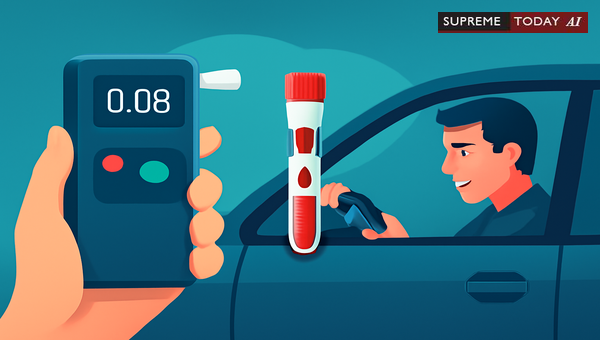
Is Blood Test Mandatory for Drunken Driving Cases?
Drunken driving remains one of the leading causes of road accidents in India, claiming countless lives and causing severe injuries. If you're wondering, Drunken Drive Blood Test has to be Taken, you're not alone. Many drivers, legal professionals, and even law enforcement grapple with the nuances of when and how alcohol tests—whether breath or blood—are mandated under the , 1988 (MV Act). This post breaks down the legal requirements, judicial interpretations, and practical implications to help you understand these critical provisions.
Important Disclaimer: This article provides general information based on legal precedents and statutes. It is not a substitute for professional legal advice. Consult a qualified lawyer for advice specific to your situation.
Understanding Drunken Driving Laws Under the MV Act
punishes whoever drives or attempts to drive a motor vehicle with exceeding 30 mg per 100 ml of blood, detected via a breath analyzer test.
The law prioritizes scientific evidence over mere suspicion or appearance of intoxication to ensure fair convictions. 2016 0 Supreme(Ker) 1367
The primary methods to establish drunkenness are breath analyzers for immediate testing or blood tests when breath tests aren't feasible. Courts emphasize that these tests objectively measure alcohol levels at the relevant time, particularly when the driver is driving or attempting to drive. 2012 5 Supreme 321 2016 0 Supreme(Ker) 1367
Purpose of Breath and Blood Tests
Under , police officers with reasonable suspicion can require a breath specimen from a person driving or attempting to drive. 2012 5 Supreme 321 The breath analyzer provides instant, objective evidence of intoxication —meaning at the exact moment of driving or attempt. This immediacy is crucial, as alcohol levels can change over time.
However, if the suspect escapes, refuses, or circumstances prevent an immediate breath test, blood samples become vital. Judicial rulings affirm that blood tests conducted later, if collected properly, remain admissible. For instance, in cases like State v. Sanjeev Nanda, courts upheld blood evidence from hospital settings when procedures were followed meticulously. 2012 5 Supreme 321
When Must a Blood Test Be Taken?
A blood test is typically required in these scenarios:- Suspect unavailable for breath test: If the driver flees the scene or is unconscious/injured, police must send them to a hospital or lab for blood sampling. 2021 Supreme(Online)(MAD) 12151 One ruling stresses: the driver has to be sent compulsorily to hospital where blood samples have to be taken to detect the contents of the alcohol. 2021 Supreme(Online)(MAD) 12151- Breath analyzer unavailable or faulty: Blood tests serve as a reliable substitute, provided samples are sealed, preserved, and analyzed scientifically. 2021 0 Supreme(SC) 259- Post-accident verification: In fatal crashes, blood tests confirm BAC exceeding 30 mg/100 ml, impacting criminal and insurance claims.
The absence of a现场 breath test doesn't doom the prosecution if blood evidence proves intoxication. Courts have clarified: the purpose of the breath analyzer is to provide immediate, objective evidence of intoxication when the person is actively driving or attempting to drive. 2012 5 Supreme 321 2016 0 Supreme(Ker) 1367
Legal BAC Threshold
The MV Act sets the limit at 30 mg alcohol per 100 ml blood. Exceeding this, detected by breath or blood, triggers penalties.
Even insurance claims can hinge on this: if BAC is below the limit, insurers can't deny liability based on unproven intoxication claims. In one consumer case, the court ruled: alcohol in blood, which is less than 30 mg per 100 ml of blood. Therefore, Insurance Company cannot escape from liability.
Judicial Interpretations and Key Precedents
Indian courts have refined these rules through landmark judgments:
- Immediate Testing Emphasis: Breath tests apply only , but blood tests bridge gaps. 2012 5 Supreme 321 2016 0 Supreme(Ker) 1367
- Police Compliance Mandated: One directed: The Police should take the Drunken Drivers to labs to test Alcohol content in the blood to comply with the provisions of . Otherwise, Police cannot prove Drunken driving. Non-compliance led to reduced findings. 2020 0 Supreme(Mad) 1133
- Procedural Safeguards: Blood samples must be taken within a reasonable time, with proper documentation. Mishandling renders evidence inadmissible. 2021 0 Supreme(SC) 259
- No Probation for Young Offenders in Serious Cases: In a rash driving fatality involving alcohol, courts denied probation benefits, noting: highways and city roads have become the greatest death traps. 2018 0 Supreme(Bom) 2115
These precedents underscore that scientific evidence trumps subjective observations. Mere smell of alcohol isn't enough; quantifiable BAC is key. 2016 0 Supreme(Ker) 1367
Exceptions, Limitations, and Best Practices
While blood tests are flexible, limitations apply:- Admissibility Conditions: Samples must follow legal procedures—collected by authorized personnel, sealed, and maintained. 2012 5 Supreme 321- Reasonable Timeframe: Tests should occur promptly to reflect BAC at the offense time.- Refusal Penalties: Refusing a test can lead to presumptions of guilt, but evidence must still be robust.
Recommendations for Stakeholders:- Law Enforcement: Prioritize breath tests on-site; escalate to blood if needed. File monthly compliance reports on arrests to deter violations. 2020 0 Supreme(Mad) 1133- Drivers: Know your rights—tests must be voluntary yet mandatory under suspicion. Avoid driving after drinking.- Legal Practitioners: Challenge procedural lapses; ensure forensic reports are proven in court.
- Courts: Uphold scientific evidence while scrutinizing collection methods.
Broader societal directives highlight the menace: Accessibility and availability of Alcohol made by Governments is the main reason for increase in crimes... Many precious lives are lost due to Drunken driving. Courts urge stricter enforcement without harassment. 2020 0 Supreme(Mad) 1133
Key Takeaways
- Breath tests are ideal for immediate detection, but blood tests are mandatory alternatives when infeasible. 2012 5 Supreme 321
- BAC over 30 mg/100 ml proves drunkenness scientifically. 2016 0 Supreme(Ker) 1367
- Proper procedures ensure evidence holds in court—non-compliance weakens cases. 2020 0 Supreme(Mad) 1133
- Drunken driving endangers all; compliance saves lives.
In summary, while not always the first choice, blood tests are essential for proving drunken driving when breath analysis isn't possible. Staying informed empowers safer roads. For personalized guidance, reach out to a legal expert.
References:- 2012 5 Supreme 321: Breath test purpose, timing, blood admissibility.- 2016 0 Supreme(Ker) 1367: BAC limits, scientific evidence priority.- 2021 0 Supreme(SC) 259: Blood as substitute.- Additional cases: 2021 Supreme(Online)(MAD) 12151,
, 2020 0 Supreme(Mad) 1133, 2018 0 Supreme(Bom) 2115. #DrunkDrivingLaws, #RoadSafetyIndia, #MVAct185


















