


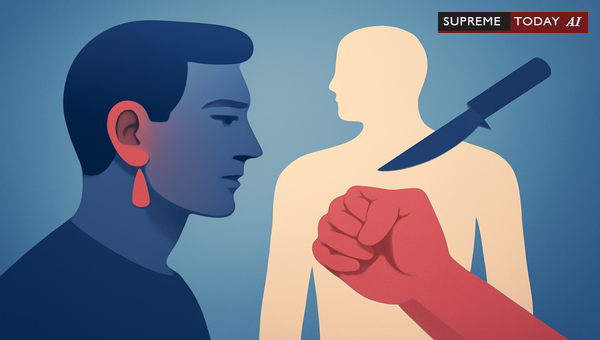
Is the Ear a Vital Body Part in Criminal Law?
In criminal cases involving assault or homicide, the location of injuries on the body often plays a pivotal role in determining the accused's intent and the gravity of the offense. A common question arises: Is the ear a vital body part? While intuitively the ear might seem non-essential for immediate survival, its legal classification can influence charges under the , such as , 304 (), or 325 (). This post delves into judicial perspectives, emphasizing that severity trumps location alone.
Main Legal Finding on Non-Vital Body Parts
Injuries to non-vital body parts like the ear are generally viewed as less likely to cause death, potentially affecting assessments of intent, injury gravity, and sentencing. However, courts stress that the nature and severity of injuries matter more than location2003 0 Supreme(Raj) 650. Even wounds on non-vital areas can qualify as grievous if they lead to death, permanent disability, or severe consequences 2003 0 Supreme(Raj) 650.
This nuanced approach prevents trivializing harm based solely on anatomy. For instance, a seemingly minor cut on the ear could escalate if it causes excessive bleeding or infection, mirroring outcomes from vital part injuries.
Key Points from Judicial Precedents
- Severity over location: Courts evaluate the injury's nature, weapon used, and outcome, not just the body part 2003 0 Supreme(Raj) 650.
- Grievous potential of non-vital injuries: Wounds on areas like limbs or ears can attract serious charges if fatal or disabling 2003 0 Supreme(Raj) 650.
- Intent indicators: Multiple injuries or use of sharp weapons signal intent, regardless of site 2003 0 Supreme(Raj) 650.
- Vital vs. non-vital distinction: Vital parts (e.g., skull, neck, brain) presume higher danger, but non-vital sites aren't automatically lesser 2003 8 Supreme 850.
Detailed Analysis: Nature of Injury and Legal Significance
Defining Vital and Non-Vital Parts
Vital body parts typically include the skull (occipital/temporal regions), neck, brain, and heart—areas where injury often leads to immediate fatality 2003 0 Supreme(Raj) 650 2003 8 Supreme 850. The ear, as an external appendage, is generally non-vital, akin to hands or legs
. However, proximity to vital areas matters; injuries above the right ear have been deemed on vital parts due to skull involvement 2006 0 Supreme(All) 1115.
Courts clarify: It is the nature of injury, the part of body where it is caused, and the weapon used which are indicators of whether the accused had the intention to cause death 2003 0 Supreme(Raj) 650. A single sharp blow to the neck or ear vicinity can imply murder intent 2003 8 Supreme 850.
Impact on Charges and Classification
Injuries on vital parts like the neck with sharp weapons often lead to murder or charges, as they are likely to cause death 2003 8 Supreme 850. Non-vital ear injuries might initially suggest lesser offenses like () or (), but escalation occurs if complications arise 2003 0 Supreme(Raj) 650.
For example, in a case involving theft of earrings, multiple injuries including private parts were noted, but the focus shifted to overall brutality rather than ear-specific harm 2023 0 Supreme(Cal) 526. Similarly, ... above the right ear which is also a vital part of the body underscored severity near the head 2006 0 Supreme(UK) 183.
Intent, Knowledge, and Circumstances
Intent isn't dictated by location alone. A blow causing death demonstrates knowledge of likely consequences, even on borderline areas 2003 8 Supreme 850. In one ruling: If head is not the vital part of body than which part of body could be said to be the vital part 2013 0 Supreme(UK) 237, affirming head/ear-adjacent zones as critical.
Courts reject arguments dismissing non-vital injuries: All these injuries are on vital parts of the injured’s body and, therefore, the contention... that the accused... did not cause any injury on any vital part... is incorrect
.
Medical and Legal Perspectives
Medically, ear injuries may cause blood loss or disability, qualifying as grievous 2003 0 Supreme(Raj) 650. Legally, this aligns with outcomes: Injuries on non-vital parts that cause death or permanent disability can still lead to serious charges 2003 0 Supreme(Raj) 650. Cases with skull wounds near ears reinforce: It could not be argued that skull is not a vital organ 2018 0 Supreme(MP) 302.
Insights from Additional Case Law
Several judgments highlight contextual evaluation:
- Pregnant victim assaults: Multiple vital part injuries with fatal weapons presume death intent
.
- denial: Injury on vital part with deadly weapon (farsa) bars bail
.
- attempts: Even non-fatal vital injuries justify trials
.
- Eyewitness corroborated injuries: Head wounds (vital) on deceased proved murder with 2013 0 Supreme(UK) 237.
- Cross-injuries in fights: Unexplained defense wounds (e.g., stab above eyebrow/ear) create 2006 0 Supreme(All) 1115 2006 0 Supreme(UK) 183.
In earring theft-murder appeals, forensic gaps led to acquittals, showing prosecution burdens 2023 0 Supreme(Cal) 526. These cases illustrate that ear-related contexts (injury or motive) demand holistic review.
Exceptions and Contextual Factors
No absolute rule deems non-vital injuries trivial. A ear laceration causing death via hemorrhage warrants murder-level scrutiny 2003 0 Supreme(Raj) 650. Factors like weapon (sharp vs. blunt), number of wounds, and victim vulnerability (e.g., pregnancy
) override location.
Recommendations for Legal Practitioners
- Prioritize injury severity, medical reports, and outcomes over body part labels.
- Scrutinize intent via weapon and circumstances.
- Use expert testimony to classify borderline injuries (e.g., ear vs. skull)
.
Conclusion and Key Takeaways
While the ear is typically a non-vital body part, Indian courts focus on holistic factors for fair justice. Injuries here may lead to serious charges if grievous, emphasizing: nature > location. Always consult a legal professional for case-specific advice—this post provides general insights only.
Key Takeaways:- Vital parts presume danger; non-vital don't preclude it 2003 0 Supreme(Raj) 650.- Intent from weapon/injury type is crucial 2003 8 Supreme 850.- Case-by-case evaluation ensures equity.
References: 2003 0 Supreme(Raj) 650, 2003 8 Supreme 850,
,
, 2023 0 Supreme(Cal) 526,
,
,
, 2018 0 Supreme(MP) 302, 2013 0 Supreme(UK) 237, 2006 0 Supreme(All) 1115, 2006 0 Supreme(UK) 183. #CriminalLaw #VitalInjuries #IPCLaw















