


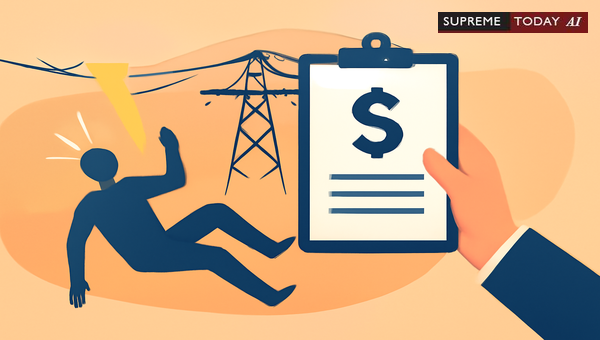
Electrocution Compensation: Understanding Liability of the Electricity Department
Electrocution accidents caused by faulty electrical infrastructure can lead to devastating injuries or fatalities. When these incidents involve the electricity department—such as live wires from broken poles or poorly maintained lines—victims or their families often seek compensation. A common query arises: Electricution Compensation by Electricity Department (noting the common misspelling; correctly, 'electrocution'). This blog post explores the legal principles, landmark cases, and practical steps under Indian law, drawing from established precedents and departmental practices.
While this information is based on general legal trends and case law, it is not specific legal advice. Consult a qualified lawyer for your situation, as outcomes depend on individual facts.
Legal Principles Governing Compensation
The electricity department or board bears responsibility under the principle of for accidents involving live electric wires. Courts hold them accountable for failing to maintain safety measures, even without proving intent. For instance, The principle of applies to the electricity board for accidents involving live electric wires. The board is held liable for in maintaining safety measures, regardless of fault 2022 0 Supreme(P&H) 200 2004 0 Supreme(MP) 319 2002 0 Supreme(Ker) 23.
This means the department cannot escape liability by claiming unavoidable circumstances if basic safety protocols were neglected.
and
Electricity authorities have a to inspect and maintain equipment to prevent public harm. Breaches, like unsecured wires or delayed repairs, trigger liability. The electricity department has a to maintain its equipment and prevent accidents. Failure to do so can result in to victims of electrocution
AJMER VIDYUT VITRAN NIGAM LTD. VS PARTHU -
2002 0 Supreme(Ker) 23.Other sources reinforce this: In cases of wire breakages, departments must act promptly, as delays exacerbate risks 2024 Supreme(Online)(CG) 6140. However, claims fail without evidence linking the incident to departmental fault, as seen where the averment that the petitioner’s husband died of electrocution itself is a false one led to denial 2021 Supreme(Online)(MAD) 52975.
Compensation Framework
Courts calculate awards based on the victim's age, injury severity, disability, lost income, and future needs—often mirroring methods. Compensation is typically calculated based on the victim's age, disability, and future needs. Courts have applied methods similar to those used in motor vehicle accident claims 2019 0 Supreme(Mad) 2671 2012 0 Supreme(Mad) 2321.
Departmental guidelines sometimes fix payments, like Rs. 1,00,000 for deaths, but courts may award more upon proving 2022 Supreme(Online)(Kar) 59317. For example, compensation of `1,00,000/- without... its in causing the death of the deceased due to electrocution has not been disputed 2022 Supreme(Online)(Kar) 59317.
Landmark Case Law Summaries
Indian courts have consistently favored victims when is established. Here's a review of key precedents:
Electrocution of Minors: A 10-year-old girl suffered severe injuries from a broken electric pole. The court awarded Rs. 95 lakhs under 2022 0 Supreme(P&H) 200.
Application: Claims under this Act remain unaffected by the . One family received Rs. 10,26,000 for a negligent electrocution death 2021 0 Supreme(Raj) 506.
Severe Disability Cases: A victim with 70% disability from electric shock got Rs. 10,29,680, upholding the suit's maintainability due to departmental 2022 0 Supreme(J&K) 441.
Death Compensation: Awards for fatalities factor in the deceased's income and dependents, using principles 2012 0 Supreme(Mad) 2321 2019 0 Supreme(Mad) 2671.
Duty of Care Breaches: The electricity board was ordered to pay Rs. 2,50,000 for failing to secure a live wire 2012 0 Supreme(Jhk) 313.
From additional sources:- In Tamil Nadu, poor maintenance of electric posts led to demands for higher compensation beyond board-fixed amounts 2024 Supreme(Online)(MAD) 2680.- Cattle deaths from snapped 11,000 KV wires prompted departmental payouts, but only after complaints 2024 Supreme(Online)(CG) 6140 2024 Supreme(Online)(Chh) 14075.- Disputes arise over causation; without proof, claims are rejected, as there is no proper evidence that the cause of death was on account of electrocution 2025 Supreme(Online)(SCDRC) 32864.
These cases illustrate variability: Awards range from Rs. 1 lakh (departmental) to lakhs in court, hinging on evidence.
Key Findings from Precedents and Practices
- Liability Established: Departments are liable for in safety standards, with often applied 2022 0 Supreme(P&H) 200.
- Variable Compensation: Amounts depend on injury/death severity, age, and circumstances—e.g., Rs. 1-10 lakhs or more.
- Economic and Non-Economic Damages: Covers medical costs, lost earnings, pain, and suffering.
- Challenges: Proof of is crucial; contested cases may deny claims if electrocution link is unproven 2021 Supreme(Online)(MAD) 52975 2025 Supreme(Online)(SCDRC) 32864.
Departmental responses vary—some pay promptly per guidelines, others deny without fault 2025 0 Supreme(Mad) 4471. Courts affirm authority to award under statutes like 2022 0 Supreme(All) 1225.
Practical Recommendations for Victims
If you've suffered electrocution due to suspected departmental fault:- Gather Evidence: Photos of the site, medical reports, witness statements, and maintenance complaints.- File Promptly: Adhere to limitation periods (typically 2-3 years for ).- Approach Department First: Seek under guidelines (e.g., Rs. 1 lakh), then escalate to civil court if inadequate 2025 0 Supreme(Mad) 4471.- Document Damages: Track expenses, income loss, and disabilities for robust claims.- Seek Legal Help: Lawyers can invoke and for higher awards.
When this fact came into the knowledge of answering respondents they immediately proceeded for disbursement of the just and proper compensation as per the guidelines 2024 Supreme(Online)(CG) 6140—prompt action aids resolution.
Conclusion and Key Takeaways
Under Indian law, the electricity department's liability for electrocution incidents is well-established via and doctrines. Courts prioritize victim compensation, with awards tailored to losses. However, success requires solid evidence of fault—lacking it, claims falter.
Key Takeaways:- applies to live wire hazards.- Compensation mirrors accident claim formulas.- Start with departmental claims; pursue courts for more.- Always prove for best outcomes.
Stay safe around electrical infrastructure and report hazards immediately. For personalized guidance, contact a legal expert. This overview draws from precedents like 2022 0 Supreme(P&H) 200 2019 0 Supreme(Mad) 2671, emphasizing fairness in such tragedies.
#ElectrocutionCompensation, #ElectricityNegligence, #VictimRights












