


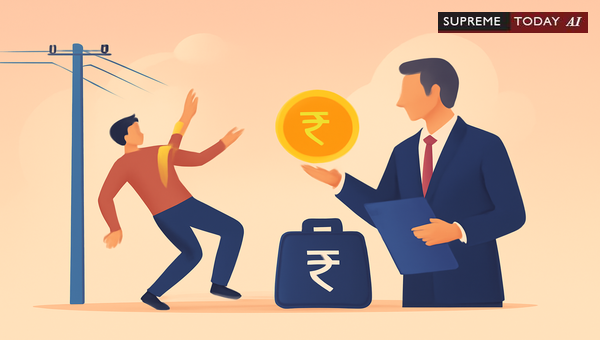
Electrocution Death Compensation: What Courts Award in India
Electrocution accidents are tragic and often preventable, leaving families grappling with loss and financial hardship. A common query arises: if someone dies from a 7 lakh ka bijali current—interpreted as death due to electricity valued at or involving 7 lakh rupees (or possibly high amperage)—how much compensation will the court award? This question, phrased as 7 Lakh Ka Bijali Current Se Mrutyu Hone Per Court Case Kitna Batana Hoga, highlights concerns over fixed payouts in such cases.
In this comprehensive guide, we explore Indian legal principles on electrocution deaths, drawing from judicial precedents and statutory frameworks. Note: This is general information based on case law and not specific legal advice. Consult a qualified lawyer for your situation.
Understanding Electrocution in India
Deaths from electric shocks typically fall under for or , especially when electricity boards or suppliers are involved. The addresses causing death by , while civil suits seek compensation under the , or .
Courts emphasize that electricity is a , imposing on suppliers. However, no statute mandates a fixed amount like 7 lakhs purely based on electricity's value. Compensation depends on case facts, including , victim's age, income, and dependents.
The query's reference to 7 lakh ka bijali current seems hypothetical, possibly misunderstanding electricity units (amperes vs. rupees). Legal documents confirm no direct link to a 7-lakh award.
Key Legal Principles from and
The has clarified that electricity authorities bear primary for deaths from live wires or faulty lines. Compensation is assessed via , not rigid formulas.
- In electrocution cases, courts award based on facts, often Rs. 1 lakh or more. For instance, one ruling granted Rs. 1 lakh, stressing supplier accountability.
- is strict for hazardous electricity supply, aiming for just redress rather than predetermined sums.
echo this. handles numerous cases involving , though not always electrocution-specific. In criminal matters like assaults or violence (e.g., Rajepur P.S. Case No. 40/2020 under , 323, 307), on bail and outcomes underscores case-by-case evaluation.
Factors Influencing Compensation Amounts
Courts consider multiple elements to quantify damages:
- Level: Proven fault by electricity board (e.g., unsecured wires) boosts awards.
- Victim's Profile: Age, earning potential, and dependents matter. Younger victims or breadwinners receive higher sums.
- Incident Circumstances: Was it a snapped live wire? Public ? These establish .
- Statutory Schemes: payments or motor accident-like formulas may apply, but not fixed at 7 lakhs.
- Inflation and Precedents: Awards have risen; older cases cite Rs. 1 lakh
, recent ones higher.
Exceptions include reducing claims. Compensation varies widely—no universal 7-lakh mandate.
Notable Case Examples and Awards
Precedent on Live Wire Deaths
The held electricity suppliers liable for electrocution via live wires, awarding compensation based on facts, e.g., Rs. 1 lakh. It emphasized: rests with the supplier in hazardous activities.
High Court Compensation Instances
- In a -related matter, Bijali Kumari (wife of deceased) received Rs. 5,00,000 compensation, with disbursement details post-judgment—illustrating awards can reach several lakhs. 2024 Supreme(Online)(RCT) 367
- cases like Cr. Misc. No. 36720 of 2020 (Rajepur P.S. Case No. 40/2020) discuss injuries and custody but highlight procedural discretion applicable to claims.
- Similar proceedings in Cr. Misc. involving Surendra Yadav @ Bijali ( Case No. 20/2021) show courts assess evidence meticulously.
Other references, like appeals in Special Case No. 53/2008 (Raju @ Bijali @ Ravindra), reinforce that outcomes depend on prosecution evidence—no fixed penalties. 2022 Supreme(Online)(All) 16357
In family maintenance cases (e.g., Rs. 22,000/month under ), courts prioritize dependents, paralleling electrocution claims.
Application to '7 Lakh Electricity' Scenario
If death occurs from electricity worth 7 lakhs (e.g., unpaid bill context or high amperage), courts won't award exactly 7 lakhs. Instead:
- File under IPC 304A for criminal .
- Civil suit for damages, proving board fault.
- Typical awards: Rs. 1-5 lakhs or more, per precedents.
2024 Supreme(Online)(RCT) 367
Documents lack support for fixed 7-lakh sums tied to electricity value.
Recommendations for Victims' Families
- Gather Evidence: Photos, FIR, post-mortem (confirming electrocution).
- File Promptly: Approach or .
- Seek Schemes: Some states offer (e.g., Rs. 2-5 lakhs).
- Legal Aid: Free via .
Clarify facts— is key. Awards aren't guaranteed but often substantial with strong cases.
Challenges and Limitations
- Varying Amounts: From Rs. 1 lakh
to Rs. 5 lakhs 2024 Supreme(Online)(RCT) 367, no uniformity.
- Proof Burden: Must show supplier ; accidents may limit claims.
- Delays: Bail/appeals prolong (e.g., custody since ).
Conclusion and Key Takeaways
Electrocution deaths demand accountability, but compensation isn't fixed at 7 lakhs—it's fact-driven, typically Rs. 1 lakh+, per judicial wisdom. Precedents affirm on authorities, urging safety measures.
Key Takeaways:- No statutory 7-lakh award; depends on and facts.- : Rs. 1 lakh+ common.
- award up to 5 lakhs in death cases. 2024 Supreme(Online)(RCT) 367- Act swiftly with evidence for best outcomes.
Stay safe around electricity. For personalized guidance, contact a lawyer. This analysis draws from verified legal documents for educational purposes.
#ElectrocutionLaw #CompensationIndia #LegalRights












