


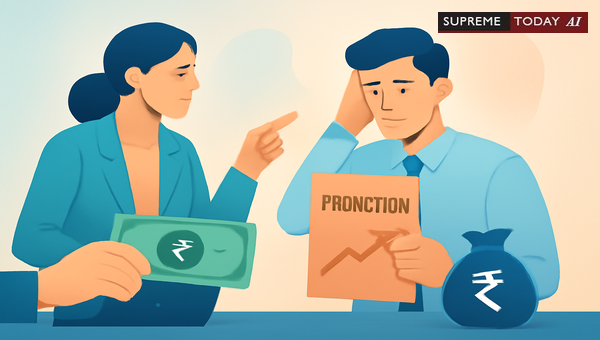
Employees Can't Benefit from Employer Mistakes: Key Legal Insights
In the world of employment, mistakes happen—whether it's a clerical error in payroll, an erroneous promotion, or a miscalculation of benefits. But can employees keep the windfall from such slip-ups? The question Employee Cannot Take Advantage of Employers Mistakes strikes at the heart of this issue. Generally, Indian courts have ruled that employees cannot permanently benefit from their employer's errors. Employers typically retain the right to correct these mistakes through , including recovering excess payments, subject to equitable considerations like .
This blog post dives into landmark decisions, key principles, and practical advice, drawing from established case law. Remember, this is general information based on legal precedents and not specific legal advice—consult a qualified attorney for your situation.
Core Legal Principles: No Free Rides on Errors
1. Mistakes Can Be Corrected via
The has firmly established that employees cannot claim rights based on employer mistakes. In , the court emphasized that mistakes can be corrected by following , and employees cannot claim rights based on erroneous promotions or payments made due to such mistakes 2023 0 Supreme(Jhk) 473 2023 0 Supreme(Jhk) 481. This principle echoes in other rulings, such as where mistakes are mistakes and they can always be corrected by following of law
BANESHWAR KUMBHKAR vs LABOUR
2012 0 Supreme(Del) 1949.For instance, if an employee receives a promotion due to overlooked disciplinary records, the employer may revoke it later. As noted in a promotion case, even if correction causes hardship, the respondent cannot be permitted to derive the benefit that emanates from an illegality 2012 0 Supreme(Del) 1949.
2. Recovery of Excess Payments: Generally Permissible
Employers often overpay due to payroll glitches or misapplied scales. The in outlined scenarios where recovery is impermissible, such as when it causes to low-level employees, but affirmed the general right to reclaim excess amounts 2023 0 Supreme(Mad) 2487.
Courts balance this with equity. Recovery from Class-III and Class-IV employees without or hardship assessment is typically barred 2017 0 Supreme(Bom) 2024. In one case, recovery of excess paid public money cannot be limited only to cases of fraud or , but exceptions apply for extreme cases 2017 0 Supreme(Bom) 2024. Similarly, it is well settled principle that if a wrong pay scale has been granted to any employee... recoveries by the employers may be restricted if hardship ensues
BANESHWAR KUMBHKAR vs LABOUR
.Key situations from Rafiq Masih where recovery may be impermissible:- Long delay in discovery of mistake.- Employee's disadvantaged position (e.g., retired or near retirement).- Substantial amounts causing relative hardship 2023 0 Supreme(Mad) 2487.
No Advantage from Clerical or Systemic Errors
Employees frequently argue reliance on employer representations, but courts prioritize correction. Employees cannot take advantage of or mistakes made by employers, as seen in multiple precedents 2017 0 Supreme(Kar) 1300 2014 0 Supreme(Mad) 2136.
In a Malaysian industrial case, an employee's refusal to correct ERP system mistakes led to justified termination, underscoring that employees must not exploit systemic issues
. Even in voter list errors, authorities cannot take advantage of the said mistakes, flipping the logic to employer-employee dynamics 2022 0 Supreme(Gau) 437.
Agency and Third-Party Obligations
When employers act as agents (e.g., for insurance), their deduction failures don't absolve third parties. Employees retain rights against the principal, preventing loopholes 2005 5 Supreme 649
2010 0 Supreme(Gau) 840.
Equitable Exceptions and Employee Protections
While the rule favors correction, courts apply equity:- : Recovery quashed for pensioners without hearings, as in Maharashtra Civil Service cases 2017 0 Supreme(Bom) 2024.- Reliance and Bona Fide: If employees act in good faith, recovery might be softened, but not if illegality persists 2023 0 Supreme(Mad) 2487.
Contrastingly, U.S. precedents highlight disparities, like military leave disadvantages if non-military leaves are paid, though Indian law focuses on domestic equity 2021 Supreme(US)(ca3) 112. In compassionate appointments, subsisting despite absences allow claims, showing nuance 2021 0 Supreme(Jhk) 916.
cannot be specifically enforced, so employees can't force continued employment post-mistake 2004 1 Supreme 56.
Practical Implications for Employers and Employees
For Employees:
- Document all communications on pay/promotions.
- Challenge recoveries promptly, citing hardship.
- Avoid assuming permanence in windfalls—seek clarification.
For Employers:
- Robust payroll/compliance systems to minimize errors.
- Follow : notices, hearings before recovery.
- Assess hardship, especially for vulnerable staff.
In winding-up scenarios, defaults trigger recoveries without inconsistency across laws 2014 0 Supreme(AP) 625.
Conclusion: Balance of Rights and Responsibilities
The legal framework underscores that employees generally cannot take advantage of employer mistakes. Employers may correct errors and recover excesses, but must navigate hardship exceptions and 2023 0 Supreme(Jhk) 473 2023 0 Supreme(Jhk) 481 2023 0 Supreme(Mad) 2487. Cases like Narendra Singh and Rafiq Masih provide clear guidance: mistakes aren't permanent perks.
Key takeaways:- Act Promptly: Delays weaken recovery claims.- Equity Matters: Hardship can block enforcement.- Prevention Wins: Strong systems protect all parties.
Stay informed on employment law to safeguard your interests. For personalized guidance, consult a legal professional. This overview draws from precedents including 2023 0 Supreme(Jhk) 473 2023 0 Supreme(Jhk) 481 2023 0 Supreme(Mad) 2487 2005 5 Supreme 649
2010 0 Supreme(Gau) 840 2017 0 Supreme(Kar) 1300 2014 0 Supreme(Mad) 2136 2004 1 Supreme 56
BANESHWAR KUMBHKAR vs LABOUR
2021 Supreme(US)(ca3) 1122022 0 Supreme(Gau) 437 2021 0 Supreme(Jhk) 916 2017 0 Supreme(Bom) 2024 2014 0 Supreme(AP) 625 2012 0 Supreme(Del) 1949. #EmploymentLaw, #LaborRights, #EmployerMistakes















