


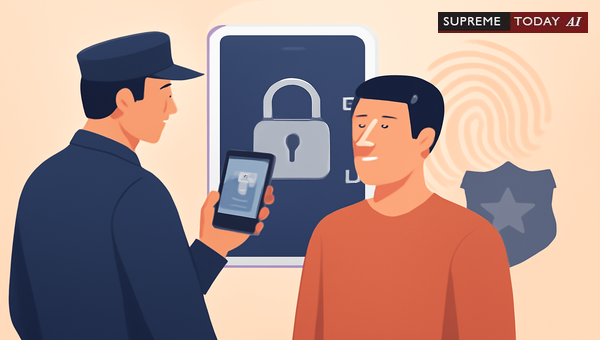
Can Police Use Face Recognition to Unlock Phones in Indian Investigations?
In today's digital age, smartphones hold a treasure trove of evidence—from messages and call logs to photos and apps. But what happens when police need to access a locked device during an investigation? A common question arises: Open the Mobile Phone with Face Recognition during the Course of Investigation is Allowed? This query touches on critical intersections of technology, privacy rights, and criminal procedure in India.
As biometric tools like face recognition become standard on mobiles, law enforcement faces new challenges. While not explicitly addressed in statutes, courts apply principles from search, seizure, and identification laws. This post breaks down the legal landscape, drawing from key statutes like the and , alongside court precedents. Note: This is general information, not legal advice. Consult a qualified lawyer for specific cases.
Main Legal Finding
Generally, using face recognition to unlock a suspect's mobile during investigation is permissible under Indian law, provided it adheres to . These include informing the suspect of their rights, ensuring transparency, and complying with statutes like and provisions on searches. Courts treat face recognition akin to other biometrics, such as fingerprints or voice samples, emphasizing lawful authority and fairness. 2012 0 Supreme(SC) 883 1954 0 Supreme(SC) 42
Failure to follow these can render evidence inadmissible, underscoring the need for procedural compliance. 1954 0 Supreme(SC) 42 1999 6 Supreme 159
Key Principles Governing Searches and Identification
Indian law prioritizes balancing investigation needs with fundamental rights under (protection against and privacy). Key statutes include:
- Section 50: Requires informing the person of their right to be searched before a Gazetted Officer or Magistrate. This extends analogously to identification processes. 1954 0 Supreme(SC) 42 1999 6 Supreme 159
- Sections on Search and Seizure: Demand reasonable grounds, witnesses, and documentation (e.g., Sections 100, 165).
Courts have ruled that non-compliance vitiates the process. For instance, failure to inform or conduct the search in accordance with statutory safeguards can vitiate the legality of the process and affect . 1954 0 Supreme(SC) 42 1999 6 Supreme 159
Face Recognition as
Though statutes don't explicitly mention face recognition, it's viewed as a biometric method similar to voice samples or fingerprints. Courts uphold such tech if obtained lawfully:
- Voice samples during probes are permissible without violating rights, provided procedural fairness. 2012 0 Supreme(SC) 883
- Scientific evidence like call data or biometrics is allowed with safeguards to prevent abuse. 2012 0 Supreme(SC) 883 2025 0 Supreme(SC) 1786 2017 0 Supreme(MP) 803
In mobile-related cases, phones are routinely seized and examined. For example, in a kidnapping probe, a mobile recovered from the accused was key evidence, with the prosecution relying on voice presumption and device recovery.
The court stressed proving charges beyond reasonable doubt with procedural adherence, like compliance.
Similarly, detention of mobiles for forensic analysis is upheld if relevant. A court will not quash an order for the detention of a mobile phone during investigation if the phone contains evidence that is relevant to the case. 2022 Supreme(Online)(KER) 56941 Here, abusive messages on the device justified retention, noting the owner could get a duplicate SIM.
Application to Unlocking Mobiles with Face Recognition
Unlocking via face scan is typically non-invasive, like a visual ID parade. Its legality depends on:- Informing the suspect: Of the process and rights, akin to NDPS safeguards.- Lawful authority: Reasonable suspicion and documentation.- Transparency: Presence of witnesses or recording.
If done fairly, it's akin to permissible biometrics. However, coercive or surreptitious use risks challenges. Courts note: evidence obtained unlawfully... can be inadmissible. 2012 0 Supreme(SC) 883 1954 0 Supreme(SC) 42
Other cases reinforce this. In voyeurism allegations, a mobile allegedly used for recording was scrutinized, with courts allowing trials based on evidence. 2024 0 Supreme(Kar) 411 Forensic needs often justify device handling, as in abduction probes where call details were summoned under post-charge-sheet. 2024 0 Supreme(Raj) 129
Privacy is not absolute; it's restricted for crime prevention with safeguards.
Limitations and Potential Challenges
- Without safeguards: Face unlock could be deemed illegal, evidence excluded.
- Privacy violations: Must respect Article 21; non-consensual deep scans might differ.
- Tech limitations: Accuracy issues or spoofing could question reliability.
In one case, mobile detention was challenged due to business inconvenience, but rejected for evidentiary value. 2022 Supreme(Online)(KER) 64628 Bail considerations also factor device use, like jail calls via smuggled phones. 2021 5 Supreme 742
Prosecution must prove transmission or use conclusively; mere presence of data isn't enough. 2021 0 Supreme(Chh) 120
Practical Recommendations for Compliance
To ensure admissibility:- Inform suspects of rights under relevant laws.- Document the process, including consent or authority.- Use independent witnesses or video recording.- Seek magistrate approval where possible.- Meticulously log for devices.
As in memory card cases, even critical evidence like abuse recordings may have access limits to protect victims. 2018 0 Supreme(Ker) 538
Conclusion and Key Takeaways
Face recognition to unlock mobiles during Indian investigations is generally allowed if are followed—mirroring NDPS and principles. This balances efficient probes with rights protection. Key takeaways:- Always inform and document.- Treat as biometric ID with fairness.- Non-compliance risks evidence exclusion.
Tech evolves, but core tenets remain: transparency and lawfulness. Stay informed on judgments, as courts continue interpreting biometrics. For tailored advice, reach out to legal experts.
References:- 2012 0 Supreme(SC) 883, 1954 0 Supreme(SC) 42, 1999 6 Supreme 159,
,
, 2022 Supreme(Online)(KER) 56941, 2024 0 Supreme(Kar) 411, 2024 0 Supreme(Raj) 129 #FaceRecognitionLaw, #IndianCriminalInvestigation, #NDPSAct












