


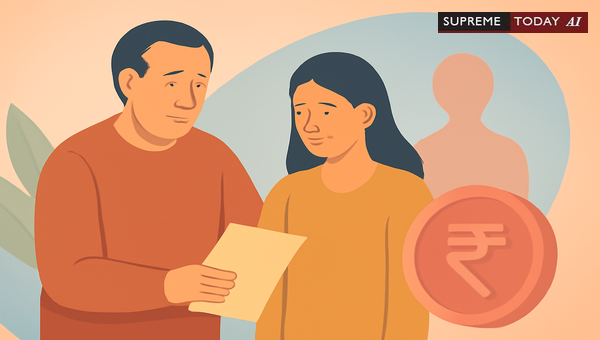
Father's Duty to Maintain in India
In Indian family law, the question of often arises, especially regarding whether it is the duty of the father to maintain his major and unmarried daughter. This issue touches on evolving societal norms, , and . While traditional views placed heavy obligations on fathers, modern laws balance responsibilities across genders and marital statuses. This post examines the legal framework, key precedents, exceptions, and , providing general insights—not specific legal advice. Consult a lawyer for personalized guidance.
Legal Framework: Father's Obligation to Unmarried Daughters
Under Indian law, fathers generally have a duty to support their children, including daughters, until they can maintain themselves. This stems primarily from , which allows wives, minor children, and parents unable to maintain themselves to claim maintenance.
For major unmarried daughters, the obligation is limited:- A father is liable to maintain his unmarried daughter only until she attains majority unless she proves inability to maintain herself due to 2024 0 Supreme(Guj) 1626.- The court ruled that a could receive maintenance from her father under specific conditions. The father's obligation continues till the daughter attains majority or unless she proves inability due to 2024 0 Supreme(Guj) 1626.
Hindu personal law reinforces this. Under the (Section 20) and traditional principles:- Every father is under an obligation to maintain his daughters and even to get them married. Under Hindu Law, a daughter is entitled to be maintained out of the even after his death 2022 0 Supreme(Del) 288.- Father cannot abdicate his responsibility of looking after his unmarried daughters. An unmarried daughter, even if employed and earning, cannot be assumed to have sufficient resources to meet her
Poonam Sethi VS Sanjay Sethi
.The , also recognizes this in maintenance proceedings, emphasizing the father's legal and absolute obligation arising from the , including education and marriage expenses 2022 0 Supreme(Del) 288
Poonam Sethi VS Sanjay Sethi
.Key Judicial Precedents on Father's Duty
Courts have consistently upheld these duties:- In a case under CrPC Sections 125 and 127, the court allowed enhancement of maintenance for a minor daughter but clarified limits for majors: The ruling emphasizes the non-applicability of Section 125 concerning major children unless they cannot maintain themselves2024 0 Supreme(Guj) 1626. The Criminal Revision was partly allowed, modifying maintenance until majority.- in a divorce appeal held: The father has a duty and an obligation to maintain his daughters and to take care of their expenses, including towards their education and marriage. This obligation is legal and absolute2022 0 Supreme(Del) 288. Even major daughters were granted lump sum for wedding expenses, as is a solemn and of a Hindu Father2022 0 Supreme(Del) 288.- Another ruling affirmed: Father has duty and obligation to maintain his daughters... He cannot simply resile from that relationship
Poonam Sethi VS Sanjay Sethi
.These cases highlight that while majority typically ends automatic support, courts may extend it for marriage, education, or disability, considering the father's capacity and daughter's needs.
: Maintenance from Daughters to Fathers
Indian law promotes equality, extending obligations both ways. The allows parents, including fathers, to claim maintenance from their children, which includes married daughters, irrespective of marital status 2015 0 Supreme(All) 1477.
Judicial Support for Parents' Claims
- The affirmed that parents, including fathers, can claim maintenance from married daughters, ruling exclusion discriminatory under 2015 0 Supreme(All) 1477.
- Courts note maintenance extends to married daughters, allowing parents to depend on them in old age, similar to sons 2000 0 Supreme(Cal) 195.
Key points:- Right to Maintenance: Fathers can claim from married daughters under the Act 2022 0 Supreme(Raj) 213.- Equality in Obligations: Law treats daughters equally to sons 2022 0 Supreme(Raj) 213 2015 0 Supreme(All) 1477.- Judicial Support: Consistent upholding of parents' rights 2000 0 Supreme(Cal) 195 2015 0 Supreme(All) 1477.
Exceptions and Limitations
Both directions have caveats:- : Maintenance depends on the claimant's needs and respondent's ability. Courts assess income of both 2018 0 Supreme(Ker) 582.- Dependency Proof: Stronger claims if father lacks independence or has no male heirs 2000 0 Supreme(Cal) 195. For daughters, proof of inability (disability, unemployment) is key 2024 0 Supreme(Guj) 1626.- Parents-in-law cannot claim from daughters-in-law under Section 125, as they are not listed
.- Married daughters' obligations do not apply if self-sufficient, mirroring limits on fathers.
Evolving Societal and Legal Shifts
Traditional allowed maintenance till marriage but lacks statutory transformation 2024 0 Supreme(Guj) 1626. Modern rulings reflect , as seen in parents claiming from daughters. A case noted a married daughter can be a divorcee fully dependent upon the father, challenging old restrictions 2017 0 Supreme(Cal) 426.
Conclusion and Key Takeaways
Generally, fathers have a duty to maintain major unmarried daughters until majority, marriage, or proven inability, rooted in CrPC, Hindu law, and judicial precedents 2024 0 Supreme(Guj) 1626 2022 0 Supreme(Del) 288
Poonam Sethi VS Sanjay Sethi
. Reciprocally, married daughters may owe support to aging fathers under the Act 2015 0 Supreme(All) 1477.Key Takeaways:- Document financial needs and communications for claims.- Consider daughter's employment but not assume self-sufficiency for marriage expenses.- Courts prioritize equality and actual dependency.
Recommendations:- Seek legal consultation for specific cases.- Maintain records to strengthen positions.
This overview draws from statutes and cases like 2022 0 Supreme(Raj) 213 2015 0 Supreme(All) 1477 2000 0 Supreme(Cal) 195 2018 0 Supreme(Ker) 582 2024 0 Supreme(Guj) 1626 2022 0 Supreme(Del) 288
Poonam Sethi VS Sanjay Sethi
. Laws may vary by personal law (Hindu, Muslim, etc.), so professional advice is essential. #FamilyLawIndia, #MaintenanceRights, #FatherDaughterDuty















