


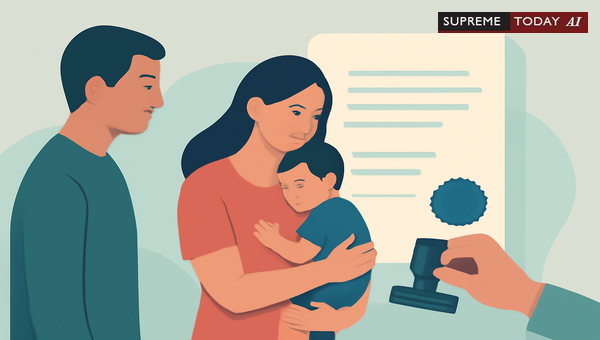
Father's Rights to Child from Live-in Relationship During Marriage in India
In modern India, relationships are evolving, and live-in arrangements are increasingly common. But what happens when a child is born from such a relationship while one partner is legally married to someone else? A pressing question arises: Whether a Man has a Right over his Child Born out of a Live in Relationship with a Valid Marriage. This issue touches on , , , and the interplay of and statutory rights. While courts prioritize the child's welfare, parental rights—especially a father's—can be complex and context-dependent.
This blog post delves into Indian legal precedents, focusing on obligations under , mother's ability to waive claims, and dynamics. Note: This is general information based on case law and not personalized legal advice. Consult a lawyer for your specific situation.
Legal Status of Children Born from Live-in Relationships
Children born from live-in relationships are generally considered legitimate under Indian law, irrespective of the parents' marital status. , extends legitimacy to children of , and similar protections apply broadly. However, when the father is married to another, complications arise regarding his 'rights over the child'—encompassing , , and .
Courts emphasize the child's best interests over parental claims. For instance, under various , mothers often hold preferential rights for young children. In Muslim Personal Law, a mother has () for children below seven years, prioritizing welfare
. This right persists post-divorce unless she remarries, shifting to the father
.
Father's Obligations and Mother's Waiver Rights
Under , a father has an absolute to maintain his minor child, independent of 1997 6 Supreme 523. This obligation holds even for children from live-in relationships, affirming through evidence like birth certificates or DNA tests.
However, the mother can voluntarily waive her right to claim from the father. Indian courts uphold such waivers when they are:- Voluntary, without coercion or undue influence- Clear and unambiguous- Made with full understanding of implications- Incorporated into a court-approved settlement or decree1997 6 Supreme 523 2020 0 Supreme(SC) 814
The court held that a mother can waive her right to claim under through a settlement or , provided it is voluntary and clear. 1997 6 Supreme 523
In settlement agreements during divorce or disputes, mothers have explicitly relinquished claims, and courts have enforced these 2020 0 Supreme(SC) 814. For example, in a case involving minor child , the mother's waiver was approved as valid and binding 2020 0 Supreme(SC) 814. Once waived, she generally cannot revive the claim absent fraud, misrepresentation, or 1997 6 Supreme 523.
This implies that while the father bears the primary obligation, his 'right over the child' (e.g., avoiding ) strengthens if the mother waives it voluntarily.
Rights: Mother's Preferential Position
decisions hinge on the child's welfare, but mothers typically receive preference for infants and young children. Right of mother to of infant children... no bar to mother seek right even if she is divorced.
- Preferential for mothers: Under Hindu and Muslim laws, mothers get of tender-aged children unless unfit 2023 Supreme(Online)(KER) 35372. Separating a child from the mother is often deemed detrimental 2023 Supreme(Online)(KER) 35372.
- Post-divorce rights: Divorce does not bar a mother from seeking , unless she remarries (under some ) 2025 Supreme(Online)(Mad) 65497
.
- Father's : Courts grant fathers , but deny it if harmful to the child, considering the mother's concerns 2021 Supreme(Online)(KER) 10376 2023 Supreme(Online)(MAD) 34188.
Mothers can also relinquish voluntarily via affidavits or court orders 2024 Supreme(Online)(GUJ) 13087. Such decisions are scrutinized to ensure they serve the child's best interests.
Conditions and Exceptions for Waivers and Rights
For a father's position to solidify (e.g., no liability post-waiver):
Valid Waiver Criteria
- Part of a or settlement 1997 6 Supreme 523.
- No fraud, coercion, or mistake 2020 0 Supreme(SC) 814.
- Full legal awareness 1997 6 Supreme 523.
Limitations
- Waivers can be challenged if under 1997 6 Supreme 523.
- Child's welfare overrides parental agreements; courts may intervene if neglect is evident.
- must be established for any rights/obligations.
The judgment emphasizes that waivers of rights incorporated into court settlements are valid when made without coercion, and courts uphold such agreements. 2020 0 Supreme(SC) 814
Implications for Live-in Children with Married Fathers
In live-in scenarios during a valid marriage, the child is still entitled to support, but the mother's waiver can relieve the father. Courts recognize comprehensive divorce settlements waiving rights, provided free will and legal advice 2020 0 Supreme(SC) 814. Fathers may seek or , but success depends on proving suitability and child's welfare.
Related cases show mothers forgoing too 2024 Supreme(Online)(GUJ) 13087, balancing parental autonomy with child protection.
Key Takeaways and Recommendations
- Father's rights exist but are obligation-focused () unless mother waives claims 1997 6 Supreme 523.
- favors mothers for young children, with welfare paramount 2023 Supreme(Online)(KER) 35372.
- Document everything: Waivers must be court-approved to bind.
- Seek legal counsel: Before agreements, ensure voluntariness to avoid future disputes.
- Courts scrutinize for abuse, prioritizing children.
In conclusion, while a man has parental duties over a child from a live-in relationship—even during a valid marriage—his 'rights' (like relief from ) hinge on the mother's voluntary waiver and judicial approval. Always prioritize the child's best interests, as Indian jurisprudence consistently does.
Disclaimer: This article summarizes case law (e.g., 1997 6 Supreme 523, 2020 0 Supreme(SC) 814, 2024 Supreme(Online)(GUJ) 13087) and is for informational purposes. Laws vary by facts and jurisdiction; consult a qualified advocate.
#FathersRightsIndia, #LiveInChildCustody, #MaintenanceWaiver












