


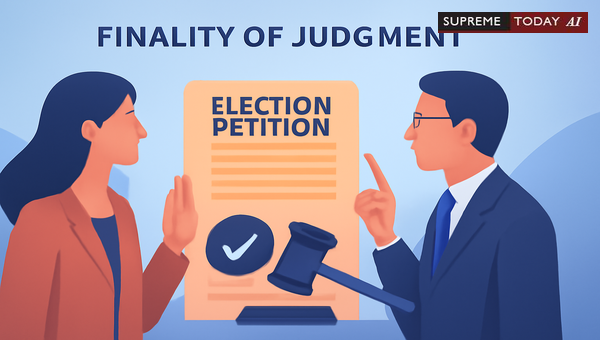
: Key Judgment Insights
In the realm of Indian civil and election law, few cases highlight the intricacies of and as poignantly as . This landmark judgment delves into critical issues like the conclusion of trials, the role of investigation evidence, and the binding nature of court pronouncements. Whether you're a legal professional, litigant, or simply interested in judicial processes, understanding these principles can shed light on how disputes are resolved in courts. This post breaks down the core findings, drawing from primary documents and related case law for a comprehensive view.
Note: This analysis is for informational purposes only and does not constitute legal advice. Consult a qualified attorney for specific guidance.
The Core Legal Question
The title : Key Judgment Insights encapsulates a pivotal inquiry into the nature of proceedings, evidence evaluation, and judgment finality in and . At its heart, the case examines when a trial truly ends and how evidence from investigations influences outcomes. Courts have consistently emphasized that procedural adherence is key to upholding justice 1959 0 Supreme(SC) 44.
Main Legal Finding: Trial Conclusion and Judgment Finality
A fundamental principle from the judgment is that the conclusion of a trial, whether in or , signifies the end of proceedings and the pronouncement of judgment2022 0 Supreme(Kar) 953. This marks a binding endpoint, closing doors to further alterations unless appealed properly.
In document 1959 0 Supreme(SC) 44, the court clarifies: the beginning of trial to the order of dismissal constitutes the entire proceeding, and the order at the end signifies the conclusion. This applies broadly, ensuring finality to prevent endless litigation. Once pronounced, the judgment stands as authoritative, influencing subsequent actions by parties.
Why Finality Matters
- Prevents Abuse: It stops parties from reopening settled matters without due process.
- Promotes Efficiency: Courts can move to new cases, upholding judicial economy.
- Binding Effect: Parties must comply or seek appellate remedies 1959 0 Supreme(SC) 44.
and Investigative Materials
Evidence, such as statements and photographs gathered during investigations, plays a nuanced role. While relevant, they do not necessarily determine final judgments unless incorporated into the court's final decision2022 0 Supreme(Kar) 953. The respondent's advocate in the case justified actions based on these, but their weight hinges on judicial acceptance.
Document 2022 0 Supreme(Kar) 953 details: statements recorded during investigation, including those of the mother and other relevant parties, and photographs, are part of the evidentiary record but do not automatically influence the final judgment unless they are incorporated into the court's findings.
This underscores that raw investigation data isn't conclusive—trial courts must evaluate and admit it formally.
Relevance to Civil and Election Disputes
In , the dispute's nature—civil or electoral—shapes procedures. demand strict timelines, where trial conclusion via judgment dismissal ends proceedings 1959 0 Supreme(SC) 44. Civil cases follow similar logic, prioritizing pronounced orders.
Principles include:- Final judgment hinges on court pronouncement.- Investigative evidence supports but doesn't override unless admitted.- All parties get opportunities to present cases, ensuring fairness 2022 0 Supreme(Kar) 953.
Insights from Related Case Law
Related judgments reinforce these themes, particularly on evidence and finality.
in Family Disputes
In a divorce case under , a husband's cruelty claim was upheld via son's testimony of the wife sleeping with a third party. The court noted: Adultery by wife with third person, normally is to be proved by ... her own son had seen his mother sleeping with third person
. This mirrors how child statements or photos gain weight only if unblemished and accepted, akin to investigative evidence in Chandrika 2022 0 Supreme(Kar) 953.
Motive and Circumstantial Proof
2009 0 Supreme(Gau) 499 highlights motive in circumstantial cases: in a case of , motive is one of the circumstances, which assumes importance... refer to Uday Kumar Vs. State of Kerala. Though not directly matching, it shows evidence chains must culminate in judicial findings for finality, paralleling Chandrika's evidentiary limits.
Procedural Compliance in Other Contexts
Insurance disputes like 2001 0 Supreme(Jhk) 513 and 2001 0 Supreme(Jhk) 515 affirm post-settlement if quantum differs: insurance company does not deny liability for compensation after an accident. Finality via awards echoes trial conclusions 1959 0 Supreme(SC) 44.
Criminal matters, such as cheating via dishonored cheques 2000 0 Supreme(Pat) 817: mere allegation of dishonour of cheque will not amount to but... intention of the accused need not be proved since the inception... decided at the trial stage. This stresses trial-end determinations, not preliminary evidence.
cases mentioning similar names, like (Chandrika Yadav parties) or (Chandrika Choudhary), illustrate recurring evidentiary disputes in civil writs, reinforcing procedural rigor.
Exceptions and Limitations
While finality binds, exceptions exist:- Illegal Evidence: Challenged if procedurally flawed, but judgments stand unless overturned 2022 0 Supreme(Kar) 953.- : Allows scrutiny for irregularities, though not detailed here.- Opportunity to Present: Denial can invite reversal, emphasizing fairness 1959 0 Supreme(SC) 44.
Practical Recommendations
For litigants navigating similar issues:- Admit Evidence Properly: Ensure statements, photos enter trial records early 2022 0 Supreme(Kar) 953.- Respect Finality: Post-judgment, pursue appeals, not collateral attacks 1959 0 Supreme(SC) 44.- Procedural Compliance: Present thoroughly to strengthen positions.- Seek Expertise: In election or civil matters, align with case-specific rules.
Key Takeaways
teaches that judicial proceedings culminate at judgment pronouncement, with evidence's power lying in court adoption—not mere collection. By integrating insights from 1959 0 Supreme(SC) 44 and 2022 0 Supreme(Kar) 953 alongside broader precedents like and 2009 0 Supreme(Gau) 499. these principles guide effective dispute resolution.
Stay informed on evolving case law, as courts continually refine balances between finality and justice. For tailored advice, engage legal counsel.
References:1. 1959 0 Supreme(SC) 44: Trial conclusion in .2. 2022 0 Supreme(Kar) 953: Investigative evidence relevance.3. Additional sources as cited inline.
#IndianCaseLaw #JudgmentInsights #LegalAnalysis















