


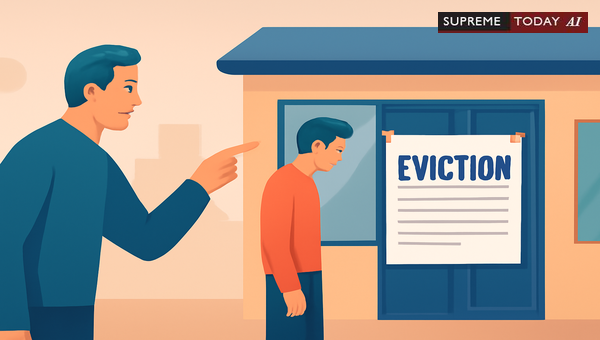
Forcibly Evicted from Shop Room? Required
In the world of commercial tenancy, disputes between landlords and tenants over shop rooms can escalate quickly. Imagine a scenario where a tenant is suddenly locked out or physically removed from their rented shop space without warning. A common question arises: Tenant Force Fully Evicted from the Tenented Shop Room then Original Suit has to be Filed? This query highlights a critical aspect of landlord-tenant law in India, where forcible actions do not equate to legal eviction.
This blog post explores the legal implications of such forcible evictions, the necessity of filing an , valid grounds for eviction, tenant protections, and insights from relevant case laws. While this provides general information based on established principles and precedents, it is not a substitute for professional legal advice. Consult a qualified lawyer for your specific situation.
Overview of and Legal Requirements
—such as changing locks, using force, or demolishing premises without court orders—is typically unlawful under Indian tenancy laws, including state-specific Rent Control Acts and the . Even if a landlord or new owner has physically removed the tenant from the shop room, they cannot claim possession legally without . The original landlord or subsequent owner must file a formal eviction suit in the appropriate to obtain a valid eviction order. 2011 0 Supreme(Ker) 894
This principle ensures tenants' rights are protected, preventing self-help remedies that could lead to further litigation. Courts have consistently ruled that possession gained through force must be legitimized through judicial proceedings. For instance, in cases involving shop rooms, tenants have successfully obtained injunctions against such actions. 2016 0 Supreme(HP) 484 1996 0 Supreme(Raj) 541
Key Grounds for Filing an Eviction Suit
Landlords cannot evict arbitrarily; they must prove specific grounds. Common grounds for shop room evictions include:
1. Personal Requirement
Landlords may seek eviction if they or their family need the premises for personal or business use, provided they have no other suitable accommodation. Courts uphold this if the need is . 2016 0 Supreme(Cal) 580 2022 0 Supreme(Cal) 867
2. Default in Rent Payment
Failure to pay rent constitutes a strong ground. Multiple precedents show eviction decrees granted where tenants defaulted. 2020 0 Supreme(Cal) 240 2009 0 Supreme(Pat) 173
3. Repairs, Reconstruction, or Building Needs
If substantial repairs or rebuilding are required that cannot be done with the tenant in possession, eviction may be justified. 2016 0 Supreme(Cal) 580
These grounds must be clearly pleaded and evidenced in the eviction suit. Amendments to include new grounds, like necessity arising during proceedings, are permissible.
The Legal Process for Eviction After Forcible Action
Filing the Original Suit
Post-, the landlord files an eviction suit detailing the landlord-tenant relationship, grounds, and supporting evidence like rent receipts or notices. The suit seeks possession, arrears, and . 2017 0 Supreme(Ori) 679 2009 0 Supreme(Pat) 969
In one case, after by lock, the court directed over the shop room during suit pendency, underscoring the need for judicial process. 2023 Supreme(Online)(ORI) 9562 No.159 of 2008, both the parties were directed to maintain over the suit shop room.
Role of Injunctions
Tenants facing threats of illegal eviction can seek to block forcible dispossession. Successful suits like O.S. No.2881/2006 and O.S. No.2180/2010 restrained such actions, decreeing in tenants' favor. 2011 0 Supreme(Ker) 894
For new landlords, eviction suits proceed similarly. In a second appeal, the court confirmed the new owner's right to evict upon proving title and failed tenancy continuation by the tenant. Issues included under . 2017 0 Supreme(Ori) 680 The plaintiff, as the new landlord, was entitled to eviction as the defendant failed to prove continued tenancy under the plaintiff's vendor.
Tenant's Rights and Defenses
Tenants enjoy robust protections:- Right to Possession Until Legal Eviction: Forcible removal is illegal; tenants can reclaim via suit. 2016 0 Supreme(HP) 484 1996 0 Supreme(Raj) 541- Contest Eviction Suits: Prove tenancy validity, payments, or challenge grounds. 2000 0 Supreme(Ori) 181 2012 0 Supreme(Cal) 899- Injunction Against Demolition or Force: Even if premises are demolished without , tenancy rights may persist. In a Nagpur case, demolition by did not terminate tenancy; the under , was invoked. 2017 0 Supreme(Bom) 1629 The respondent/plaintiff was not evicted from the suit shop block after following of law. On the contrary... the shop premises, which was in occupation with respondent/plaintiff, was demolished and he was evicted.
Tenants must prove lease details under laws like for protections. 2017 0 Supreme(Ker) 70
Insights from Landmark Cases
- O.S. No.2881/2006 & O.S. No.2180/2010: Highlighted legal proceedings' primacy over force. 2011 0 Supreme(Ker) 894
- Personal Requirement Cases: Upheld where genuine need proven. 2012 0 Supreme(Raj) 1934
- New Grounds via Amendment: Allowed in eviction petitions.
Landlord can incorporate new ground of eviction in eviction petition by way of amendment.
- Shop Closure Post-Suit: Courts noted prolonged closure after forcible actions, reinforcing suit necessity.
The suit has been filed on . ... Since then the shop room has remained closed.
These cases illustrate courts' stance: no shortcuts in eviction.
Conclusion and Key Takeaways
Forcibly evicting a tenant from a shop room does not grant legal possession; an is mandatory. Landlords should gather evidence on valid grounds like personal need, rent default, or reconstruction. Tenants, arm yourselves with injunction applications and defenses.
Key Takeaways:- Landlords: File eviction suits promptly with strong evidence; avoid self-help to prevent counter-suits.- Tenants: Seek immediate injunctions against force; contest suits vigorously.- Both Parties: Negotiate where possible to avoid costly litigation.
References: 2011 0 Supreme(Ker) 894 2016 0 Supreme(Cal) 580 2022 0 Supreme(Cal) 867 2017 0 Supreme(Ori) 679 2016 0 Supreme(HP) 484 1996 0 Supreme(Raj) 541 2020 0 Supreme(Cal) 240 2009 0 Supreme(Pat) 173 2000 0 Supreme(Ori) 181 2012 0 Supreme(Cal) 899 2012 0 Supreme(Raj) 1934 2023 Supreme(Online)(ORI) 9562
2017 0 Supreme(Bom) 1629 2017 0 Supreme(Ori) 680 2017 0 Supreme(Ker) 70
This post is for informational purposes only and reflects general legal principles. Laws vary by jurisdiction; seek tailored advice.
#TenantEviction, #LandlordRights, #EvictionLaws














