


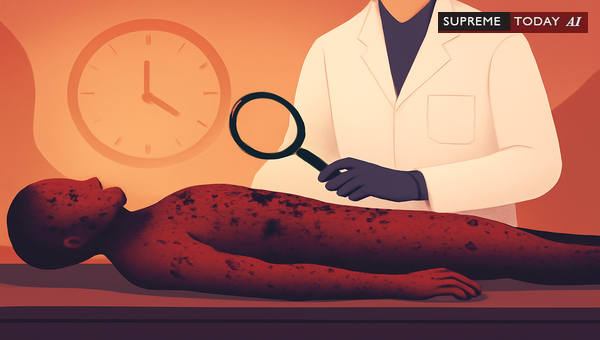
How to Ascertain Time of Death in Burnt Bodies During
Determining the time of death is a cornerstone of forensic investigations, especially in suspicious cases involving fire. But when a body is severely burnt, traditional methods become complicated. How do forensic experts ascertain the time of death in a burnt body during examination? This question arises frequently in criminal cases, where pinpointing whether burns occurred before or after death—and estimating the time elapsed—can make or break a prosecution.
In this article, we explore the scientific and legal principles used in autopsies of burnt remains. Drawing from and Indian court judgments, we'll break down key indicators like rigor mortis, soot in respiratory tracts, and burn characteristics. Note: This is general information based on forensic practices and case law; it is not legal advice. Consult a qualified expert for specific cases.
Challenges in Estimating Time of Death for Burnt Bodies
Burnt bodies pose unique challenges due to heat altering tissues, masking injuries, and accelerating decomposition. Standard changes like livor mortis or algor mortis can be unreliable. As noted in forensic reports, in a burnt case, it is difficult to pinpoint the time of death, because the death could occur within half an hour of being burnt. 2019 0 Supreme(All) 135 2019 0 Supreme(All) 133
Courts recognize these limitations. For instance, in cases involving half-burnt bodies, and detailed are crucial, but exact timing remains approximate.
Role of Rigor Mortis in Burnt Body Analysis
Rigor mortis—the stiffening of muscles—is often the first indicator examined. Typically, it begins 2-6 hours after death, peaks at 12 hours, and fades after 24-36 hours. However, in burnt bodies, heat can accelerate or mimic this process.
Legal findings emphasize its variability: Rigor mortis timing is variable and cannot be solely relied upon for precise time-of-death estimation. 2003 0 Supreme(Pat) 1207 The same source states, the time of appearance and disappearance of rigor mortis cannot be accepted as conclusive material for deciding the time of death. 2003 0 Supreme(Pat) 1207 Factors like ambient temperature, body condition, and pre-existing injuries influence it further.
In practice, if rigor mortis is present 12-24 hours post-, it suggests death within that window—but with caution. Courts have upheld that rigor mortis was present at the time of , but... the duration of rigor mortis varies from individual to individual. 2003 0 Supreme(Pat) 1207
Crucial Evidence: Soot Particles in Respiratory Passages
One of the most reliable signs is the presence or absence of soot (carbon particles) in the trachea, larynx, bronchi, and lungs. This distinguishes (before death) from burns:
- burns: Victim inhaled smoke while alive, depositing soot in airways. Lungs may show congestion and dark fluid blood.
- burns: No soot, as breathing had ceased. Lungs appear shrunken and congested without particles.
A key case illustrates: no carbon particles were seen over mucosa of trachea, larynx and the lungs were shrunken, congested, and dark fluid blood was oozing out, leading to the conclusion that she was burnt after death. 2002 0 Supreme(Raj) 961 Conversely, soot confirms live inhalation.
This analysis is vital in arson-murder cases, where the dead body was burnt soaking body continued to be burnt even after the death.
External and Internal Burn Characteristics
Burn appearance provides further clues:
- : Redness, blisters, inflammation, and reparative signs (e.g., clotting).
- : Cherry-red skin, no blisters, deep charring without vital reactions.
Reports note: the absence of blister formation and redness, coupled with the presence of deep burns without signs of body reaction, suggests burns. 2002 0 Supreme(Raj) 961 External burn characteristics, such as blister formation, redness, and reparative signs, help determine if burns are or . 2002 0 Supreme(Raj) 961
Internal organs offer corroboration. In one judgment, burn injuries were certified sufficient in the ordinary course to cause death, with burnt clothes analyzed.
Insights from Court Cases on Burnt Body Post-Mortems
Indian courts frequently address these issues:
- In a murder case, 49 ante-mortum injuries were noted on the dead body, confirmed via , highlighting brutal assaults before burning. 2023 Supreme(Online)(KER) 7171
- Re-post-mortems are ordered when initial exams miss details, as in a case where many of the injuries... were not revealed.
- Meal contents estimate time: The deceased Munni Lal might have consumed meals 5-6 hours prior to his death... period of death... 6-8 hours prior to the conducting of . 2019 0 Supreme(All) 135
- No external injuries in some cases contradict witness claims, leading to acquittals. 2017 0 Supreme(Ker) 272
These examples show courts rely on comprehensive autopsies, including video graphing and chemical analysis.
1999 0 Supreme(J&K) 277
Limitations and Exceptions
No single method is foolproof:- Rigor mortis varies by temperature, body condition, and injuries.- Soot absence isn't absolute proof; correlate with other findings.- Fire intensity affects burns: rapid incineration can mimic signs.
As one judgment warns, in a burnt case, it is difficult to pinpoint the time of death. 2019 0 Supreme(All) 135
Recommendations for Forensic Experts and Investigators
For reliable results:- Conduct holistic exams: Combine rigor mortis, soot analysis, burn features, and organ states.- Preserve evidence: Seal viscera, clothes, and tissues for lab tests (e.g., toxicology). 2026 Supreme(Online)(Mad) 6062- Use multidisciplinary approaches: Histology, radiology, and entomology if applicable.- Document thoroughly: Video autopsies aid court scrutiny.
Proper collection, sealing, and transportation of samples... are crucial. Relying solely on rigor mortis is inadequate. 2003 0 Supreme(Pat) 1207
Key Takeaways
Ascertaining time of death in burnt bodies requires integrating multiple indicators:- Rigor mortis for rough timelines (variable) 2003 0 Supreme(Pat) 1207.- Soot particles to differentiate ante- vs. burns 2002 0 Supreme(Raj) 961.- Burn characteristics for vital reactions 2002 0 Supreme(Raj) 961.
Court precedents underscore caution, emphasizing corroborative evidence. While challenging, these methods provide approximate estimates critical for justice.
References:1. 2003 0 Supreme(Pat) 1207 – Variability of rigor mortis.2. 2002 0 Supreme(Raj) 961 – Soot and burn analysis.3. 2019 0 Supreme(All) 135 2019 0 Supreme(All) 133 – Difficulties in burnt cases.4. Other cases:
, 2023 Supreme(Online)(KER) 7171, etc.
This forensic interplay ensures fair investigations—stay informed, but seek professional guidance for legal matters.
#ForensicPathology #TimeOfDeath #PostMortem












