


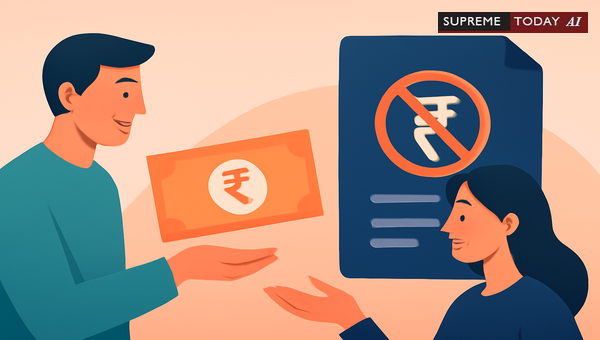
Are Friendly Loans Considered ? Indian Law Insights
In today's fast-paced world, personal financial help between friends or acquaintances is common. But what happens when a '' turns contentious? A frequent question arises: did not consider in – essentially, can such informal, interest-free loans be classified as under Indian law? This blog dives deep into the legal nuances, drawing from statutes, court judgments, and case analyses to clarify this issue.
Friendly loans, often based on trust without formal paperwork or interest, are everyday transactions. However, disputes can lead to accusations of . Generally, courts distinguish these from criminal acts, but understanding the boundaries is crucial. This post provides a comprehensive overview, supported by legal precedents. Note: This is general information, not specific legal advice. Consult a qualified lawyer for your situation.
Legal Definition of in India
is a serious criminal offense defined under (replacing relevant provisions). It involves intentionally putting a person in fear of injury or harm to dishonestly induce them to deliver property or - - BNS - S.308 : . Key ingredients include:
- Threats or fear: Must create reasonable apprehension of harm.
- : The intent to wrongfully obtain property.
- Delivery of property: Victim parts with valuables due to fear.
Mere financial transactions, like loans, do not qualify without these elements. 2017 0 Supreme(Bom) 1489
What Constitutes a ?
Friendly loans are typically interest-free advances given on personal trust or cordial relations, without . Courts recognize them as legitimate personal undertakings. For instance, transactions labeled as friendly loans are often interest-free and based on personal relations, and courts have distinguished these from coercive or threatening conduct necessary to establish 2017 0 Supreme(Bom) 1489.
In Malaysian cases (relevant for comparative insights, as similar principles apply), friendly loans are enforceable even if unstamped or unattested, provided mutual understanding is proven. One ruling noted: A agreement is enforceable even if not attested or stamped, provided it can be proven that both parties understood and accepted the terms
. This underscores their non-criminal nature absent illegality.
Indian courts echo this: The witnesses have clearly stated that the transaction was in the nature of which was not paid in spite of demand 2021 0 Supreme(Jhk) 982, treating it as a , not or .
Judicial Views: Friendly Loans Are Not Inherently
Courts consistently hold that friendly loans lack the essential for . In a key observation: payment of a without threats or does not constitute . The court emphasized that the transaction's nature—interest-free, based on personal relations—distinguishes it from 2017 0 Supreme(Bom) 1489.
Another case dismissed charges: the court dismissed charges of where the transaction was a , and no threats or intimidation were proved 2009 7 Supreme 515. Here, the court clarified that a pledge or security interest in sugar bags does not automatically amount to ownership transfer or constitute , emphasizing the importance of the presence of threats or 2009 7 Supreme 515.
In cheating disputes under , convictions were set aside when transactions were friendly loans without initial dishonest intent: there being no evidence on record that petitioner had intention to cheat complainant right from inception of transaction of extending , conviction of petitioner under of cannot be sustained 2021 0 Supreme(Jhk) 982.
Even in bail contexts, demands for friendly loans due to financial difficulty were not seen as : demand of by the applicant entitle him to be released on bail... His financial difficulty has prompted him to ask for hand loan
.
Insights from Related Cases on Loan Validity
Friendly loans often intersect with repayment disputes, but courts differentiate them from regulated moneylending or fraud:
- Enforceability: The Plaintiff had discharged the burden of proving the loan, shifting the onus to the Defendant
, affirming friendly loans based on trust.
- Not Moneylending: The Moneylenders Act regulates business, not personal loans: The does not prohibit personal loans between individuals; it regulates the business of moneylending
. A RM1.52 million loan between ex-spouses was upheld as non-illegal.
- Sham Claims Rejected: Where evidence showed interest or , loans were voided, e.g., the court found the loan charged illegal interest, ruling it a
. But pure friendly loans stand.
- Civil vs. Criminal: In cheque bounce cases under , friendly relations negated criminal intent: Both the parties had friendly and business relationship, therefore, no deceptive intention was existing at the initial stage of transaction 2018 0 Supreme(Jhk) 1681.
These cases reinforce that without threats, friendly loans remain civil disputes.
Exceptions: When a May Cross into
While generally safe, context matters:
- Threats Present: If a is obtained through threats, intimidation, or dishonest conduct, it may then qualify as 2009 7 Supreme 515.
- Evidence of : Mere labeling as 'friendly' doesn't immunize if facts show otherwise, e.g., persons fled away after giving threatening to the informant to make payment of
.
- Interest or Business Guise: If disguised moneylending, it could be illegal, as in the loan was and not money lending business 2018 0 Supreme(Bom) 1723.
The distinction hinges on facts: no means no .
Practical Recommendations for Handling Friendly Loans
To avoid disputes:
- Document Everything: Use written agreements, even simple ones, noting it's interest-free and voluntary.
- Prove Absence of : Retain communications showing trust-based nature.
- Seek Legal Review: In repayment demands, analyze for threats.
- Civil Remedies First: Use under CPC for non-payment, not criminal complaints.
Legal practitioners should carefully analyze the conduct accompanying the loan to determine whether it qualifies as .
Key Takeaways and Conclusion
In summary, friendly loans—interest-free, trust-based personal transactions—are generally not considered under Section 308 of Bharatiya Nyaya Sanhita unless threats, fear, or dishonesty are proven. Courts prioritize the transaction's nature over labels, distinguishing legitimate help from crime 2017 0 Supreme(Bom) 1489 2009 7 Supreme 515.
From Indian revisions quashing cheating convictions to Malaysian enforcements of unstamped agreements, the consensus is clear: absent , these are civil matters. Always gather evidence and consult professionals to navigate grey areas.
This analysis is based on cited precedents and general principles. Laws evolve, and outcomes depend on specifics—seek tailored advice from a legal expert.
#FriendlyLoans #ExtortionLaw #IndianLegal















