


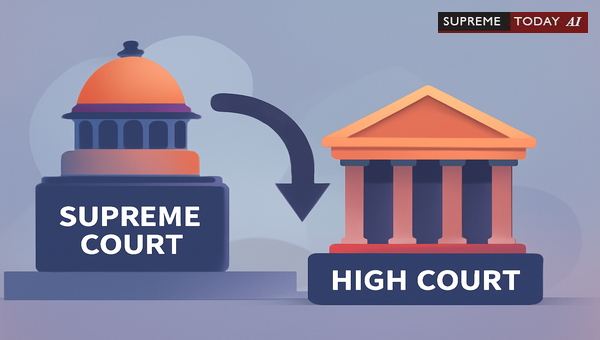
Can Allow After Rejection?
In the complex world of Indian jurisprudence, questions about court hierarchies and the often arise, especially in property or agreement disputes. A common query from litigants is: Can the allow () if the earlier rejected with direction to to divide the case in one year? This issue touches on fundamental principles like , , and the binding nature of apex court orders. While this article provides general insights based on legal precedents, it is not a substitute for professional legal advice—consult a qualified lawyer for your specific case.
Understanding the Core Legal Issue
A () typically involves specific contractual arrangements, often in property or commercial matters. When the rejects such an agreement and issues directions—like dividing the case within one year—it sets a binding framework for lower courts. The , as a subordinate court in the , must adhere strictly to these instructions.
Generally, reopening a rejected would undermine the 's authority. This scenario raises questions about jurisdiction, , and potential contempt risks. Let's break it down step by step.
The Binding Nature of Judgments
The of India stands at the pinnacle of the judicial system. Its decisions are not merely persuasive but absolutely binding on all lower courts, including High Courts, under . As highlighted in key legal documents, it is the law declared by the , which is binding on all Courts within the territory of India. 2002 7 Supreme 191
Once the rejects a and directs the to divide the case in one year, this order implies finality on the 's validity. The cannot re-examine or re-allow the same issue, as it would violate . Such directions are meant to expedite proceedings and prevent endless litigation. 2002 7 Supreme 191
In practice, this means:- Finality Principle: orders close the door on re-litigation of settled matters.- Specific Directions: The one-year timeline limits the 's role to compliance, not innovation or reversal. 2025 0 Supreme(SC) 1110
Doctrine of : Preventing Re-litigation
, a cornerstone of civil procedure under Order II Rule 2 and , bars courts from trying the same issue again between the same parties. When the rejects , it attains finality, making reconsideration impermissible.
Key aspects include:- Bar: The same grounds for cannot be revived.- : Avoids multiplicity of proceedings, as emphasized in various rulings.
Supporting this, judgments underscore that lower courts must respect these doctrines to maintain order. Re-allowing post-rejection would typically constitute a breach. 2002 7 Supreme 191
Implications of the 'Divide the Case in One Year' Direction
The 's directive to divide the case within one year signals urgency and final disposition on ancillary issues like . This is not an open invitation for the to revisit rejected pleas but a mandate for structured progression.
Failure to comply could lead to:- : As seen in cases where judicial orders are undermined, such as contemptuous disregard of court authority. 2024 Supreme(Online)(DEL) 17838 For instance, comments or actions undermining judicial processes have led to referrals for contempt, stressing respect for hierarchy.- Risks: Parties aggrieved by non-compliance can approach higher forums.
In related contexts, courts have quashed proceedings motivated by malice or vengeance, reinforcing that judicial directions must be followed without ulterior motives.
Kumar Jitendra Singh VS State of Jharkhand
Exceptions and Limitations
While the rule is clear, narrow exceptions may apply generally:- : Pending before the , these could reopen issues—but only there, not in .- New Facts or Ambiguity: The might seek clarification from the , but not independently allow on prior grounds.- No Indication Here: Absent such elements, re-allowance is typically barred.
For example, in cases involving serious allegations, courts prioritize finality to protect victims and prevent tampering, mirroring the need for adherence to apex directives. 2024 Supreme(Online)(Bom) 7257 Bail denials in sexual assault matters highlight how ongoing impacts (like trauma) parallel the need to honor timelines without deviation. 2024 Supreme(Online)(Bom) 422
and Supporting Precedents
Indian courts repeatedly affirm the supremacy of orders. Documents emphasize that the ’s decision is final and binding on all courts. 2025 0 Supreme(SC) 1110
Related case law illustrates broader principles:- Malicious Proceedings: Quashed when instituted for vengeance, underscoring clean compliance with higher orders. 2012 0 Supreme(Jhk) 551 Abusive conduct or defiance, like in cases, leads to dismissal if not public or genuine.
Kumar Jitendra Singh VS State of Jharkhand
- Contempt for Undermining Authority: Frivolous complaints or scandalous remarks invite action, as in matrimonial misuse scenarios. 2024 Supreme(Online)(DEL) 17838- Evidence Reliability: In sensitive matters like assaults, courts demand strict proof, akin to rigorous adherence to SC directions. 2019 0 Supreme(Del) 519These precedents, while not directly on , reinforce that High Courts cannot override rejections.
Practical Recommendations for Litigants
If facing a similar situation:1. Adhere Strictly: High Courts should follow SC orders without re-entertaining rejected pleas.2. Challenge Properly: Seek review in if new grounds exist, not re-hearing.3. Avoid Risks: Attempts to re-allow may invite contempt challenges or appeals.4. Document Compliance: Track timelines like the one-year division to demonstrate good faith.
In domestic or family disputes, false implications have led to divorce decrees on cruelty grounds, showing how misuse erodes trust—similarly, bypassing SC orders erodes judicial integrity. 2016 0 Supreme(Del) 2063
ACJ VS RJ
Conclusion and Key Takeaways
In summary, the generally cannot allow a previously rejected by the , especially with directions like dividing the case in one year. This upholds , finality, and hierarchy—core to India's legal system. 2002 7 Supreme 191 2025 0 Supreme(SC) 1110
Key Takeaways:- orders are binding and final.- prevents re-examination.- Exceptions are rare and -bound.- Prioritize compliance to avoid contempt or reversals.
This analysis draws from established principles and referenced documents for educational purposes. Legal outcomes depend on specific facts—always seek tailored advice from a legal expert.
Word count: Approximately 1050
#ResJudicata #SupremeCourt #HighCourtIndia















