


Understanding : Meaning in Indian Law
In the realm of criminal justice, few concepts carry as much weight as . But what exactly does meaning entail, especially within the Indian legal framework? If you've ever wondered about the implications of being confined in prison—whether as punishment, during trial, or as part of a sentence—this guide breaks it down. Drawing from judicial precedents and legal principles, we'll explore its definition, context, and real-world applications. Note: This is general information and not specific legal advice; consult a qualified lawyer for personalized guidance.
What is the Definition of ?
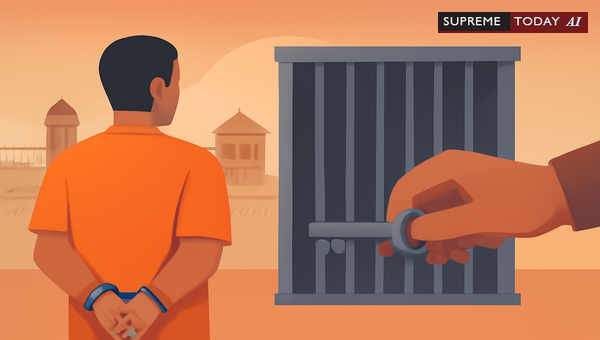
refers to the state of being confined in prison or a similar facility as a result of legal proceedings. It involves the deprivation of liberty and is typically a consequence of being charged with or convicted of a crime. In essence, it's the legal mechanism by which the state restricts an individual's freedom to ensure public safety, facilitate justice, or rehabilitate the offender.
In the Indian context, isn't just about locking someone away—it's governed by constitutional rights under () and statutes like the , and the . Courts often emphasize that it should not be punitive during stages but essential only when necessary. As noted in one judgment, the purpose of during the trial is not punitive, and is to be limited to cases where it is absolutely essential 2021 0 Supreme(Del) 558.
Legal Context of in India
India's legal system views through multiple lenses: punishment, deterrence, reformation, and protection of society. Key aspects include the rights of the accused, prison conditions, provisions, and sentence .
Duration of and
The length of is crucial, often measured by time served for eligibility in programs. For instance, prisoners who have served 16 years without or 20 years with may qualify under specific guidelines 2023 0 Supreme(All) 552.
adds complexity. Courts have clarified that fixed-term life sentences, like 20 years without , entitle convicts to release upon completion without further applications. There cannot be any further of the appellant herein from onwards 2025 0 Supreme(SC) 1192. Here, the court distinguished (sentence reduction) from , stressing constitutional rights to liberty post-term.
also hinges on conduct. In a case of over 26 years served (including 19 years actual ), exemplary jail behavior led to quashing arbitrary refusals for release, as Central Government consent must be reasoned, not capricious 2021 0 Supreme(Del) 38.
Impact on Rights and
Prolonged , particularly for , raises concerns about physical and psychological harm. The law balances accused rights with justice interests
. Presumed innocence until proven guilty is paramount; further during trial may not be justified without significant purpose 2021 0 Supreme(HP) 510 2011 0 Supreme(J&K) 318.
decisions often pivot on this. In riot-related cases, courts grant if isn't essential, rejecting mechanical opposition 2021 0 Supreme(Del) 558. Similarly, where investigation completes and charge sheets are filed, further would be unwarranted and unjustified 2021 0 Supreme(Del) 996.
vs. : When Confinement is Questioned
is a fundamental right, and courts scrutinize extended pre-conviction detention. Factors like , trial stage, and risk of absconding matter. For example, in a , was denied due to coercion evidence and age manipulation, but generally, lack of priors and prolonged custody favor release 2021 0 Supreme(Del) 996 2017 0 Supreme(Ker) 924.
In riots matters, petitioners not caught in overt acts or satisfying the '' (flight risk, tampering, repetition) secure , underscoring non-punitive 2020 0 Supreme(Del) 859. Continued detention of non-hardened accused without necessity is deemed unwarranted 2017 0 Supreme(Ker) 924.
Rehabilitation and Reform During
isn't solely punitive; it incorporates rehabilitation. Courts recognize reform opportunities influencing 1991 0 Supreme(SC) 427 2016 0 Supreme(Mad) 2654. exemplifies this—temporary release for good conduct, breathing fresh air to foster citizenship 2022 0 Supreme(P&H) 2035.
Under the , eligibility excludes certain 'hardcore' offenders, but proper conduct prevails. One petitioner won 21 days after rejection was set aside for lacking justification, emphasizing penal reform rights 2022 0 Supreme(P&H) 2035.
The CrPC and judicial interpretations govern execution, suspension, and , promoting humane treatment 1997 0 Supreme(Guj) 593 2022 0 Supreme(MP) 1230.
Key Judicial Insights on
- Fixed Sentences: Serve the term (e.g., 20 years actual custody, excluding ), then release—no needed 2025 0 Supreme(SC) 1192.
- Undertrial Rights: Balance with justice; avoid unnecessary prolongation
.
- : Mandatory reasoned consent; exemplary conduct key 2021 0 Supreme(Del) 38.
- /: Reform tool, not privilege for all 2022 0 Supreme(P&H) 2035.
- Principles: Non-punitive; parity, conduct, and necessity guide 2021 0 Supreme(Del) 558 2020 0 Supreme(Del) 859.
These precedents from and shape 's application.
Summary of Key Findings
- denotes confinement from criminal proceedings, impacting liberty profoundly.
- Duration, conditions, , and are pivotal.
- Indian judiciary prioritizes rehabilitation, presumed innocence, and humane reform over mere punishment.
Practical Recommendations
For those facing :- Pursue early, especially post-investigation or with clean records.- Document good conduct for /.- Highlight psychological/social impacts in pleas.- Explore rehabilitation programs.
Always seek professional legal counsel, as outcomes vary by case.
Conclusion: Balancing Justice and Humanity
Understanding meaning reveals a nuanced system aiming for fairness. While confinement upholds law and order, safeguards ensure it's not excessive. Reforms like and reasoned reflect evolving justice—punishment with purpose. Stay informed, respect rights, and remember: personal liberty is sacrosanct.
References: 2023 0 Supreme(All) 552 2021 0 Supreme(HP) 510 2011 0 Supreme(J&K) 318 1991 0 Supreme(SC) 427 2016 0 Supreme(Mad) 2654 1997 0 Supreme(Guj) 593 2022 0 Supreme(MP) 1230 2025 0 Supreme(SC) 1192 2022 0 Supreme(P&H) 2035 2021 0 Supreme(Del) 996 2021 0 Supreme(Del) 558 2021 0 Supreme(Del) 38 2020 0 Supreme(Del) 859 2017 0 Supreme(Ker) 924















