


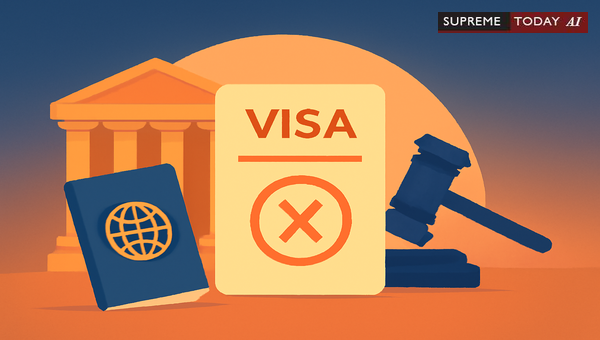
Can Indian Courts Overrule Foreign Visa Refusals?
In an increasingly globalized world, travel and migration are essential for business, education, and family reunions. However, when a foreign country refuses a visa to an Indian citizen or resident, frustration often leads to questions about legal recourse. A common query arises: Can an Indian court interfere with the visa refusal by a foreign country?
The short answer, based on established legal principles and judicial precedents, is generally no. Indian courts respect the over their immigration policies. This blog post delves into the reasons behind this stance, key cases, and practical recommendations, drawing from authoritative sources to provide clarity.
Understanding the Core Legal Issue
Visa decisions are fundamentally tied to a country's right to control its borders. International law recognizes each nation's sovereignty in immigration matters. Indian courts have consistently upheld this, limiting their jurisdiction to domestic issues rather than foreign administrative decisions.
As outlined in various precedents, Indian judiciary intervention in foreign visa refusals would infringe on —a principle of mutual respect among sovereign states. This is not merely a policy choice but a legal boundary reinforced by the Constitution and statutes. 2022 0 Supreme(SC) 1439
Key Legal Principles Limiting Judicial Interference
1.
Foreign countries hold absolute authority over entry into their territory. Indian courts defer to this, rooted in international law. Attempting to override a visa refusal would equate to , which is typically impermissible.
For instance, determinations of nationality or citizenship fall under the Central Government's purview, not the judiciary. Courts have ruled that such matters are outside . 1961 0 Supreme(SC) 159 1971 0 Supreme(SC) 269
2. Judicial Precedents on Visa and Entry Denials
In Mohd Qamar, the court addressed detention of a foreign national under (right to life and liberty). While emphasizing constitutional protections, it explicitly avoided jurisdiction over the underlying visa refusal, signaling these are foreign domain issues. 2022 0 Supreme(SC) 1439
Similarly, under , foreign citizens cannot sue for compensation due to denial of entry. A case involving a Malaysian citizen whose visa was canceled at an airport illustrates this: A conjoint reading of these two provisions would make the legal position clear that it is not permissible for a foreigner to maintain a suit for compensation or damages on account of refusal to enter into India either based on a Visa or otherwise. The court affirmed civil authorities' immunity, setting aside a 's decree. 2022 Supreme(Online)(KER) 63504
Even for Indian citizens, entry without valid documents invites penalties, underscoring strict immigration enforcement without judicial override of foreign decisions. 2015 0 Supreme(Tri) 599
3. Arbitration and Foreign Awards Analogy
The framework for foreign awards under the , mirrors this restraint. Indian courts cannot set aside foreign decisions except on narrow grounds in Section 48. This reinforces non-interference in foreign jurisdictional acts, including visas. 2012 0 Supreme(SC) 596 2020 6 Supreme 193
Broader Context from Related Cases
Visa issues often intersect with travel documents like (PCC). A PCC assures foreign authorities of no criminal record, but its absence doesn't trigger Indian court intervention in visa denials. One case highlighted a applicant's right to seek long-term visas for business, yet resolution lies abroad, not in Indian courts. 2024 Supreme(Online)(DEL) 31452
Property and citizenship cases further illustrate boundaries. A Pakistani national visiting India on visa could not execute a valid gift deed over , as visa status doesn't confer domestic rights overriding foreign nationality decisions. 2010 0 Supreme(All) 450
In criminal contexts, even offenses abroad (e.g., foreign convictions) prompt debates on Indian courts' notice, often referred to larger benches due to conflicts, but visa refusals remain distinctly sovereign. 2014 0 Supreme(Bom) 1828
Foreign law itself requires expert proof in Indian courts, and agreements excluding Indian jurisdiction (e.g., Swiss courts for contracts) are honored. This extends analogously to unilateral visa decisions. 2007 0 Supreme(Del) 2779
Practical Implications and Recommendations
Facing a visa refusal? Here's what typically applies:
- Diplomatic Channels First: Approach the foreign embassy or consulate for reconsideration or appeals within their system.
- No Indian Lawsuit Viability: Suits for compensation or against foreign decisions are ill-conceived and likely dismissed.
- Alternative Remedies: Explore reapplication with stronger documentation, waivers, or legal aid in the foreign jurisdiction.
- For Businesses/Individuals: Secure PCCs or character certificates proactively; even Indians need valid docs for entry anywhere. 2015 0 Supreme(Tri) 599
Legal practitioners should counsel clients on these limits, avoiding futile litigation. Remember, even seemingly arbitrary refusals respect sovereign discretion.
Conclusion and Key Takeaways
Indian courts generally cannot interfere with visa refusals by foreign countries due to sovereignty principles, statutory bars like the Foreigners Act, and precedents limiting jurisdiction. 2022 0 Supreme(SC) 1439 2022 Supreme(Online)(KER) 63504
Key Takeaways:- Respect foreign immigration sovereignty—courts won't override it.- Seek resolutions abroad via diplomatic or administrative routes.- Focus on compliance with travel document requirements.- Consult specialists for case-specific strategies.
This post provides general information based on legal precedents and is not specific legal advice. Immigration matters vary; always seek professional counsel.












