


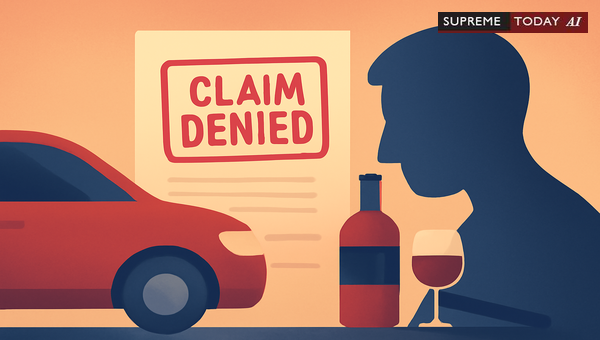
Does Insurance Pay If Driver Was Drunk Without Proof?
Imagine this: A car accident occurs, and the other driver is accused of being under the influence of alcohol. The insurance company denies the claim, citing a for . But what if there's no solid proof—like blood tests or medical reports? Must the insurer still pay?
This scenario raises a critical question for accident victims, vehicle owners, and insurers alike: Driver Alcoholic Accident Not Proof Insurance Kindle to Pay Claim Amount—or, more plainly, does an insurance company have to pay a claim in an accident involving an allegedly intoxicated driver without concrete proof?
In this post, we'll break down the legal principles, key court rulings, evidence requirements, and related defenses like invalid licenses. Drawing from Indian jurisprudence, we'll explore when claims survive denial attempts. Note: This is general information based on case law and not specific legal advice. Consult a lawyer for your situation.
Main Legal Finding: Proof of is Essential
Generally, insurance policies include exclusion clauses denying coverage if the driver operates the vehicle under the influence of alcohol. However, courts have consistently ruled that merely proving that the driver consumed alcohol is insufficient; the insurer bears the to establish at the time of the accident with such as medical reports or blood test results
.
Without this, denying a claim is unjustifiable. For instance, allegations based on police charge sheets, FIRs, or even a guilty plea do not automatically trigger exclusion. The court in a key case emphasized: mere consuming of alcohol is not a ground to unless supported by medical evidence such as blood test results or medical reports establishing
.
Key Points from Landmark Rulings
- Policy Exclusions Require Proof: Insurers can deny claims only if they prove violation of clauses
.
- Burden on Insurer: The onus lies with the insurance company to demonstrate at the accident time
.
- Insufficient: Charge sheets or guilty pleas alone aren't enough without medical proof. The husband of the complainant pleaded guilty which is not an adequate proof whether he had consumed intoxicated liquor
.
- No Medical Evidence, No Denial: Courts set aside denials lacking blood tests or reports 2024 0 Supreme(Raj) 786.
Detailed Analysis: Evidence Standards for
Legal Principles on Insurance and Alcohol
Insurance policies typically exclude coverage for driving under the influence, but activation demands rigorous proof. In
, the court noted: neither the medical officer examined nor there is any blood test result on record to show that the driver was under the influence of alcohol. Mere allegations fail here.
Similarly, in 2024 0 Supreme(Raj) 786, the insurer's -based denial was overturned because the insurer could not prove the case with credible evidence. This underscores that courts favor claimants when proof is absent.
Impact of Police Records and Guilty Pleas
While a police charge sheet might allege drunkenness—e.g., And at the time of accident, the driver was under , therefore... the Insurance Company is not liable to pay 2023 0 Supreme(Pat) 22—it doesn't suffice without corroboration. Courts demand scientific backing to prevent arbitrary denials.
Related Defenses: Lessons from Driver License Cases
isn't the only policy breach insurers cite. Similar principles apply to claims of invalid driving licenses, providing broader context for accident claims.
for License Violations
Courts hold that merely proving the driver lacked a license on the accident date isn't enough to escape liability. The insurer must show the driver never had a licence or was disqualified from holding or obtaining a licence 2008 0 Supreme(Del) 1227
NATIONAL ASSURANCE CO. LTD. VS NEELAM - Delhi
2008 0 Supreme(Del) 1121 2008 0 Supreme(Del) 1289.- Owner's Initial Burden: The vehicle owner must first prove a valid license existed 2024 0 Supreme(Jhk) 786 2024 0 Supreme(Jhk) 506.
- Pay and Recover Principle: Even with breaches like no license, insurers may pay then recover from the owner/driver 2024 0 Supreme(Jhk) 786 2024 0 Supreme(Jhk) 506 2023 0 Supreme(AP) 412 2024 0 Supreme(Gau) 1324 2023 0 Supreme(AP) 353 2023 0 Supreme(AP) 1115 2022 0 Supreme(Bom) 1549.
This mirrors cases: Insurers can't deny outright without full proof.
Criminal vs. Civil Liability
An acquittal in a criminal drunk driving case doesn't absolve 2022 0 Supreme(HP) 633. Negligence must be proven separately with cogent evidence, not just accident involvement 2023 0 Supreme(Bom) 1316 2023 0 Supreme(AP) 1115.
Exceptions: When Insurers Can Lawfully Deny
- Concrete Evidence Exists: Blood alcohol tests or medical reports conclusively proving allow denial under policy clauses.
- Policy Compliance Key: For third-party risks, breaches like or no license may limit direct liability but invoke 2023 0 Supreme(AP) 412 2024 0 Supreme(Gau) 1324.
In 2024 0 Supreme(Mad) 2125, owner-claimant issues were raised, but proof remained pivotal.
Practical Recommendations for Stakeholders
For Claimants (Victims/Owners)
- Challenge denials lacking medical proof—courts often side with you.
- Gather your evidence: eyewitnesses, photos, and policy copies.
- Note that police charges alone won't doom your claim.
For Insurers
- Secure blood tests or reports promptly post-accident.
- Avoid relying solely on FIRs or pleas
.
General Tips
- Focus on Evidence Quality: Both sides should prioritize scientific proof for or license issues.
- Seek Legal Help: handle these; precedents guide outcomes.
Conclusion and Key Takeaways
In summary, insurers typically must pay claims in accidents with alleged drunk driving unless they provide concrete proof like blood tests. Mere accusations fall short, as affirmed in
and 2024 0 Supreme(Raj) 786. Related defenses like invalid licenses follow suit, emphasizing the insurer's proof burden and options.
Key Takeaways:- Proof Trumps Allegations: Scientific evidence is mandatory for denials.- Burden on Insurer: They must substantiate policy breaches.- Claimant Advantage: No proof often means payment.- Holistic View: Criminal outcomes don't bind civil claims.
Stay informed, drive safe, and insure wisely. For personalized advice, contact a motor accident law expert.
Word count: 1028. References are to specific case IDs for further reading.
#InsuranceClaims, #DrunkDrivingLaw, #MotorAccidentClaims












