Searching Case Laws & Precedent on Legal Query.....!
Analysing the retrieved Case Laws
Scanned Judgements…!



Searching Case Laws & Precedent on Legal Query.....!
Analysing the retrieved Case Laws
Scanned Judgements…!
Obscenity Definition and Elements - To establish an offence under Section 294(b) IPC, the words or acts must be obscene and cause annoyance in or near a public place. Obscenity is not explicitly defined in IPC; courts rely on the context and whether the words tend to arouse sexual impure thoughts or feelings ["2024 0 Supreme(Ker) 798"], ["2024 Supreme(Online)(Ker) 81971"].
Place of Occurrence - The offence is only made out if the obscene act or utterance occurs in or near a public place, or if it causes annoyance to others in such a place. Mere use of obscene words without proof of occurrence in or near a public place or causing annoyance does not suffice ["2024 0 Supreme(Ker) 798"], ["2024 Supreme(Online)(Ker) 81971"], ["2019 0 Supreme(Mad) 3097"].
Cause of Annoyance - The prosecution must prove that the obscene words or acts caused annoyance to others. Words alone, without evidence of causing annoyance or being obscene in nature, are insufficient to attract Section 294(b) ["2025 Supreme(Online)(Mad) 67764"], ["2024 Supreme(Online)(Ker) 81971"], ["GANESHAN Vs THE DEPUTY SUPERINTENDENT OF - Madras"].
Nature of Words - To qualify as obscene, words must involve lascivious elements or arouse sexual thoughts. Mere abusive or humiliating words, even if defamatory, do not necessarily constitute obscenity unless they involve such elements ["2024 0 Supreme(Ker) 798"], ["2024 Supreme(Online)(Ker) 81971"], ["2025 Supreme(Online)(Mad) 67764"].
Legal Precedents - Courts have consistently held that for conviction under S.294(b), it must be shown that the words were obscene and caused annoyance in or near a public place. Absence of evidence of obscene nature or annoyance negates the offence ["2024 Supreme(Online)(KER) 41119"], ["2025 Supreme(Online)(Mad) 73589"], ["2022 Supreme(Online)(KER) 43600"].
Conclusion - Before deposing obscene words before the court for attracting offence 294(b), the prosecution must establish that the words or acts were obscene, uttered in or near a public place, and caused annoyance. Mere abusive or humiliating words without these elements do not suffice ["2024 0 Supreme(Ker) 798"], ["2024 Supreme(Online)(Ker) 81971"], ["2025 Supreme(Online)(Mad) 76759"].
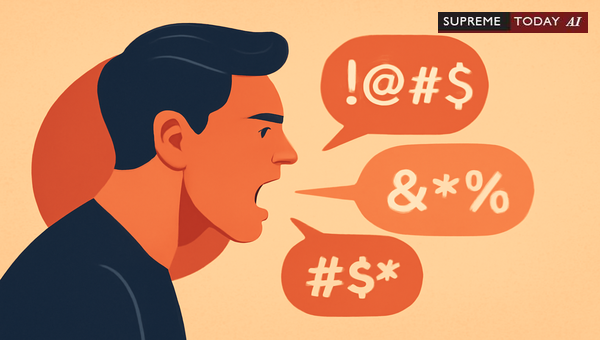
In legal disputes involving allegations of obscene language, a common question arises: Do obscene words need to be explicitly deposed or reproduced before the court to attract an offence under (IPC)? This issue often surfaces in cases of public altercations, harassment claims, or workplace conflicts where abusive speech is alleged. Understanding this can help both complainants and accused parties navigate proceedings effectively.
Section 294(b) IPC punishes whoever, with , sings, recites, or utters in or near a . But does proving the offence hinge on of those words? Generally, courts have clarified that it does not. Instead, the emphasis lies on the nature, context, tendency, and impact of the words or acts. This blog post breaks down the legal position, drawing from key judgments and principles to provide clarity.
To attract Section 294(b), three main ingredients must typically be established:- Utterance in or near a : Private settings, like phone calls or personal WhatsApp messages, often fall outside its scope. For instance, one court held that receiving obscene phone calls on a mobile does not satisfy the '' requirement if not uttered there. 2019 0 Supreme(Mad) 3213- Obscene content: Words must in an average person, per contemporary community standards.- : Mere abuse without this intent may not suffice.
Courts stress that not every abusive or humiliating remark qualifies as obscene. As observed, Mere abusive, humiliating or defamative words by itself cannot attract an offence under Section 294(b) IPC. To prove the offence under , mere utterance of obscene words are not sufficient but there must be a further proof to establish that it was to the annoyance of others. 2022 0 Supreme(SC) 1243
The short answer: No, it is not a strict requirement. Judgments consistently hold that courts can assess obscenity based on context, manner, and probable impact without needing the exact words reproduced in evidence. The legal test focuses on whether the words tend to deprave or corrupt or arouse impure thoughts, evaluated objectively. 2022 0 Supreme(SC) 1243 2024 0 Supreme(Ker) 798
In , the court emphasized that the absence of exact words does not bar conviction if surrounding circumstances demonstrate obscenity. 2022 0 Supreme(SC) 1243 Similarly, noted: The words alleged to have been uttered must be capable of arousing sexually impure thoughts in the minds of its hearers. Thus, every abusive word or humiliating word cannot, by itself, be said to be obscene. 2024 0 Supreme(Ker) 1272
This approach aligns with broader principles where evidence of effect and tendency trumps literal deposition. Courts may rely on witness testimonies about the words' nature, without verbatim quotes, especially if reproduction could itself be offensive. 2006 8 Supreme 219
Failing to deposit exact words does not automatically acquit the accused. If context—like public setting, witnesses' reactions, or expert views—shows the words met the obscenity threshold, the offence may still stand. Conversely, vague FIRs alleging 'obscene words' without specifics can weaken prosecution. One ruling stated: It is necessary to state the words uttered by the accused. A vague or general statement in the that the accused showered obscene words is not enough. 2018 0 Supreme(Mad) 3361
Several rulings reinforce that obscenity under Section 294(b) demands more than mere filth:- Requirement: In a case quashing proceedings, the court clarified that WhatsApp messages, even if obscene, do not qualify as they are not uttered 'in or near any .' 2020 0 Supreme(Bom) 328- Intent and Context Matter: Proceedings were quashed where no showed intent to annoy via obscenity, stressing analysis of actions' context. 2024 0 Supreme(Ker) 616- Not All Abuse Qualifies: Convictions were set aside when words were defamatory but not obscene, or incidents occurred in private homes. For example, slapping in a house did not meet Section 294(b) as it lacked public utterance and annoyance proof. 2019 0 Supreme(Mad) 709 2023 Supreme(Online)(MAD) 960- Corroboration Needed: Even victim testimony alone may not suffice without medical or other evidence, especially if witnesses turn hostile. 2024 Supreme(Online)(MAD) 1685
In another instance, no offence was made out under Section 294(b) alongside provisions without public obscenity.
Phone threats or private utterances similarly failed the test. 2019 0 Supreme(Mad) 3213
These cases illustrate courts' reluctance to stretch Section 294(b) beyond its bounds, prioritizing evidence of public nuisance and obscenity's gravity. 2020 0 Supreme(Chh) 175
While deposition isn't mandatory, certain scenarios may challenge prosecution:- Purely Abusive Words: Humiliating language without lascivious content rarely qualifies. 2022 0 Supreme(SC) 1243 2024 0 Supreme(Ker) 798 2006 8 Supreme 219- Private Communications: Social media DMs or calls evade the section. 2020 0 Supreme(Bom) 328- Lack of Specificity in : Vague complaints risk quashing. 2018 0 Supreme(Mad) 3361- No Annoyance Proof: Isolated utterances without public impact fail. 2022 0 Supreme(SC) 1243
Supplementing with context, witness accounts, or expert opinions can bolster cases without exact deposition. 2022 0 Supreme(SC) 1243
Always consult a lawyer for case-specific advice, as outcomes vary by facts.
Disclaimer: This post provides general information based on judicial trends and is not legal advice. Laws and interpretations evolve; seek professional counsel for your situation.
In summary, while specific words strengthen cases, their absence doesn't doom prosecution if obscenity is evident from the totality of evidence. Understanding this balance ensures fair application of Section 294(b).
#IPC294b #ObscenityLaw #IndianPenalCode


While addressing the essentials to constitute Section 294(b), it is relevant to extract Section 294(b) of IPC as under: “S. 294. Obscene acts and songs. ... In such cases, offence under section 294(b) of Indian Penal Code would attract. The term ‘in or near public place’ referred in Section 294(b) of the Indian Penal Code does not limit its orbit in absolute public place alone. ... State of Harya....

While addressing the essentials to constitute Section 294(b), it is relevant to extract Section 294(b) of IPC as under: “S. 294. Obscene acts and songs. ... , the Apex Court held that in order to secure a conviction the provision of Section 294(b) IPC requires two particulars to be proved by the prosecution, i.e (i) the offender has done any obscene act in any public place or has sung, recited or uttered any #HL_ST....
The learned counsel for the petitioner argued to convince this Court that, no materials prima facie attracting commission of offences punishable under Sections 294(b) and 509 of the IPC and Section 12 r/w Section 11(i) of the PoCSO Act, are made out. ... In order to attract an offence under Section 294(b) of the IPC, whoever, with intention to annoy others, sings, recites or utters any obscene song, ballad or words, in or near any p....

On perusal of the ingredients for attracting section 294(b) IPC, the occurrence should take place in or near any public place. ... At this juncture, it is necessary to refer sections 294(b) IPC and 3(1)(x) of SC/ST (PA) Act, 1989, which would run thus:- "294. Obscene acts and songs.? Whoever, to the annoyance of others? ... (a) does any obscene act in any public place, or (b) sings, recites or utters any obscene s....

Admittedly, the alleged words were spoken by the petitioner over phone. In order to attract the offence under Section 294(b) I.P.C, the words uttered must have caused annoyance to others in any public place. The Hon'ble Supreme Court in the case of N.S.Madhanagopal and Another Vs. ... It may not be the requirement of law to reproduce in all cases the entire obscene words if it is lengthy, but in the instant case, there is hardly anything on record. ....
Hence, it is held that the offence under Section 294(b) IPC and 3(1)(x) of SC/ST (PA) Act, 1989 were not made out. ... At this juncture, it is necessary to refer sections 294(b) IPC and 3 (1)(x) of SC/ST (PA) Act, 1989, which would run thus:- “294.Obscene acts and songs. ... 11.On perusal of the ingredients for attracting section 294 (b) IPC, the occurrence should take place in or near any public place.....

It may be that the words are defamatory of the complainant, but I do not think that the words are ‘obscene’ and the utterance would constitute an offence punishable under S. 294(b) IPC.”9. ... No one has spoken about the obscene words, they felt annoyed and in the absence of legal evidence to show that the words uttered by the appellants accused annoyed others, it can not be said that the ingredients of the offence....
sexual thoughts or feelings or words cannot attract the offence under Section 294(b). ... the course of the conversation, the appellant had used obscene and intemperate words against P.W.1 attracting the offence u/s 294 (b) and in the course of the same transaction the appellant is alleged to have caught hold of the hair of the appellant and uttering words to the effect to do away with her ... Mer....
Whether the same amounts to an offence under Section 294(b) IPC is the first question to be decided in this case. The ingredients of Section 294(b) IPC is considered by the Apex Court and this Court in several decisions. The Apex Court in Apoorva Arora v. State (Govt. ... The conviction and sentence against the revision petitioner under S.294(b) IPC in ST No. 3810/1998 of the Judicial First Class Magistrate #HL_STA....
It may be that the words are defamatory of the complainant, but I do not think that the words are 'obscene' and the utterance would constitute an offence punishable under S.294(b) IPC." ... 6.Section 294(b) IPC reads as follows:- "294(b)sings, recites or utters any obscene song, ballad ... But mere allegation that the petitioner used the abusive word does not satisfy to attract the offe....

He submitted that the WhatsApp messages are personal messages. 4. Shri Deshmukh, the learned counsel for the petitioner submitted that offence under Section 294 of the I.P.C. will be attracted only if the obscene words are uttered in public place and that the obscene words should be of such a nature as to cause annoyance to others. Therefore sending of personal messages on personal account of WhatsApp will not amount to utterance of words at public place.

Though Saraswati Devi Chandra (PW/1) deposed regarding uttering of some filthy words by the appellant, but the fact remains that for commission of offence under Section 294 of IPC, words should be obscene words In absence of determination to execute threat, charge under Section 506 Part II of IPC is not established.
In order to constitute an offence under Section 294(b) of IPC, the obscene acts or words may be done or uttered at or near any public place. In the present case, the de-facto complaint is said to have received phone calls in her mobile phone. If the same is not done at or near any public place, the fundamental requirement under the provision is not satisfied and no offence is made out.
7. As per the charge, the first accused slapped the defacto complaint (PW-1), on his cheek. Since, the evidence in this case does not meet out the ingredients of the charge under section 294(b) of I.P.C., the accused are not guilty. To attract offence under section 294(b) IPC, the utterance of obscene words, ought to have made in or near a public place and it should have caused annoyance. The trial Court, after appreciating the evidences, held that the prosecution evidence indicates that the alleged incident has taken place at the house of the accused.
The prosecution would not be justified in bringing in the evidence for the first time the words allegedly spoken to by the accused, when the same is not recorded in the First Information Statement in a case instituted upon police report. It is necessary to state the words uttered by the accused. A vague or general statement in the FIR that the accused showered obscene words is not enough to constitute an offence under Section 294(b).


An indispensable Tool for Legal Professionals, Endorsed by Various High Court and Judicial Officers
Please visit our Training & Support
Center or Contact Us for assistance

Scan Me!
India’s Legal research and Law Firm App, Download now!


For Daily Legal Updates, Join us on :



 Back to top


