


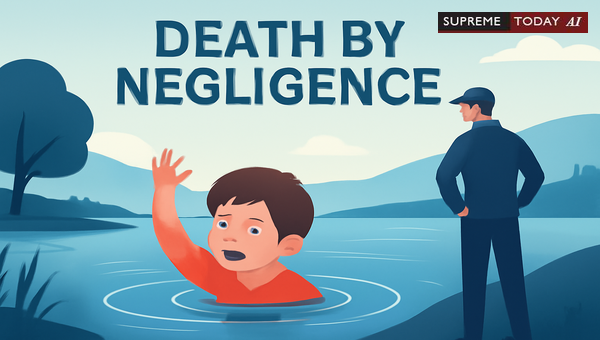
IPC 304A: Liable if Unaware Child Entered Lake?
Imagine a tragic incident where a child sneaks into a private lake and drowns. The lake owner, unaware of the child's presence, faces charges under (IPC) for . But does lack of awareness absolve the owner of liability? This question raises critical issues at the intersection of and .
In this post, we delve into whether an offence under Section 304A is made out if the owner was not aware that a child had entered the lake. We'll break down the legal principles, apply them to this scenario, and draw insights from relevant judgments. Note: This is general information based on legal principles and is not specific legal advice. Consult a qualified lawyer for your situation.
Understanding : Core Elements
punishes whoever causes the death of any person by doing any not amounting to . Punishment can extend to two years imprisonment, or fine, or both. Crucially, this provision applies only when there is no to cause death and no that the act is likely to cause death2008 0 Supreme(SC) 831 2012 5 Supreme 321.
Key elements include:- : implies an overhasty act without due care, while is failure to exercise reasonable care 2008 0 Supreme(SC) 831.- Causation: The act must directly cause the death.- Absence of or : As stated, The provisions of this section apply to cases where there is no to cause death and no that the act done in all probabilities will cause death. Therefore this provision is directed at offences outside the range of and obviously contemplates those cases into which neither nor enter 2016 0 Supreme(Raj) 1818.
If exists that the act could likely cause death, it may elevate to not amounting to murder under 2012 5 Supreme 321.
The Query: Owner Unaware of Child's Entry into Lake
The central question is: Whether Offence under 304A is Made out if Owner was Not Aware that Child has Entered into the Lake?
Lack of awareness about the child's specific presence is a pivotal factor. If the owner genuinely did not know the child had entered, it may negate the '' element. However, this does not automatically dismiss liability. Courts typically examine:
- : As the lake owner, there may be a general duty to prevent unauthorized access, especially to children who are presumed less cautious.
- or : Was the lake left unattended without fences, warnings, or safety measures? Even without knowing about this child, failing to secure a hazardous area could be negligent 2008 0 Supreme(SC) 831.
- Foreseeability: Children trespassing into dangerous spots like lakes is often foreseeable, potentially establishing .
In essence, while unawareness of the exact incident may weaken the prong, overall or could still attract Section 304A 2012 5 Supreme 321.
Insights from Judicial Precedents on and
Indian courts have clarified Section 304A in diverse contexts, emphasizing the need for both (guilty act) and (guilty mind) elements, albeit -based.
Distinction from
One judgment underscores: Words 'not amounting to ' in the section are very significant and it must therefore be understood that intentionally or knowingly inflicted violence directly and wilfully caused is excluded - Section applies only to such acts which are rash or negligent and are directly the cause of death of another person - In other words, a rash act is primarily an overhasty act as opposed to a deliberate act but done without due care and caution 2016 0 Supreme(Raj) 1818. This supports that pure unawareness might tilt away from higher charges but not necessarily from 304A.
and Owner Responsibility
In cases involving vehicle owners or guardians, courts apply under statutes like the , but stress rebuttable presumptions and need for direct involvement. For instance, In criminal offence, generally, no one can be held responsible for an offence committed by other except in case of or 2024 0 Supreme(Guj) 452. Similarly, a lake owner isn't vicariously liable for a trespasser's actions unless their enabled it. In a guardian-vehicle case, proceedings were quashed where no direct role was shown, highlighting the necessity of and for criminal liability (from case summary on , etc.)
Mohemad Hanif Abdulsatar Teliya VS State of Gujarat
.Analogy
Courts caution against over-criminalizing . In a doctor's case: However, considering the facts and circumstances of the case, it cannot be said that offence under is not made out... from the record of prosecution this Court is of the view that there was no justification to take under Section 304 I.P.C. 2016 0 Supreme(All) 3255. This illustrates a balanced approach: downgrade if no higher , but proceed if evident. Applied here, lake security lapses could justify 304A .
Offence Determination
Multiple sources note: Further, the Court has only to consider as to whether only offence is made out or not... under Section 304 or 304A or any other sections of the IPC is made out 2024 0 Supreme(Guj) 452
Mohemad Hanif Abdulsatar Teliya VS State of Gujarat
. At FIR or stage, courts assess if basic elements exist, leaving full facts for trial.Factors Courts Consider in Such Cases
To determine if 304A applies despite unawareness:
- Safety Measures: Fencing, signage, patrols? Absence may indicate .
- Location and Accessibility: Public proximity increases foreseeability of trespass, especially by children.
- Owner's Conduct: Routine maintenance or abandonment?
- Child's Age: Victims under 14 often invoke heightened care, as seen in premature release bars for child victim cases 2019 0 Supreme(P&H) 766 2018 0 Supreme(P&H) 3171.
- Evidence of : Any prior incidents or warnings?
Bullet-point takeaways:- Lack of specific helps but doesn't end inquiry.- General in maintaining premises is key.- Defenses include proving reasonable care or /trespass.
Practical Implications for Property Owners
Lake or pond owners, especially near residential areas, should prioritize:1. Installing barriers and warnings.2. Regular inspections.3. Insurance for liability.4. Documenting safety efforts to rebut claims.
In , courts often terminate if no case, as in vehicle owner cases where evidence lacked
Mohemad Hanif Abdulsatar Teliya VS State of Gujarat
. Property owners can similarly challenge via if facts favor them.Conclusion and Key Takeaways
The owner's lack of awareness that a child entered the lake could significantly influence whether applies, potentially negating higher culpability but not ruling out -based liability. Ultimately, it hinges on case-specific facts like safety measures and foreseeability 2008 0 Supreme(SC) 831 2012 5 Supreme 321.
Key Takeaways:- Section 304A requires rash/negligent act without / of death likelihood.- Unawareness of presence may help, but general persists.- Courts demand evidence; defenses focus on reasonable precautions.- Child victims heighten scrutiny.
Property owners must proactively mitigate risks. For tailored advice, seek professional legal counsel. Stay informed, stay safe.
(Word count approx. 1050. References drawn from provided legal documents for illustrative purposes.)
#IPC304A, #NegligenceLaw, #CriminalLiability















