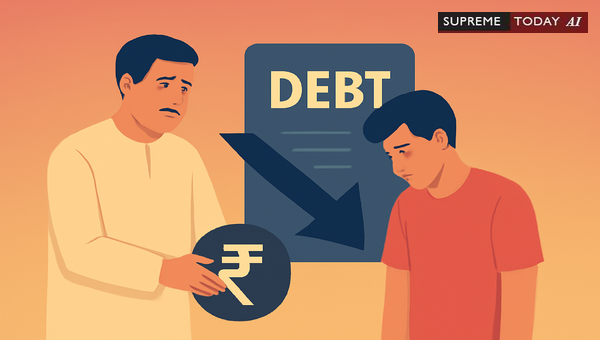
Liability of a Son for His Father's Debt Several sources establish that a son can be held liable for his father's debts, especially when he has explicitly agreed to repay or has issued a cheque to discharge such liabilities. For example, in cases ["Prasad Raykar VS B. T. Dinesh - Karnataka"] and ["Prasad Raykar VS B. T. Dinesh - Crimes"], the courts recognize that sons, as legal heirs or representatives, can be liable if they acknowledge the debt or undertake repayment, even after the father's death. The issuance of cheques and acknowledgment of liability serve as evidence of such obligation.Analysis and Conclusion: A son may be made liable for his father's debts if he has agreed to repay, issued a cheque, or otherwise acknowledged the debt. However, liability often depends on the specifics of the case, such as whether the son explicitly accepted responsibility or acted as a legal representative.
Legal Capacity and Scope of Liability of Legal Heirs The liability of heirs is generally limited to the estate of the deceased and not their personal assets, as clarified in ["Harmeet Singh VS Ravi Inder Singh, Deceased Through Legal Representatives - Delhi"]. The courts emphasize that legal heirs are liable only to the extent of the deceased's estate and not beyond. In cases like ["CHEPPULLA RADHAKRISHNA VS CHEPPULLA ARJUNA RAO - Andhra Pradesh"], the natural son or adopted son may be liable if they are involved in collusive or fraudulent transactions to avoid debt repayment, such as executing a sale deed to evade liabilities.Analysis and Conclusion: Heirs' liability is typically confined to the deceased's estate. Personal liability requires explicit acknowledgment or legal obligation, and heirs cannot be personally liable for debts beyond the estate unless involved in fraudulent transactions.
Liability in Cases of Fraudulent Transactions and Collusion When a property transfer or sale deed is executed to avoid debt repayment, courts scrutinize such transactions. For example, in ["CHEPPULLA RADHAKRISHNA VS CHEPPULLA ARJUNA RAO - Andhra Pradesh"] and ["CHEPPULLA RADHAKRISHNA vs CHEPPULLA ARJUNA RAO - Andhra Pradesh"], the courts found that transfers made in collusion with natural or adopted sons to evade debts are fraudulent. Such parties may be held liable for the debt, especially if the transaction is proven to be a sham or collusive act to avoid liability.Analysis and Conclusion: Fraudulent or collusive transfers to avoid debt can lead to liability for the transferees, including natural or adopted sons, if proven to be in bad faith.
Additional Considerations Some sources highlight the moral obligation of sons to maintain aged parents (e.g., ["Manoj Kumar @ Manoj Sao, son of Deoki Sao VS State of Jharkhand - Jharkhand"]) and recognize that debts incurred due to familial or spiritual reasons may also be considered. The courts also consider the nature of the debt, whether it was borrowed for family necessity or other reasons, influencing liability assessments.Analysis and Conclusion: Moral and familial obligations may influence perceptions of liability, but legal liability depends on explicit agreements, acknowledgment, and the nature of transactions involved.
References:- ["Prasad Raykar VS B. T. Dinesh - Karnataka"], ["Prasad Raykar VS B. T. Dinesh - Crimes"]: Son liable if he agrees to pay or issues cheque, even after father's death.- ["Harmeet Singh VS Ravi Inder Singh, Deceased Through Legal Representatives - Delhi"]: Heirs liable only up to estate; personal liability requires explicit acknowledgment.- ["CHEPPULLA RADHAKRISHNA VS CHEPPULLA ARJUNA RAO - Andhra Pradesh"], ["CHEPPULLA RADHAKRISHNA vs CHEPPULLA ARJUNA RAO - Andhra Pradesh"]: Fraudulent transfers to evade debts can result in liability for natural or adopted sons.- ["Manoj Kumar @ Manoj Sao, son of Deoki Sao VS State of Jharkhand - Jharkhand"]: Moral duty of sons to maintain aged parents; debts due to family responsibilities.
Summary:A father’s debt can be enforced against his son if the son has acknowledged the debt, issued a cheque, or engaged in collusive transactions to avoid liability. Generally, heirs are liable only to the extent of the deceased's estate unless proven to have acted fraudulently or collusively to evade debt repayment.