


Disease Determination on Human Body: Indian Law Guide
In today's health-conscious world, questions about what legally constitutes a disease on the human body often arise in disputes involving , , , or . Understanding this distinction is crucial, especially in the Indian legal context where medical evidence plays a pivotal role. This post delves into determination of disease on a human body, drawing from and regulatory insights to clarify when a health condition triggers legal consequences.
Note: This article provides general information based on legal precedents and is not a substitute for professional legal advice. Consult a qualified lawyer for specific cases.
What Legally Constitutes a Disease?
The determination of disease on a human body hinges on more than just the presence of germs or symptoms. Human bodies naturally harbor microorganisms, but these alone do not amount to a disease. As established in legal interpretations, Human bodies inherently carry germs and microorganisms, which may cause diseases upon exposure. The presence of germs or microorganisms alone does not constitute a disease unless there is exposure or of illness
Oriental Insurance Co. Ltd. VS Parveen Maggo - Consumer (2008)
.Normal aging or bodily decay typically does not invite legal intervention unless linked to tangible issues like in property disputes. For instance, Normal disease and decay of the human body are generally not considered grounds for legal action unless they result in specific health issues or are linked to legal claims such as property or disputes 1980 0 Supreme(P&H) 118.
This principle underscores that courts require —clear symptoms or —before recognizing a disease legally.
Key Factors in Disease Assessment
- Requirement: Mere potential for illness isn't enough; observable effects are needed.
- Medical Evidence: Laboratory findings, clinical exams, and are essential. The process of inspecting the body and its products as a means of diagnosing a disease or as to physical fitness defines , involving microscopic and chemical analysis 2017 0 Supreme(Guj) 224.
- Knowledge of Disease: In insurance contexts, If a person has a disease in his body but he does not know about it then no knowledge of the disease can be attributed to him
. Diseases like cancer may remain undetected until advanced stages.
Distinguishing Disease from Symptoms
A critical aspect of disease determination is separating symptoms from the underlying condition itself. Courts emphasize this to avoid conflating indicators with illnesses.
- Fever (Pyrexia): Often mistaken for a disease, fever is merely a symptom signaling an underlying issue. Fever (pyrexia) is identified as a symptom rather than a disease itself. Its presence indicates an underlying disease but does not constitute a disease in itself 2011 0 Supreme(P&H) 2196.
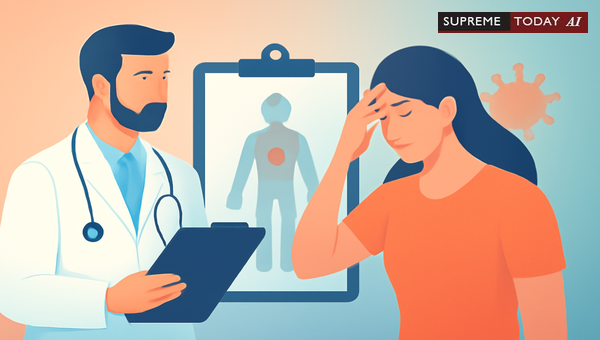
- Headaches: Similarly, Symptoms like headaches are not classified as diseases but as indicators of underlying conditions 2021 0 Supreme(Del) 753. This distinction matters in mental health or disability claims.
Further, imbalances like fluid disruptions can lead to symptoms: When the fluid balance in the human body is upset, the electric charge is upset and the circuit breaks and the human body shows symptoms of disease 2004 0 Supreme(All) 1048. Legal assessments thus demand probing beyond surface symptoms.
Legal Implications of Disease Determination
The presence of a disease doesn't automatically alter legal rights or liabilities. Severity and impact are key.
Incapacity and Responsibility
The mere existence of a disease or mental disorder does not automatically imply or liability. For example, must reach a certain severity or impact to influence legal rights or responsibilities, such as dissolution of marriage or criminal responsibility 1988 0 Supreme(SC) 574 1999 0 Supreme(HP) 266.
In property or matters, disease must pose specific risks: In cases involving property, , or personal rights, the presence of disease or decay must be linked to specific legal grounds, such as or mental incapacity 1989 0 Supreme(Bom) 365.
Regulatory and Patent Contexts
Indian laws regulate substances affecting the body: (ii) any substance intended to be used for or in the , cure, mitigation, treatment or prevention of disease in human beings 2023 0 Supreme(Telangana) 446. Methods involving body interaction—surgical, therapeutic, or diagnostic—are deemed practised on the human or animal body, even minimally technical steps 2023 0 Supreme(Mad) 3058 2023 Supreme(Online)(MAD) 22183.
itself implies body inspection: Diagnostic methods performed on the body, aimed at identifying or uncovering 2025 Supreme(Online)(Del) 7676. like vaccines qualify as they aim to prevent disease manifestations 2023 0 Supreme(Mad) 3058.
Diseases like Hepatitis B, transmitted via body fluids, require confirmatory evidence for legal recognition 2023 0 Supreme(Ker) 602. Devices and substances influencing body function fall under the 2025 Supreme(Online)(MP) 1220.
Broader Insights from Global Precedents
While focused on India, parallels exist elsewhere. U.S. cases highlight evidence in disease treatment approvals, where agencies must justify preventive uses 2023 Supreme(US)(ca9) 15. Patent laws exclude body-practised methods, reinforcing interaction thresholds 2023 0 Supreme(Mad) 3124.
These align with Indian views, emphasizing clinical severity, , and causation supported by evidence.
Practical Recommendations for Legal Disputes
When facing health-related claims:- Gather Robust Evidence: Corroborate with medical reports showing impairment.- Distinguish Symptom vs. Disease: Argue based on precedents to challenge unsubstantiated claims.- Assess Impact: Link disease to specific legal effects like incapacity.- Regulatory Compliance: For treatments or diagnostics, ensure alignment with drug laws.
For legal purposes, the impact of a disease or mental disorder on a person's capacity, rights, or liabilities must be established with medical evidence showing significant impairment or causation.
Key Takeaways
- Diseases require beyond germs or symptoms; normal decay rarely triggers action.
- Symptoms like fever or headaches indicate but do not define disease.
- Legal consequences demand proof of severity affecting rights or liabilities.
- involves body interaction, regulated strictly in India.
Understanding determination of disease on a human body empowers better navigation of legal challenges. Stay informed, seek expert advice, and prioritize medical documentation in disputes.
#DiseaseLaw #IndianLegalHealth #LegalDisease
















