


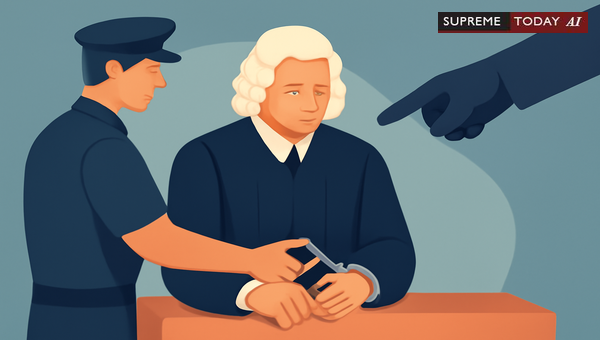
Can a Sitting Judge Be Arrested? Legal Guidelines Explained
In the intricate world of judicial independence, one question often arises: Whether a Sitting Judge can be Arrested? This issue strikes at the heart of balancing accountability with the need to protect the judiciary from undue interference. Judges, as pillars of justice, enjoy certain legal safeguards, but these are not absolute. This blog post delves into the legal framework, guidelines, key case references, and procedural requirements surrounding the arrest of sitting judges. Whether you're a legal professional, a concerned citizen, or someone navigating related allegations, understanding these nuances is crucial.
Note: This article provides general information based on legal precedents and is not a substitute for professional legal advice. Consult a qualified attorney for specific cases.
Overview of Judicial Protections
Judges typically benefit from , a principle designed to shield them from arrest or harassment while performing judicial functions. This protection ensures the independence of the judiciary, preventing external pressures that could compromise fair decision-making. As outlined in various judicial interpretations, arrests must adhere to strict protocols to maintain this balance. 2015 0 Supreme(Tri) 652
However, immunity does not mean invincibility. A sitting judge may be arrested under exceptional circumstances, but only after complying with established guidelines. The has laid down specific directives emphasizing that any such action requires prior consultation and procedural rigor. Improper arrests can lead to legal challenges against the arresting authority, underscoring the gravity of these situations. 2015 0 Supreme(Tri) 652
Key Legal Guidelines for Arresting Judicial Officers
The has issued clear guidelines on the arrest of judicial officers to prevent misuse of power. Document 2015 0 Supreme(Tri) 652 highlights that there are specific guidelines laid down by the regarding the arrest of judicial officers. Any arrest must comply with these guidelines to be lawful.
Core Requirements:
- : Arrests generally necessitate consultation with higher judicial authorities or the Chief Justice to ensure propriety.
- Inquiry Preference: Allegations of misconduct or criminal activity typically trigger an rather than immediate arrest. This preserves judicial integrity and allows for a measured response.
- Compliance with : Under Article 22 of the , any arrested person—including judges—must be informed of the and . Failure to do so renders the arrest unlawful. 2025 0 Supreme(Bom) 820
From other precedents, it's evident that the decision to arrest hinges on material evidence collected during investigation. As noted in 2024 0 Supreme(Cal) 727, whether an accused is liable to be arrested is totally based upon the decision of the investigating officer depending upon the material evidence collected during investigation.
Circumstances Permitting Arrest
While arrests are rare, they may occur in cases of serious criminal allegations, provided protocols are followed. For instance:- Criminal Misconduct: If a judge faces charges like corruption, an inquiry precedes any action. The Special Judge, , may take the individual into custody only after due process. 2025 0 Supreme(All) 2840- Non-Compliance Risks: Unauthorized arrests violate guidelines, as seen in cases where judicial officers were arrested improperly, leading to repercussions for police. 2015 0 Supreme(Tri) 652
Additional sources reinforce that arrest constitutes a , regardless of terminology.
Sk. Hussain VS State of Orissa - Crimes
and 2025 Supreme(Online)(Bom) 4472 emphasize: the act of restraint by authorities, if depriving liberty, qualifies as arrest. For judges, this triggers heightened scrutiny. Courts have ruled that arrests without recording grounds or informing the individual are invalid., 2024 0 Supreme(Kar) 647
In
, it's stated: Arrest of a Sitting Judge - Generally, a sitting judge cannot be arrested without following proper legal procedures, and any arrest must comply with constitutional and statutory provisions.
Landmark Case References
Several cases illustrate these principles:
Violation of Arrest Guidelines
In a notable instance discussed in 2015 0 Supreme(Tri) 652, a judicial officer's arrest was deemed a violation of protocols. This case underscores that procedural lapses can invite judicial intervention against the arresting agency.
Continuation of Judicial Functions
Document
addresses whether a sitting judge facing allegations should continue performing duties: Document
raises the question of whether a sitting judge should continue to perform judicial functions while facing allegations, indicating that the legal system has mechanisms to address such situations without resorting to arrest.
Broader Precedents on Arrest Legality
- In 2023 0 Supreme(P&H) 1633, the court examined if grounds for arrest were supplied, referencing verdicts like Pankaj Bansal Versus Union of India.
- 2025 0 Supreme(Bom) 820 questions: whether the Petitioner was taken into custody at 7.00 AM on.... and compliance with .
- During court holidays, bail applications for judges or related matters consider judge availability. 2016 0 Supreme(Ker) 937, 2016 0 Supreme(Ker) 555
Other insights include scenarios where arrests can occur at court instance. 2010 0 Supreme(Mad) 152: They can also be arrested at the instance of the Court.
Preferences for sitting judges in appointments highlight their authority but also workload concerns if diverted. 2007 3 Supreme 562, 2007 3 Supreme 473
Integrating Additional Legal Contexts
Arrests during proceedings or outside court premises raise jurisdictional issues. Judges exercise functions within designated areas, and external arrests demand extra caution.
Compensation cases indirectly touch on judicial decisions post-arrest scenarios, but the focus remains on procedural adherence.
ANANTHAGOPI ALAGUGANESAN vs MENTERI DALAM NEGERI & ORS - High Court Malaya Seremban
Overall, sources affirm: arrests must record grounds, inform the individual, and respect rights. Arbitrary actions are unconstitutional.
Challenges and Recommendations
Arresting a sitting judge poses risks to public trust in the judiciary. Legal counsel is vital to invoke safeguards. Key recommendations include:- Monitor Guidelines: Stay updated on directives.- Seek Inquiries First: Advocate for internal probes over arrests.- Procedural Vigilance: Ensure all constitutional rights are upheld.
Conclusion and Key Takeaways
In summary, while a sitting judge can technically be arrested, it is heavily regulated. guidelines prioritize inquiries, protects functions, and violations invite backlash. Key takeaways:- Arrests require evidence, , and procedural compliance. 2015 0 Supreme(Tri) 652- Immunity is functional, not absolute.- Courts favor internal mechanisms to uphold integrity.
References: 2015 0 Supreme(Tri) 652
2024 0 Supreme(Cal) 727
ANANTHAGOPI ALAGUGANESAN vs MENTERI DALAM NEGERI & ORS - High Court Malaya Seremban
2023 0 Supreme(P&H) 1633 2025 0 Supreme(Bom) 820 2025 0 Supreme(All) 2840 2016 0 Supreme(Ker) 937 2016 0 Supreme(Ker) 555 2010 0 Supreme(Mad) 152 2007 3 Supreme 562 2007 3 Supreme 473Sk. Hussain VS State of Orissa - Crimes
2025 Supreme(Online)(Bom) 44722024 0 Supreme(Kar) 647
This framework ensures accountability without undermining judicial independence. For tailored advice, consult legal experts.
#JudgeArrest, #JudicialImmunity, #LegalGuidelines















