


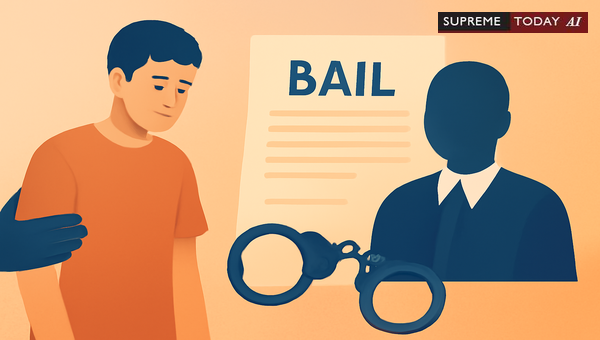
Can Juveniles File Before a ?
In the realm of juvenile justice, navigating legal protections for children accused of offenses requires a nuanced understanding of specialized laws. Parents, guardians, and legal professionals often grapple with questions about bail options when a minor is involved in a criminal case. A common query arises: Whether a can File an Application before a ?
This post delves into the legal framework, judicial precedents, and practical implications, drawing from key statutes and court rulings. While the prioritizes rehabilitation over punishment, it fundamentally alters traditional bail procedures for minors. Let's break it down step by step.
Understanding 'Child in Conflict with Law' and Bail Basics
Under the JJ Act, a 'child in conflict with law' refers to anyone under 18 years alleged to have infringed any law. Unlike adults, these children are shielded from standard criminal procedures. explicitly states that such a child shall not be placed in police lock-up or jail but must be apprehended and produced before the promptly. 2018 0 Supreme(Ker) 287
This distinction—apprehension vs. —is crucial. The Act deliberately uses instead of , limiting police powers and emphasizing child welfare. Consequently, children enjoy upon production before the JJB, irrespective of whether the offense is bailable or non-bailable. 2018 0 Supreme(Ker) 287
Why Doesn't Apply to Juveniles
under is a remedy for adults facing imminent in . It prevents deprivation of liberty when is likely. However, for juveniles:
- No Provision: The JJ Act does not empower police to children in conflict with law. 2018 0 Supreme(Ker) 287
- No Imminent : Without the possibility of , there's no need for pre- protection. The held: the Act does not provide for the of a child in conflict with law by the police and in the absence of any , no question of invoking the provision contained in Section 438 of the Cr.P.C. arises. 2018 0 Supreme(Ker) 287
- Jurisdiction Irrelevant: applications are typically filed before Sessions Courts or for adults. For juveniles, the JJB handles post-apprehension bail, rendering applications inapplicable. 2018 0 Supreme(Ker) 287
The has reinforced that applies only where is imminent or likely, a precondition absent for children. 2023 0 Supreme(Ker) 460
Judicial Precedents: A Clear Consensus?
Courts have consistently upheld this view. The emphasized the JJ Act's protective intent, distinguishing juvenile procedures from CrPC norms. 2018 0 Supreme(Ker) 287
However, contrasting interpretations exist. In one reference, a court analyzed whether juveniles can invoke absent specific JJ Act provisions. It concluded that a 'child in conflict with law' can file an application under Section 438 of the CrPC. 2022 0 Supreme(Bom) 979 This suggests some flexibility, potentially allowing High Court or approaches in exceptional cases, though it doesn't override the no- rule.
For adults, precedents clarify hierarchy: Applicants should generally approach Sessions Courts first before under Section 438, unless exceptional circumstances exist—like rejection of for co-accused or compelling reasons. 2025 0 Supreme(All) 2170
retain discretion but discourage direct filings to avoid flooding dockets. 2024 0 Supreme(UK) 582 2024 0 Supreme(UK) 609 2024 0 Supreme(UK) 632
These adult-focused rulings indirectly highlight juvenile uniqueness: Even if exists, the JJ Act's bar on arrests negates the need.
Exceptions, Limitations, and Practical Steps
While is generally unavailable:
- Post-Apprehension Bail: Juveniles get immediate release on bail from the JJB. 2018 0 Supreme(Ker) 287
- No Prohibition on Regular Bail: After apprehension or detention, standard bail applies under JJ Act provisions.
- Rare Scenarios: If misclassified as an adult or in transfer cases ( by 16-18 year olds), CrPC might apply, but this is exceptional.
Recommendations for Stakeholders:- Produce the child before JJB immediately upon apprehension.- Seek bail as a right post-production—avoid futile anticipatory applications.- Legal practitioners: Focus on JJB proceedings; before Sessions/High Court lacks foundation. 2018 0 Supreme(Ker) 287
In cases of (e.g., ignoring processes), courts may cancel bail, underscoring disclosure duties. 2024 0 Supreme(Pat) 211
Broader Context: Adult vs. Juvenile Procedures
For comparison, adults often debate bypassing Sessions Courts for . Courts like Uttarakhand's have dismissed direct High Court pleas, directing applicants to Sessions first unless special facts warrant otherwise. 2024 0 Supreme(UK) 582 2024 0 Supreme(UK) 632 Juveniles sidestep this entirely due to the JJ Act's framework.
Another Kerala ruling notes options to approach either court initially, but successive applications face scrutiny. 2020 0 Supreme(Ker) 767 These reinforce that juvenile cases demand JJ Act compliance over CrPC defaults.
Key Takeaways
- Primary Finding: Juveniles in conflict with law cannot typically file before a , as no is contemplated under JJ Act 2015. 2018 0 Supreme(Ker) 287 2023 0 Supreme(Ker) 460
- Bail is a right post-apprehension via JJB.
- Contrasting views exist but prioritize child protection. 2022 0 Supreme(Bom) 979
- Always consult local procedures; outcomes vary by facts.
Disclaimer: This article provides general information based on statutes and precedents. It is not legal advice. Consult a qualified lawyer for case-specific guidance, as laws evolve and courts interpret variably.
In conclusion, the JJ Act's child-centric approach eliminates needs for juveniles, streamlining protections through JJBs. Understanding this prevents procedural missteps and upholds juvenile rights.
#JuvenileJustice #AnticipatoryBail #CriminalLawIndia















