


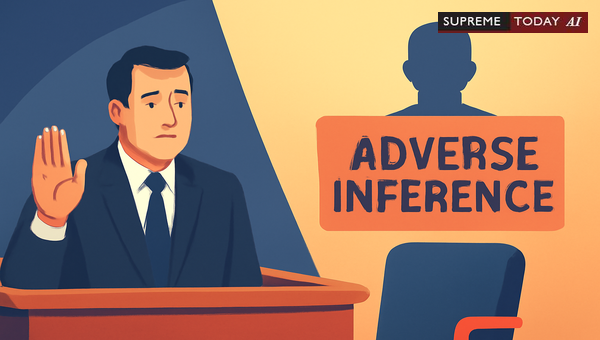
Landlord Not Entering Witness Box: Does It Doom Your Eviction Case?
In eviction disputes, especially those involving a landlord's for the property, a common question arises: Not Stepping in Witness Box – must the landlord or landlady personally testify in court? Failing to appear can raise eyebrows, potentially leading to where the court assumes the worst about your case. But is this obligation absolute? This post breaks down the legal nuances, drawing from key precedents, to help landlords and tenants understand the risks and strategies. Note: This is general information, not specific legal advice – consult a lawyer for your situation.
The Core Legal Principle: Landlord as Best Witness
Courts generally view the landlord or landlady as the best person to prove their 1993 0 Supreme(Del) 79. Their personal testimony provides direct insight into their , which is central to eviction claims under . As held in , if the landlord skips the witness box, evidence from attorneys or relatives carries less weight, often triggering 1993 0 Supreme(Del) 79.
Failure to testify isn't fatal in every case, but it heightens scrutiny. The obligation to depose about one's requirement cannot be delegated, though case management can be handed to agents 1993 0 Supreme(Del) 79.
Key Points on Landlord Testimony
- The landlord/landlady is expected to appear when their is material 1993 0 Supreme(Del) 79.
- Absence may lead to , presuming the claim lacks merit 1993 0 Supreme(Del) 79.
- Courts assess facts holistically; other evidence can sometimes compensate 1993 0 Supreme(Del) 79.
- Testimony duty is personal, but supporting proof from others may suffice in exceptions 1993 0 Supreme(Del) 79.
When Does Absence Trigger Adverse Inference?
arise when the landlord's testimony is pivotal. In , the court ruled that is a best deposed by the landlord, and non-appearance led to rejection of the claim 1993 0 Supreme(Del) 79. Similarly, in , the landlady's failure to examine herself drew negative conclusions 1993 0 Supreme(Del) 79.
This principle extends beyond eviction suits. In general civil matters, a party's non-appearance as a witness can imply weakness in their case, as noted where exhibits fail to prove without the author's testimony: Ex.DH & DI never became proven in accordance with law, whereas, they would have become proven, only upon, the author thereof stepping into the witness box
.
Exceptions: When Non-Appearance Doesn't Hurt
Courts aren't rigid – context matters. aren't automatic if:- Convincing evidence from others exists, like close relatives or attorneys 1993 0 Supreme(Del) 79.- Valid reasons justify absence, such as age or health 1993 0 Supreme(Del) 79.
In , no adverse inference was drawn because the attorney's unchallenged testimony sufficed 1993 0 Supreme(Del) 79. Likewise, in , an elderly landlady's absence was excused with attorney evidence 1993 0 Supreme(Del) 79.
Broader precedents reinforce this. Even plaintiffs filing via attorneys retain the right to testify as the best witness: The plaintiff, being the best witness in support of his case, has the right to testify, even if the suit had been filed through an attorney holder 2022 0 Supreme(P&H) 1723. The court emphasized truth-seeking over technicalities.
In criminal and cheque dishonor cases, parties often rebut claims without testifying. For instance: For the said purpose, stepping into the witness box by the accused is not imperative. The question as to whether the presumption whether stood rebutted or not, must, therefore, be determined keeping in view the other evidences on record 2012 0 Supreme(Mad) 3417
Devarsha Dnyaneshwar Parob VS Mulgao Sirigao Advalpal, V. K. S. Society Ltd.
. This underscores that courts evaluate the totality of evidence, not just one witness's presence 2010 0 Supreme(Bom) 545.Judicial Discretion: Facts Dictate the Outcome
Ultimately, decisions are case-specific. Courts weigh:- Availability of alternative evidence (documents, other witnesses).- Reasons for non-appearance (e.g., health, distance).- Overall credibility of the claim 1993 0 Supreme(Del) 79.
In cases under /139, accused routinely succeed without testifying if other record rebuts presumptions: An accused for discharging the placed upon him under a statute need not examine himself. He may discharge his burden on the basis of the materials already brought on record
Devarsha Dnyaneshwar Parob VS Mulgao Sirigao Advalpal, V. K. S. Society Ltd.
. Similarly, acquittals occur when prosecution evidence falters, without drawing automatic inferences against the defense 2009 0 Supreme(Bom) 1356.Affidavits or other proofs can stand alone in some scenarios: competency to testify depends on understanding, but absence doesn't invalidate if evidence convinces 2001 0 Supreme(Raj) 447 2017 0 Supreme(Bom) 962. Non-production of key documents can even draw inferences against the opposing side
John Fernandes VS Noorjahan Khan
.Practical Recommendations for Landlords
To minimize risks:- Prioritize personal testimony when possible – it's the gold standard.- If unable to appear (age, health), line up close relatives or authorized agents with detailed knowledge 1993 0 Supreme(Del) 79.- Bolster with documentary evidence: correspondence, medical records, property needs proof.- Anticipate challenges; prepare cross-examination responses.- Courts favor comprehensive cases over single-witness reliance 1999 3 Supreme 102 2000 2 Supreme 633.
Tenants should highlight landlord absence if it's material, but expect courts to probe deeper.
Conclusion: Balance Evidence, Not Just Presence
Not stepping into the witness box as a landlord may invite , particularly for bona fide requirements, but it's not an absolute bar 1993 0 Supreme(Del) 79. Success hinges on robust alternative evidence and compelling circumstances. As precedents like K.J. Bhat affirm, presumptions yield to facts: The question as to whether a presumption is rebutted or not must be determined keeping in view the other evidence on record
John Fernandes VS Noorjahan Khan
.Key Takeaways:- Landlord testimony is preferred but substitutable in justified cases.- depend on context – build a strong evidentiary web.- Judicial discretion protects truth over formality.
This analysis draws from established cases; outcomes vary. Always seek professional legal counsel tailored to your facts.
References
- 1993 0 Supreme(Del) 79: Core on landlord testimony and inferences.
- 2001 0 Supreme(Raj) 447, 2017 0 Supreme(Bom) 962, 1999 3 Supreme 102, 2000 2 Supreme 633: Competency and evidence sufficiency.
- 2022 0 Supreme(P&H) 1723, 2012 0 Supreme(Mad) 3417,
Devarsha Dnyaneshwar Parob VS Mulgao Sirigao Advalpal, V. K. S. Society Ltd.
, 2010 0 Supreme(Bom) 545, 2009 0 Supreme(Bom) 1356,John Fernandes VS Noorjahan Khan
: Broader principles on non-mandatory testimony. - Other cited High Court judgments for evidentiary standards.















