Searching Case Laws & Precedent on Legal Query!
Scanned Judgements…!



Searching Case Laws & Precedent on Legal Query!
Scanned Judgements…!
Calvin Francis VS State of Orissa - Crimes
"].The social stigma attached to victims, especially women and marginalized communities, results in difficulties in social integration, employment, and marriage, reinforcing the need for protective legal measures and social awareness campaigns ["1999 0 Supreme(Ori) 316"], ["2023 0 Supreme(Del) 299"], ["2025 Supreme(Online)(MP) 9284"].
Analysis and Conclusion:
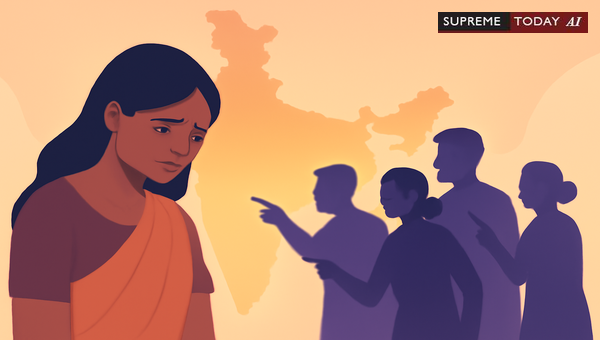
Social ostracization remains a pervasive issue in India, where individuals or groups face exclusion from community life due to perceived violations of norms. Whether through caste-based boycotts, , or stigma against rape victims, this practice inflicts deep psychological, economic, and physical harm. But is social ostracization legally recognized as a form of harm? This blog delves into its definition, judicial recognition, and remedies under Indian law, drawing from key cases and statutes. Note: This is general information and not specific legal advice; consult a lawyer for personalized guidance.
Social ostracization involves deliberately excluding individuals from social, economic, and community participation. It often manifests as , denial of access to resources, jobs, or gatherings, triggered by inter-caste marriages, defiance of customs, witchcraft accusations, or even surviving sexual violence.
Key features include:- Exclusion from community privileges and resources- Economic and social marginalization- Psychological trauma and stigma- Perpetuation by informal bodies like
This exclusion not only isolates victims but can escalate to violence, making it a serious societal ill. 2025 0 Supreme(Raj) 1624
The provides robust protection against such harms. Social ostracization typically infringes (Right to Equality), (Freedom of Speech and Expression), and (Right to Life and Personal Liberty).
Courts have consistently viewed ostracization leading to mental trauma or denied basic needs as an breach. 2025 0 Supreme(Raj) 1624
While primarily social, ostracization's harms are actionable criminally:
Rape survivors frequently endure severe ostracization, amplifying their trauma. Courts have emphasized this in multiple rulings:
A victim of rape will face hostile discrimination and social ostracisation in society. Such victim will find it difficult to get a job, will find it difficult to get married and will also find it difficult to get integrated in society like a normal human being. 2021 1 Supreme 513 2021 0 Supreme(Bom) 461 2018 0 Supreme(SC) 1238
In another PIL, courts reiterated media restraint to avoid severe mental agony from identity exposure. 2021 0 Supreme(Bom) 461
These protections extend to child victims under POCSO, banning any identity disclosure. 2018 0 Supreme(SC) 1238
Courts have issued directives for reform:- Condemnation of and . 2025 0 Supreme(Raj) 1624- Victim rehabilitation schemes like compensation. 2021 1 Supreme 513- Calls for witness protection, one-stop centers (e.g., in Hyderabad) with counseling and medical aid. 2018 0 Supreme(SC) 1238
Despite this, enforcement challenges persist due to cultural entrenchment. 2025 0 Supreme(Raj) 1624
A rape victim suffers not only a mental trauma but also discrimination from society. 2021 1 Supreme 513
Deep-rooted traditions hinder progress, but awareness, strict enforcement, and schemes like free education/housing offer hope. Victims can approach for aid. 2021 1 Supreme 513
Social ostracization may be a social evil, but Indian law treats it as a punishable harm. Stay informed and support victims. 2017 0 Supreme(Del) 619 2025 0 Supreme(Raj) 1624
Disclaimer: This article provides general insights based on judicial precedents and is not legal advice. Laws evolve; professional consultation is recommended.
#SocialOstracization #IndianLaw #HumanRights


Allegation has been made that by publication of names of alleged sexual victims, result is social harassments and ostracisation. ... In most cases of sexual assault and harassment ultimately the victim suffers by way of social victimisation and ostracisation. In the conservative Indian Society nothing can be more unfortunate for a girl than a stigma of having been sexually harassed and/or sexually assaulted.

He is likely to face social embarrassment and ostracisation, if arrested, besides the prosecutrix is a major person of 19 year, and Counsel prayed that the application be allowed. ... 3.

A victim of rape will face hostile discrimination and social ostracisation in society. Such victim will find it difficult to get a job, will find it difficult to get married and will also find it difficult to get integrated in society like a normal human being. ... A Writ Petition was filed in the Apex Court seeking directions to ensure that victims of rape and children who are victims of sexual abuse should be protected so that they are not subjected to unfortunate ridicule, social ostracisation and harassment. T....

A victim of rape will face hostile discrimination and social ostracisation in society. Such victim will find it difficult to get a job, will find it difficult to get married and will also find it difficult to get integrated in society like a normal human being. ... A Writ Petition was filed in the Apex Court seeking directions to ensure that victims of rape and children who are victims of sexual abuse should be protected so that they are not subjected to unfortunate ridicule, social ostracisation and harassment. The Apex....

In view of the social ostracisation prevailing in the relevant time, they were all permitted to reside within the campus and accordingly, they are continuing to reside there. While so, suddenly, the impugned order is now passed.
and physical restraints on the wife/daughter, leading to ostracisation of the husband and denial of access to the married couples. ... We are confident that this procedure of treating a social problem in the proper perspective can and must continue and direct accordingly. ... ... ( 2 ) ANY change in the social and family structure would naturally meet with resistance. ... The changing social scenario in this country is leading to a situation where there are more inter caste and inter-religion marriages as in the present....

It is urged that there has been sufficient social ostracisation and humiliation as the victim girl was a friend of the petitioners daughter and a lenient sentence would be meet and proper. ... ... ( 15 ) CONSIDERING the submissions made, and the social ostracisation and humiliation likely to have been suffered by the petitioner, while negativing the prayer for release of the petitioner on probation, I modify the custodial sentence ... But there has been criticism that the States right to suppress a social#HL_E....
ostracisation and harassment. ... A Writ Petition was filed in the Apex Court seeking directions to ensure that victims of rape and children who are victims of sexual abuse should be protected so that they are not subjected to unfortunate ridicule, regime in position, the Apex Court while exercising its jurisdiction under Article 142 of the Constitution of India, directed that if the Government wants to actually act under Section 228-A(2)(c) IPC, it must, before identifying such social ... The Courts have been concerned about the disclosure o....

It is urged that there has been sufficient social ostracisation and humiliation as the victim girl was a friend of the petitioner's daughter and a lenient sentence would be meet and proper. 14. ... Considering the submissions made, and the social ostracisation and humiliation likely to have been suffered by the petitioner, while negativing the prayer for release of the petitioner on probation, I modify the custodial sentence to the period already undergone, but impose a fine of Rs. 1,000/- (one ... But there has been cr....
on social stigma and awareness about the social stigma attached to COVID-19 and adverse effect of social stigma and sensitization against the discrimination have been incorporated in training module for health care workers and others. ... Such behavior may culminate into increased hostility, chaos and unnecessary social disruptions. ... So far as the stigmatization and ostracisation of the persons from the community with regard to newspaper report at Annexure-3 is concerned, it has been stated in the co....

Union of India and Others, (2019) 2 SCC 703, wherein following observations were made by this Court: "12. A victim of rape will face hostile discrimination and social ostracisation in society. Such victim will find it difficult to get a job, will find it difficult to get married and will also find it difficult to get integrated in society like a normal human being.........."

Our criminal jurisprudence does not provide for an adequate witness protection programme and, therefore, the need is much greater to protect the victim and hide her identity. A victim of rape will face hostile discrimination and social ostracisation in society. Such victim will find it difficult to get a job, will find it difficult to get married and will also find it difficult to get integrated in society like a normal human being.

A victim of rape will face hostile discrimination and social ostracisation in society. Such victim will find it difficult to get a job, will find it difficult to get married and will also find it difficult to get integrated in society like a normal human being. Our criminal jurisprudence does not provide for an adequate witness protection programme and, therefore, the need is much greater to protect the victim and hide her identity.
More than the killings, the victims are subjected to abject humiliation, social ostracisation and torture. The victims are mostly women, widows, issueless and unconventional ones who serve as healers or render services to the community. Incidents like severe beating, parading naked, feeding of excreta or chained to posts are common.


An indispensable Tool for Legal Professionals, Endorsed by Various High Court and Judicial Officers
Please visit our Training & Support
Center or Contact Us for assistance

Scan Me!
India’s Legal research and Law Firm App, Download now!


For Daily Legal Updates, Join us on :



 Back to top


