


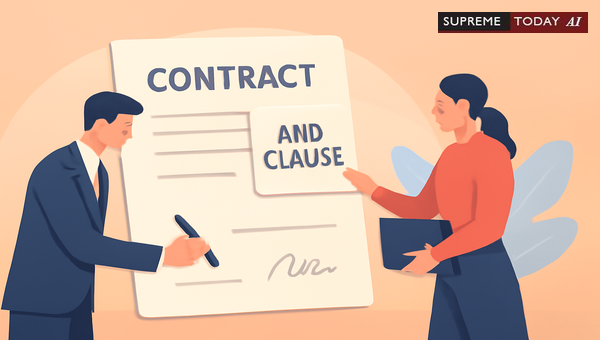
Can You Add a Missed Clause to a Signed Contract?
In the fast-paced world of business deals, it's not uncommon for parties to realize after signing that they overlooked an important term in their contract. You might wonder: Can a party to a add a clause saying they missed stating it when the contract was signed? This question strikes at the heart of contract law's fundamental principles of finality and .
The short answer is generally no. Once a contract is concluded—meaning all essential terms are agreed upon and it's binding—unilateral additions by one party are typically not enforceable. This protects both sides from surprise changes and ensures predictability in commercial relationships. But let's dive deeper into the legal analysis, drawing from established principles and case precedents to understand why, and what you can do instead.
Understanding Concluded Contracts: The
A is one where , , and have formed a complete agreement. At this point, it becomes legally binding, and neither party can alter it without the other's consent. As one key principle states: A is binding and cannot be unilaterally altered by one party. Both parties must agree to any changes or additions to the contract terms for them to be valid 2023 0 Supreme(Gau) 1070.
Attempting to add a clause post-signing, even with a note like I missed this earlier, amounts to a , which holds no legal weight on the other party. Courts consistently hold that a party cannot insist on compliance with additional terms that were not part of the original agreement. Any unilateral addition of terms is not binding on the other party 2023 0 Supreme(Gau) 1070.
This finality underscores contract law's emphasis on certainty. If all are settled, subsequent negotiations or attempts to introduce new terms do not affect the of the 1981 0 Supreme(Mad) 60 1993 0 Supreme(Del) 169.
Exceptions: and
While outright additions are off-limits, courts sometimes imply terms to make a contract workable. These must reflect what both parties clearly understood at formation, often to give the agreement . For instance: While some obligations may be implied to give to a contract, these must be clearly understood and agreed upon by both parties at the time of the contract's conclusion 1984 0 Supreme(Bom) 102.
However, this is a narrow exception. You can't retroactively imply a major clause just because you forgot it. In one case involving a resort management agreement, the court applied the test to ambiguous provisions, discerning an intent to arbitrate despite no explicit clause: The court discerned an intent to arbitrate from ambiguous provisions in the Resort Management Agreement, applying the test to establish the existence of an 2025 Supreme(Bom) 122. But this required evidence of mutual intent from the outset—not a later addition.
Lessons from Case Law: Unilateral Changes Don't Stick
Judicial precedents reinforce these rules across jurisdictions. Consider a tender scenario where a defendant added a penalty clause post-: Effective occurs upon dispatch, making a binding; additional penalty clauses imposed post- invalidate forfeiture claims without proof of actual loss 2025 0 Supreme(Ker) 2106. The court ruled the addition invalid unless ratified, emphasizing that unilateral changes cannot void agreement.
In another dispute: It is a settled legal position that once the contract is concluded between the parties, no party is permitted to add or alter the terms of the contract unilaterally without the consent of the other party 2013 0 Supreme(Guj) 59. Here, supplies were delivered based on original terms, and later alterations were rejected.
Even in sales agreements via letters, courts focus on essentials like parties, property, and price: A letter with essential elements—parties, property, and price—constitutes an enforceable contract under the , regardless of the absence of further specific terms
. Adding terms later doesn't undo this if the core deal is set.
Subsequent negotiations? They don't automatically reopen the contract: Initiating further negotiations after a contract has been concluded does not invalidate the existing contract unless both parties agree to rescind or modify it 1988 0 Supreme(Raj) 511. A case on plot allotments noted that where no firm agreement crystallized, changes were possible—but once concluded, prevents denial: It would be too late in the day for the respondents now to contend that the contract is not a 2018 0 Supreme(Bom) 1418.
Risks of Unilateral Attempts
Trying to enforce a self-added clause can backfire:- : The other party might sue for non-performance under original terms.- or waiver: Your actions could waive rights to the new term.- : Awards enforcing perverse unilateral changes may be set aside as against fundamental 2018 0 Supreme(Guj) 806.
In execution disputes, tribunals scrutinize if obligations truly arose at confirmation: On signing of confirmation notice, obligation of buyer arises and it stands triggered... there is no backtracking 2018 0 Supreme(Guj) 806.
How to Properly Modify a Contract
If you need to add or change terms:1. Initiate mutual discussions: Approach the other party promptly.2. Document in writing: Any agreement must be signed by both, ideally as an .3. Consider : If major, mutually rescind and form a new contract.4. Seek legal review: Ensure compliance with statutes like the or equivalents.
Recommendations include: Advise the client to refrain from attempting to unilaterally add terms to the contract. If there is a need to modify the contract, initiate discussions with the other party to seek for any changes. Document any agreements or modifications in writing, signed by both parties, to ensure enforceability 2023 0 Supreme(Gau) 1070.
Key Takeaways for Businesses
- Prevention is best: Review contracts thoroughly pre-signing. Use checklists for common oversights like arbitration, penalties, or termination.
- rules: Changes post-conclusion require agreement—unilateral moves risk invalidity.
- limited: Only for obvious necessities, not forgotten wishes.
- This is general information: Contract law varies by jurisdiction; consult a qualified attorney for your situation. This post is not legal advice.
In summary, while forgetting a clause happens, contract law prioritizes stability. Respect the signed deal or negotiate anew. By understanding these principles, you can avoid costly disputes and build stronger agreements.
References: Key cases include 2023 0 Supreme(Gau) 1070, 1984 0 Supreme(Bom) 102, 1988 0 Supreme(Raj) 511, 1981 0 Supreme(Mad) 60, 1993 0 Supreme(Del) 169, 2025 0 Supreme(Ker) 2106, 2013 0 Supreme(Guj) 59, 2025 Supreme(Bom) 122,
, 2018 0 Supreme(Bom) 1418, 2018 0 Supreme(Guj) 806. #ContractLaw, #BusinessContracts, #LegalInsights















